On this page
- Why a radon system is usually a good sign
- How a typical system works
- What to check before you buy
- Questions to ask the seller
- Always run your own radon test
- What to do if the system is not working
- Does a radon system affect what you pay?
- Key takeaways
- Frequently Asked Questions
- Buying in York and found a problem?
Should you buy a house with a radon mitigation system? In most cases, yes. A working system is a plus, especially in a high-radon area like York County. Before you buy, check four things: the fan's age and condition, the manometer reading, recent radon test results, and who installed the system. Then run your own radon test during the inspection.
This guide explains what a system tells you about the house, what to inspect, the questions to ask the seller, and how to handle radon mitigation during a home purchase if something is wrong.
Why a radon system is usually a good sign
A radon system means a past owner tested, found radon, and fixed it. That is the outcome the EPA recommends for homes at or above 4.0 pCi/L. Radon is a colorless, odorless radioactive gas that comes from uranium breaking down in soil and rock, and it is the leading cause of lung cancer among people who have never smoked, according to the EPA.
York County sits in EPA Radon Zone 1, the highest-potential zone. Many homes here have elevated radon. A house with a working system has already handled a problem that many other homes on the market still have.
What the system does not tell you is whether it still works. That is what your inspection is for.
How a typical system works
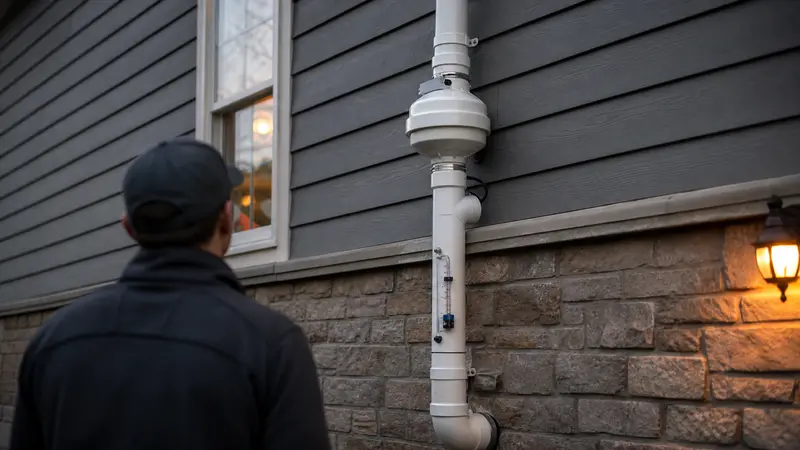
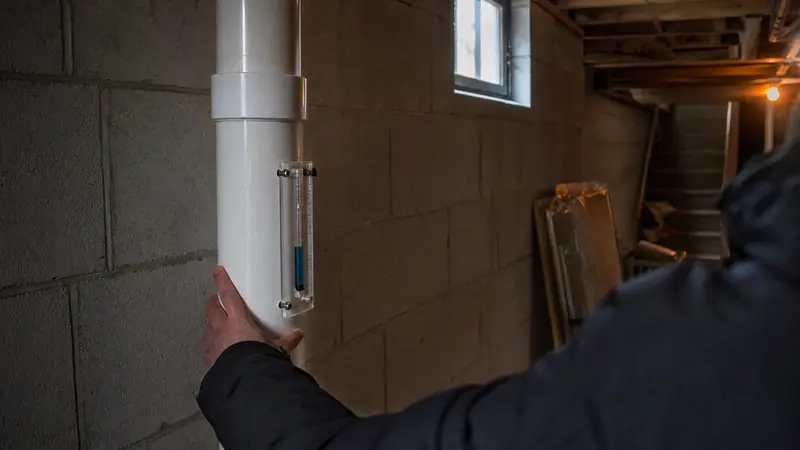
Most systems in York use sub-slab depressurization. A pipe goes through the basement floor or slab, and a fan pulls soil gas from under the house and vents it above the roof. The fan runs all the time. A U-tube manometer on the pipe shows that the fan is creating suction. Crawl space homes may have a plastic membrane over the dirt with a pipe under it.
What to check before you buy
1. The manometer reading
Find the U-tube gauge on the vent pipe, usually in the basement. The liquid levels on the two sides should be uneven. If both sides are level at zero, the fan may be off or failed. Many installers mark the starting reading on the gauge or a label, so you can compare it.
2. The fan
The fan should be outside the living space: in the attic, the garage or outdoors on the side of the house. Listen for it running. Look for:
- unusual noise, rattling or grinding,
- water leaking from the fan housing,
- rust, cracks or loose fittings,
- a fan that is off or unplugged.
Many radon fans last roughly 5 to 10 years or more, depending on the model and conditions. Major fan makers commonly offer a 5-year warranty when a professional installs the fan. If the fan's install date is unknown and it looks old, budget for a replacement.
3. The pipe and seals
Look for cracked or disconnected pipe, gaps at the slab penetration, and an open or unsealed sump pit. The pipe should be labeled as a radon system. The exhaust should end above the roof edge and away from windows, as industry standards call for.
4. The label and installer
Pennsylvania requires radon mitigators to be certified by PA DEP. Under 25 Pa. Code Section 240.308, a certified mitigator must put a label on the system with the words "Radon Reduction System," the installer's name, certification number and phone number, the install date, and a note that the building should be tested for radon at least every two years. A system with no label may have been a do-it-yourself job. That does not always mean it is bad, but it deserves a closer look.
5. The test history
Ask for:
- the original radon test result before the system went in,
- the post-mitigation clearance test,
- any later tests.
The EPA recommends retesting a mitigated home at least every two years to confirm the system still works. If the most recent test is many years old, a new one is even more important.
Questions to ask the seller
The Pennsylvania Seller's Property Disclosure Statement asks about radon tests and systems, so start there. Then ask:
- When was the system installed, and by whom?
- Has the fan ever been replaced?
- What was the radon level before and after the install?
- When was the last radon test?
- Has the system ever stopped working?
- Have you finished the basement or added on since the install?
Changes to the house, like a finished basement or a new addition, can affect how well the system works. That is another reason to retest.
Always run your own radon test
Even with a system in place, order a radon test during the inspection. Use a PA DEP-certified tester. Pennsylvania testing rules require that a permanently installed mitigation system be running during the test. If the result is below 4.0 pCi/L, you have current proof the system works. If it is high, you have time to negotiate.
What to do if the system is not working
If the fan is dead, the manometer reads zero or your test comes back high, you have options under your inspection contingency. The fix is often simpler than a new install:
- Fan replacement if the fan has failed.
- Resealing cracks, the sump lid or the slab penetration.
- An extra suction point if part of the foundation is not covered.
- A system redesign in rare cases, such as a homemade system that was never designed properly.
You can ask the seller to repair it before closing, give a credit, or adjust the price. Our guide on how the radon contingency works in a PA purchase agreement explains the timeline for those requests.
Does a radon system affect what you pay?
Generally, a working radon system does not lower a home's value. In a Zone 1 county, many buyers expect it. A system that needs repair is a normal negotiation item, much like an older water heater. The bigger risk is buying a home with high radon and no plan to fix it.
Key takeaways
- A radon system is usually a plus, especially in York County.
- Check the manometer, the fan, the pipe and seals, and the label.
- Ask for the full test history and the installer's details.
- Always run your own radon test during the inspection.
- If the system is not working, negotiate a repair or credit inside your contingency window.
Frequently Asked Questions
Is a house with a radon system safe?
A working system with a recent test below 4.0 pCi/L is a good sign. Your own test during the inspection confirms it.
How much does it cost to run a radon fan?
Radon fans use a modest amount of electricity because they run all the time. Check the fan's wattage on its label to estimate the cost on your electric rate.
Can I remove a radon system after I buy?
You can, but radon would likely return to its old level. Turning off or removing a working system in a high-radon home is not recommended.
Buying in York and found a problem?
If the system you are buying needs a new fan, a repair or a full replacement before settlement, we can quote it fast and schedule around your closing. Call (717) 356-3035 any time for a same-day callback.