On this page
If your radon test came back at or above 4.0 pCi/L, a radon mitigation system installation is the fix that works. We install active sub-slab depressurization systems in York homes, most in one day, and we prove the result with a clearance test. Call (717) 356-3035 any time for a free written quote and a same-day callback.
Radon Mitigation York PA is a team of DEP-Certified Installers. We work in York and the surrounding York County area only, so we know the basements, stone foundations and rowhomes you live in. Start with our overview of radon mitigation in York, PA if you are still learning what radon is and why it matters here.
What is included in a radon mitigation system installation
Every system we install is an active system, which means a fan runs all the time to pull radon out from under your home. A standard York install includes:
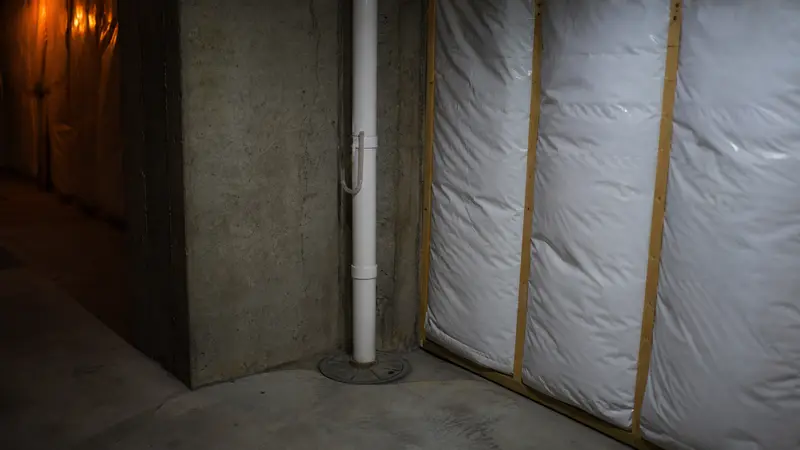
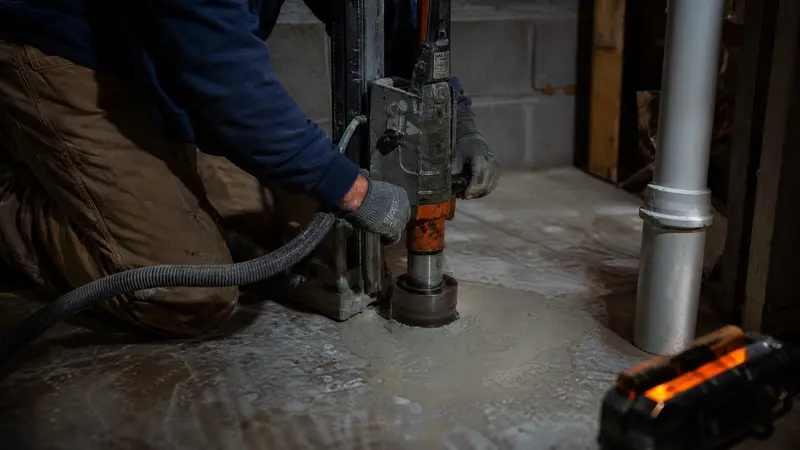
- A sealed suction point. We core a hole through the basement slab and dig out a small pit of soil and gravel below it. This gives the fan room to draw air from a wide area under the floor.
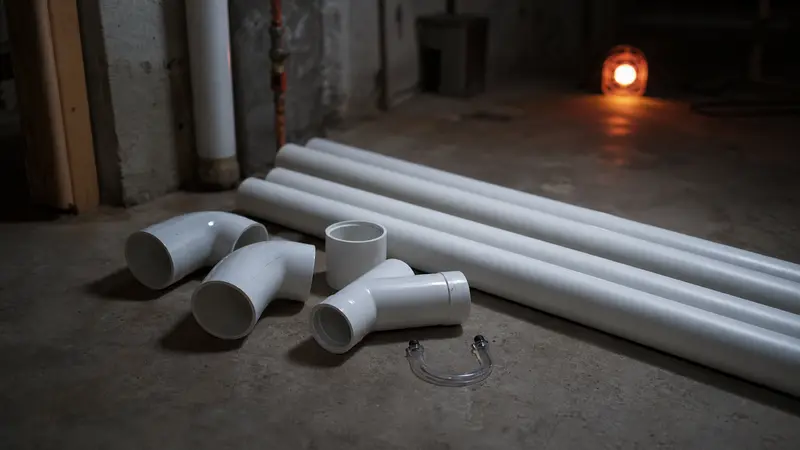
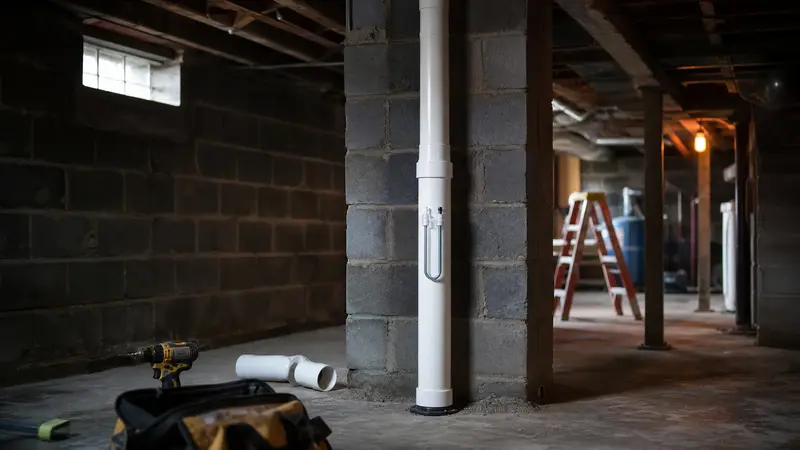
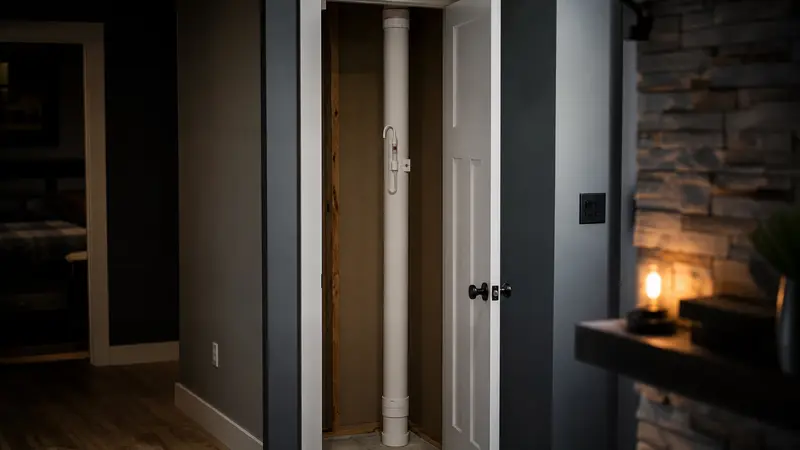
- 3 to 4 inch PVC vent pipe. The pipe runs from the suction point to a discharge point above the roofline. It is labeled "Radon Reduction System" on each floor where you can see it, as Pennsylvania standards require.
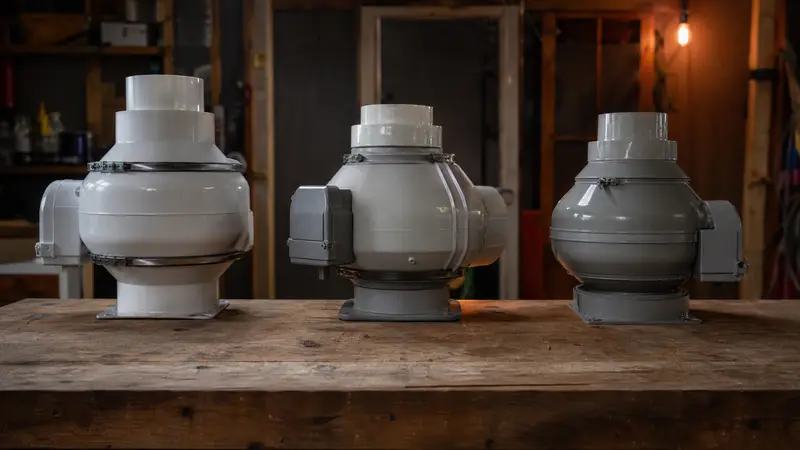
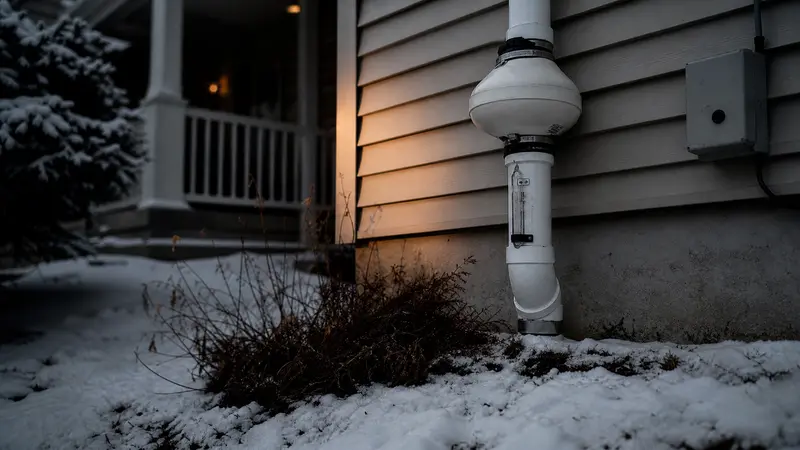
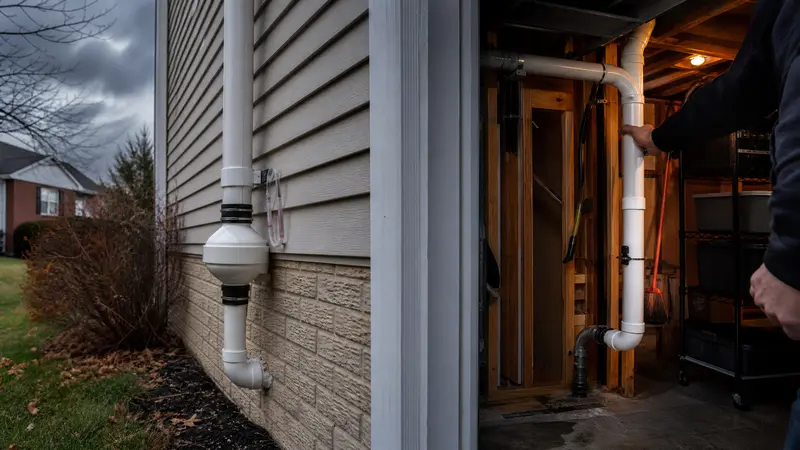
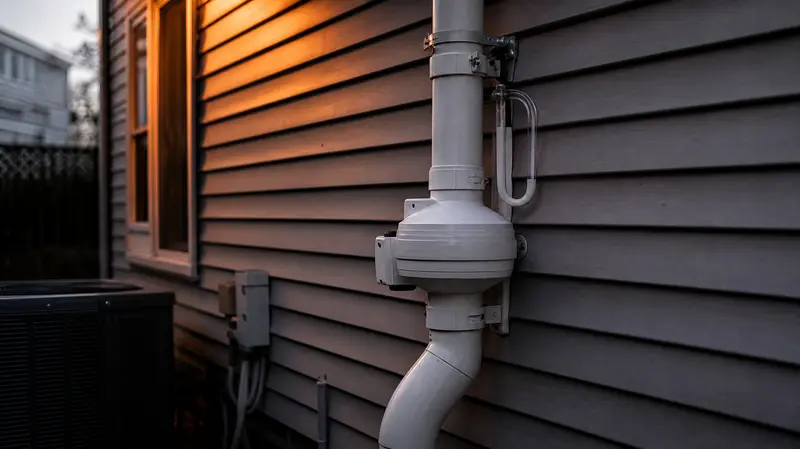
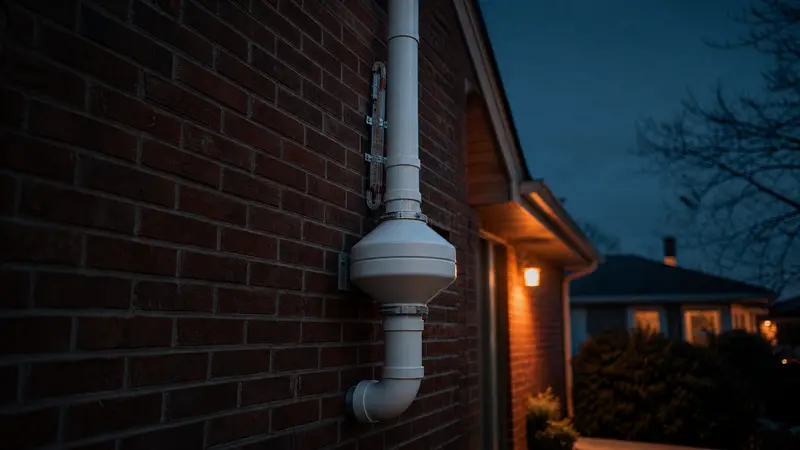
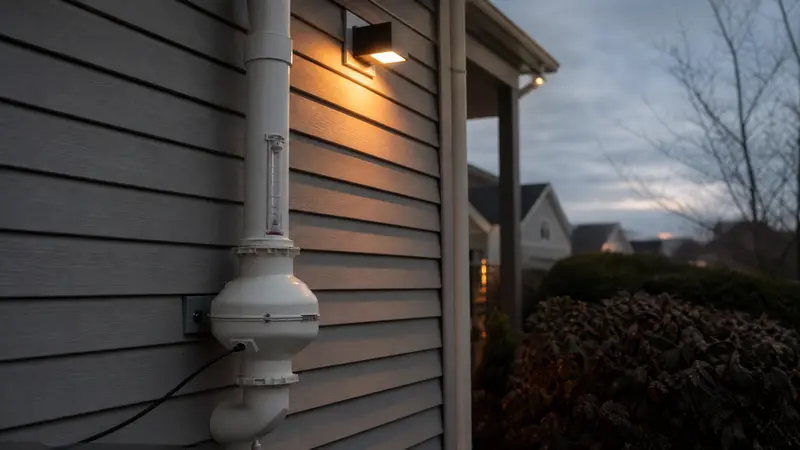
- An inline radon fan. The fan is mounted outside the living space, either on the exterior wall or in the attic or garage. Pennsylvania rules do not allow the fan in a basement or other living area.
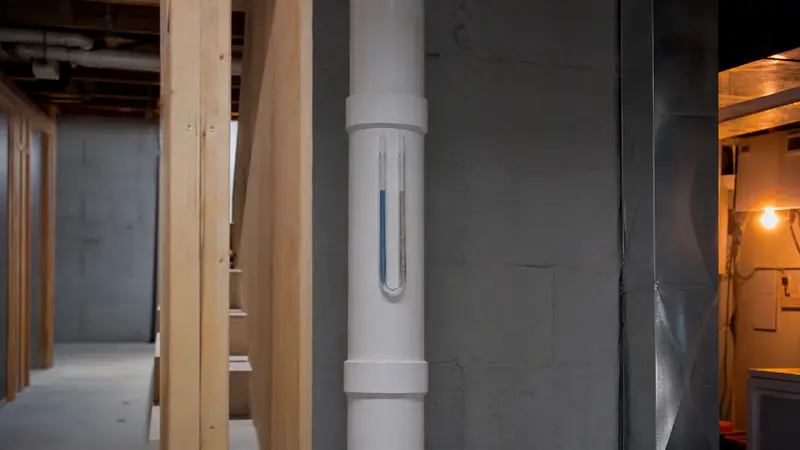
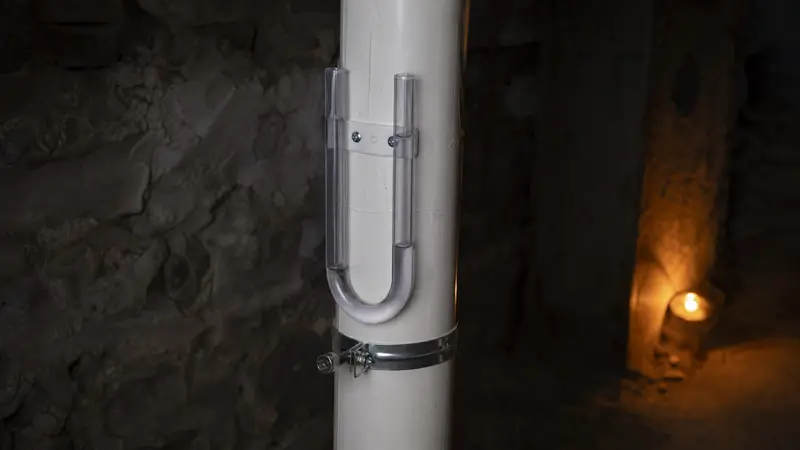
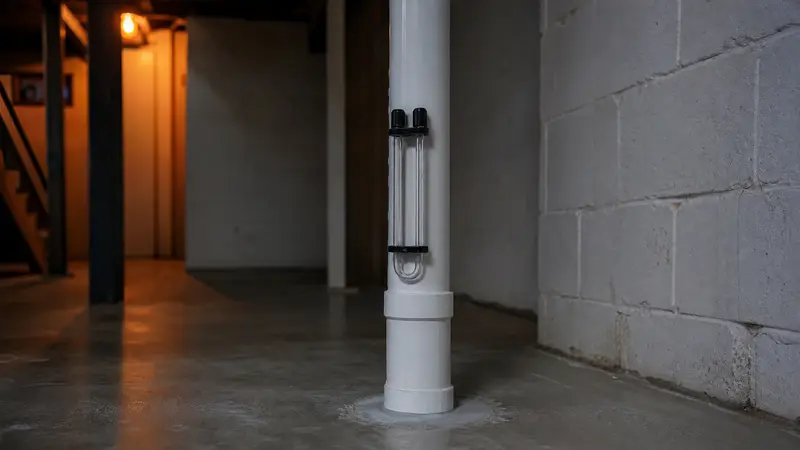
- A manometer (U-tube gauge). This small gauge on the pipe shows you at a glance that the fan is pulling suction.
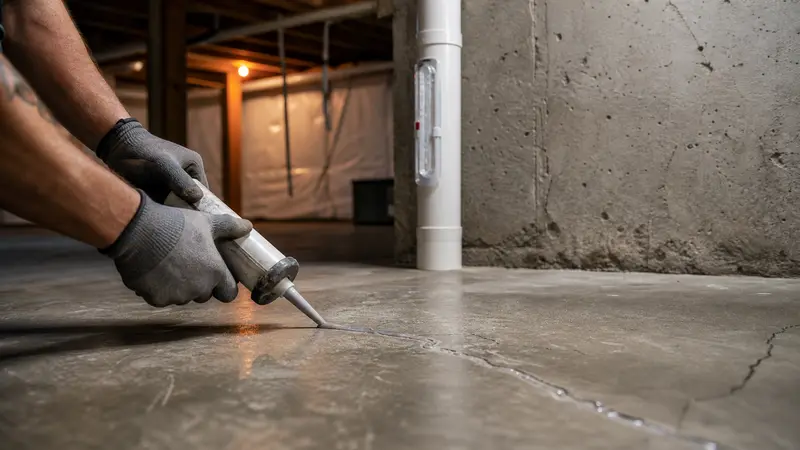
- Sealing. We seal the suction point and the major openings we find, such as slab cracks and the gap around a sump pit, so the fan pulls from the soil and not from your basement air.
- A post-install clearance test. We test after the system has run at least 24 hours to show the level is down.
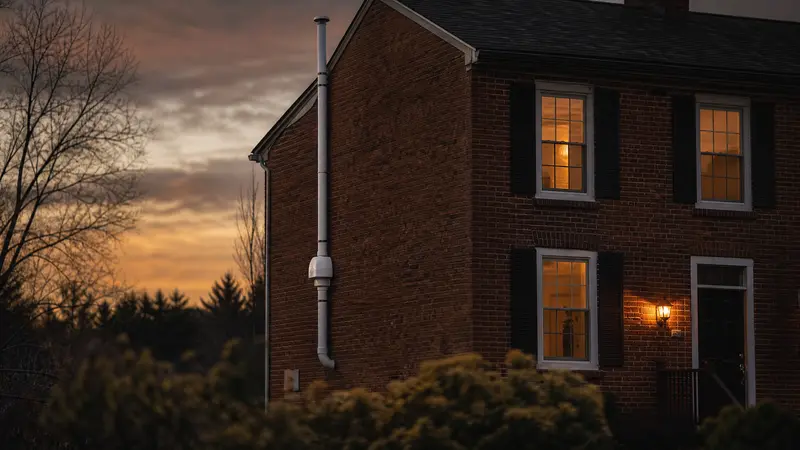
You also get a written summary of the system and how to check it. If you are curious what the finished system will look like from the street, see what a radon system looks like on the outside of a house.
Signs you need a radon system
You cannot see, smell or feel radon. It is a colorless, odorless radioactive gas that forms as uranium breaks down in soil and rock, and it causes no immediate symptoms. A test is the only way to know. You likely need a system when:
- Your test result is 4.0 pCi/L or higher. That is the EPA action level.
- Your result is between 2 and 4 pCi/L. The EPA says to consider fixing your home in this range, since there is no known safe level.
- You are buying or selling a home and the inspection radon test came back high. We schedule around closing deadlines.
- You finished your basement or started using it as a bedroom or office, and the level there is high.
- An old system stopped working or the home was sold with a passive pipe that was never activated.
The EPA estimates radon causes about 21,000 lung cancer deaths a year in the U.S. and is the leading cause of lung cancer among non-smokers. You can read more in the EPA's Citizen's Guide to Radon.
Our installation process
Here is what to expect from first call to clearance test.
- Call. Reach us any time at (717) 356-3035. We call back the same day and ask about your test results and your home.
- On-site look and written quote. We check the slab, the sump pit, the crawl space if you have one, and where the pipe can run. You get a free written quote before any work starts.
- Diagnostic check. On install day we drill a small test hole and measure how air moves under the slab. This tells us where to put the suction point and which fan to use.
- Install. We core the slab, set the suction pit, run the pipe, mount the fan, wire it, install the manometer and seal openings. Most installs are done in one day.
- Clearance test. After the fan has run at least 24 hours (and within 30 days, per EPA guidance), the clearance test confirms the result.
- Written guarantee. If the clearance test is not below 4.0 pCi/L, we keep working at no charge until it is.
System options compared
Most York homes get sub-slab depressurization. Some homes need a different approach or a mix of methods.
| Method | Best for | How it works |
|---|---|---|
| Sub-slab depressurization (SSD) | Poured slab basements, most York homes | Fan pulls soil gas from under the slab and vents it above the roof |
| Sump pit suction | Homes with a sump pit tied to drain tile | Sealed sump lid becomes the suction point |
| Sub-membrane depressurization | Dirt or gravel crawl spaces | Sealed plastic sheet over the soil, with suction under it |
| Block wall suction | Hollow block foundation walls | Suction drawn from inside the hollow cores |
| Combination system | Mixed foundations, additions, stone walls | Two or more suction points on one fan |
The EPA's Consumer's Guide to Radon Reduction lists sub-slab depressurization as reducing radon by 50 to 99 percent. If your home has a sump pit, our page on sump pit radon systems covers how we seal the lid and use the pit as a suction point.
Wondering whether all this really pays off? We cover the evidence in do radon mitigation systems actually work. For fan brands and models, see radon fans compared.
What affects the price of your system
Our price for a standard system is $935 to $1,320. Pennsylvania cost guides commonly cite roughly $800 to $2,500 for a standard system. A written on-site quote sets your real number. The main price factors are:
- Foundation type. A single poured slab is simplest. Stone walls, crawl spaces and additions add work.
- Pipe route. An exterior route up the siding is usually less labor than an interior route through closets and the attic.
- Number of suction points. Tight soil or a large footprint may need more than one.
- Finished spaces. Drywall, flooring and built-ins take more care to work around. Our guide to radon mitigation in a finished basement explains how we keep the work hidden.
- Sealing needs. A crawl space membrane or a lot of open cracks adds materials and time.
Fans also use a little electricity each month. Common models draw roughly 15 to 150 watts, depending on size. For a full breakdown, see our guide to radon mitigation cost in York.
Radon systems and York homes
York County sits in EPA Radon Zone 1, the highest potential zone on the EPA map of radon zones. That means high indoor levels are common here, and a test is the only way to know where your home stands.
York's housing stock adds its own twists. Many older homes in and around the city have fieldstone or rubble foundations, dirt floors in part of the basement, or additions built on a different foundation. These homes often need extra sealing or a second suction point. Our page on radon mitigation for older homes and stone foundations covers how we handle them.
Pennsylvania also has clear rules for this work. Anyone who tests or mitigates radon for someone else must be certified by PA DEP under the Radon Certification Act and 25 Pa. Code Chapter 240. Those rules set where the pipe can discharge, where the fan can go, and how the system must be labeled.
Season matters less than people think. We install year-round in York. Cold weather changes a few details, like pipe cement cure time and the route we pick, but it does not stop the work. Read more in can radon mitigation be installed in winter.
Why choose us
DEP-Certified Installers
Pennsylvania requires anyone who mitigates radon for a homeowner to hold PA DEP certification. Our installers are certified, and you can check any mitigator's status through PA DEP before you hire. Certification means the installer has passed the required training and exam and must follow the state's mitigation standards on every job. It also means accountability: DEP can review the work. Ask any company you are comparing for its certification number, and check it.
Written clearance guarantee
Every system comes with a written promise. If the post-install clearance test is not below 4.0 pCi/L, we keep working on the system at no charge until it is. That might mean adding a suction point, sealing more openings or changing the fan. You do not pay more for the extra work. The guarantee is in writing so you know exactly what you are getting before the install starts, and so you have it on file if you sell the home later.
Built to Pennsylvania standards
We build every system to the radon mitigation standards PA DEP requires of certified mitigators. That covers how high the pipe discharges above the roof, how far it sits from windows and doors, where the fan can be mounted, how the pipe is labeled, and the gauge that shows the system is working. These rules exist so your system is safe for your family and your neighbors. They also help when a buyer's inspector looks at the system during a future sale.
Frequently Asked Questions
How does a radon mitigation system work?
A radon system works by creating suction under your slab. A sealed suction point and an inline fan put the soil under your home at lower pressure than the house, so soil gas is pulled into the pipe and vented above the roofline instead of entering. Here is how a radon mitigation system works, step by step.
What is sub-slab depressurization?
Sub-slab depressurization is the EPA-recommended radon reduction method and the one used in most York basements. We pipe into the area under the slab and depressurize it with a fan that runs all the time, so radon is drawn out before it can seep inside. Read sub-slab depressurization explained for details.
How long does installation take?
Installation usually takes one day for a standard York home. The clearance test comes next, run after the system has been operating at least 24 hours and within 30 days. Homes with stone foundations or multiple suction points can take longer. See how long radon mitigation installation takes for a full timeline.
Will the pipe run inside or outside my house?
It can run either way. Exterior routing goes up the siding and usually costs less. Interior routing goes through a closet or garage into the attic, which hides the pipe but takes more labor. Fan noise and looks differ too. Compare interior vs. exterior radon pipe routing before you decide.
What does the manometer on my radon pipe tell me?
The manometer, a U-tube gauge on the pipe, shows whether the fan is creating suction. Uneven liquid levels are normal and mean the system is pulling. Level liquid on both sides means there is no suction, so the fan may be off or failed. Learn more in radon manometer readings explained.
Will a radon system be noisy?
A properly mounted fan outside the living space makes little noise. You may hear a low hum or air movement near the fan or the roof outlet. Most noise problems come from loose mounting, pipe contact with framing or airflow issues, and they can be fixed. Read radon fan noise: causes and fixes.
Does sealing cracks alone fix radon?
No. Sealing cracks helps a fan system work better, but sealing alone rarely brings radon below 4.0 pCi/L. The EPA does not recommend sealing by itself because it has not been shown to lower levels significantly or consistently. Find out does sealing cracks reduce radon and when it helps.
Can I install a radon system myself?
Yes, Pennsylvania lets you mitigate a home you own or live in without DEP certification. Anyone working on someone else's home must be certified. DIY systems often fail clearance testing because of poor suction point placement, weak sealing or the wrong fan. Read about DIY radon mitigation in Pennsylvania first.
Get your free written quote
A high radon test is a problem you can fix, usually in a single day. Call (717) 356-3035 any time and we will call back the same day. You can also request your free quote online. Selling or buying? Tell us your closing date and we will schedule around it.