On this page
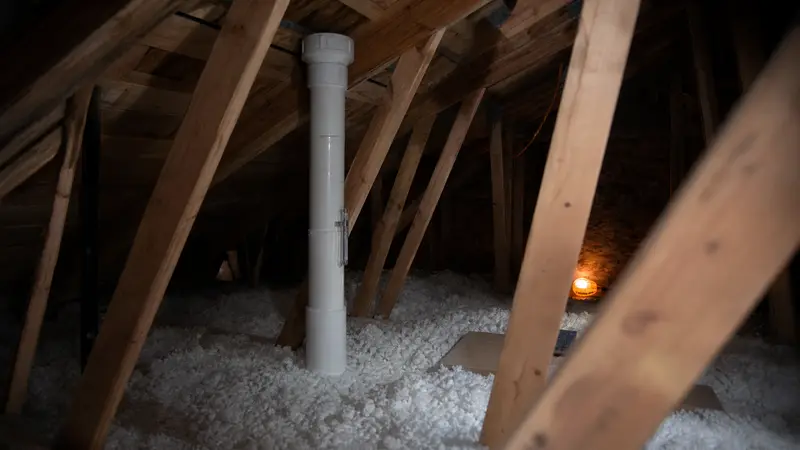
If your home has a builder-installed radon pipe with no fan, we can turn it into an active system that pulls radon out from under your slab. Passive radon system activation in York, PA usually means adding a fan in the attic or outside, a pressure gauge and an alarm, then running a clearance test. It is often a faster, smaller job than a full new install.
Many newer homes around York were built with a passive stack and a note to "add a fan if needed." If your radon test came back at 4.0 pCi/L or higher, now is that time. As part of our York radon mitigation work, we are DEP-Certified Installers. Call (717) 356-3035 any time for a same-day callback.
What activation includes
- Inspection of the passive stack. We confirm the pipe runs from below the slab to the roof, check joints and slope, and look for gaps.
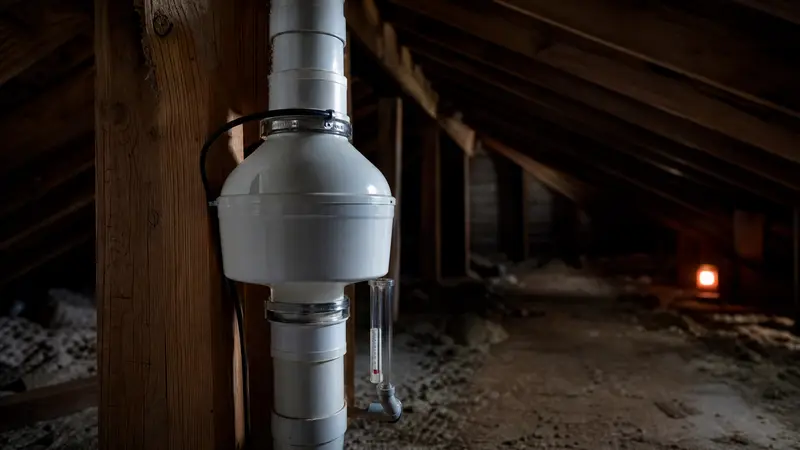
- A matched radon fan. We measure suction and pick a fan sized for your soil and pipe.
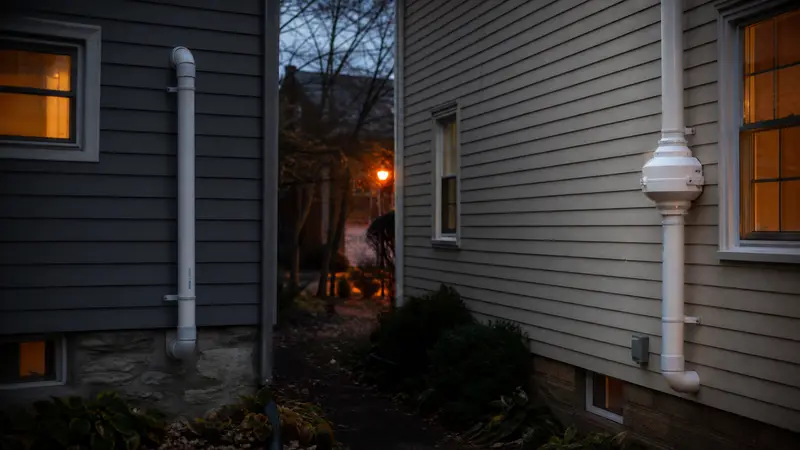
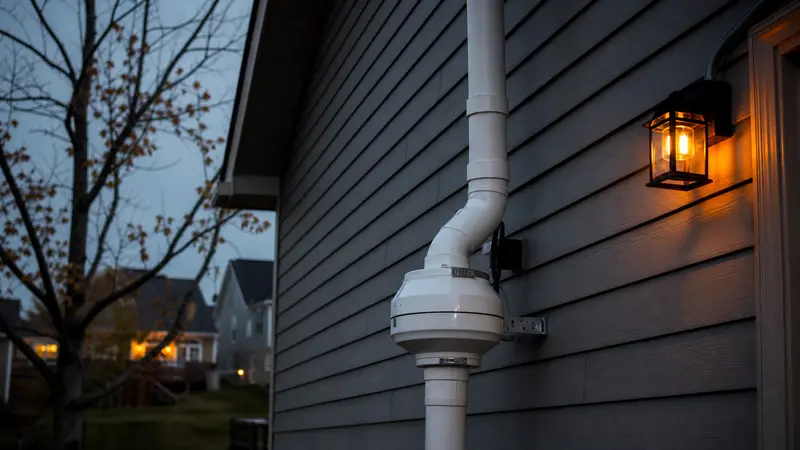
- Fan placement outside living space. The fan goes in the attic or on the outside of the house, never in the basement or a finished room.
- Electrical hookup. Many builders leave an outlet or junction box in the attic near the stack. If yours did not, we plan for one.
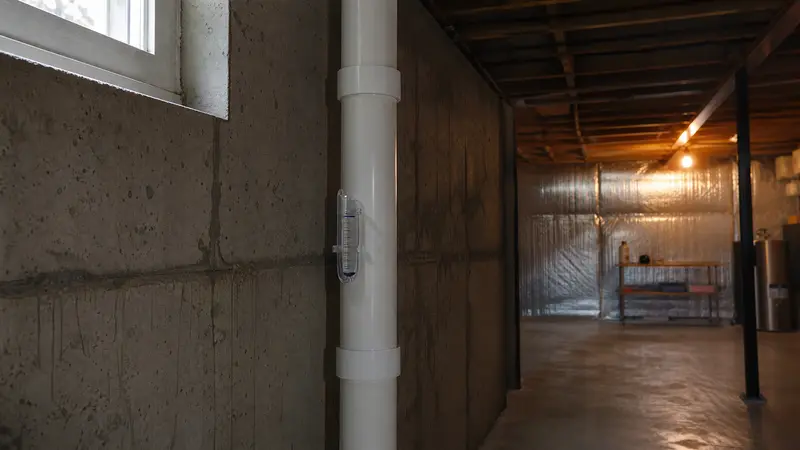
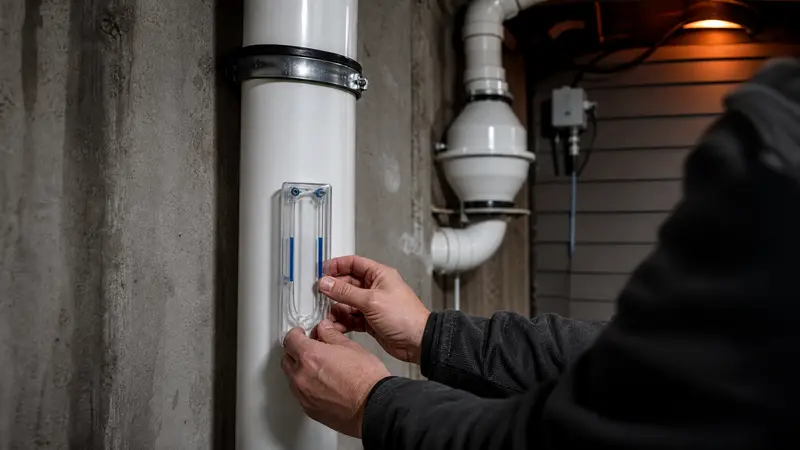
- A manometer and alarm so you can see that the system is working.
- Sealing. We seal accessible cracks, the sump lid and other openings that weaken suction.
- Labels on the pipe and breaker.
- A clearance test no sooner than 24 hours after the fan starts, backed by our written guarantee.
Signs your home needs activation
- A radon test at or above 4.0 pCi/L. EPA advises fixing homes at this level, and says to consider it between 2 and 4 pCi/L.
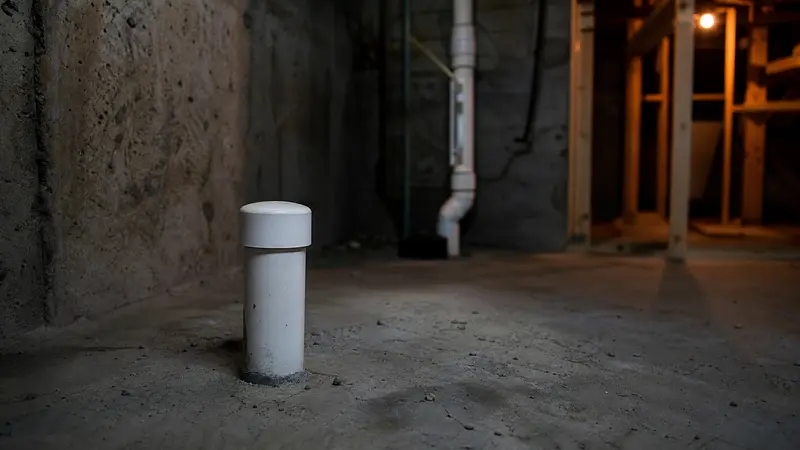
- A capped PVC pipe in your basement, utility room or attic, often labeled "radon."
- A home inspection report that flags a passive system.
- Plans to finish the basement or spend more time on the lowest level.
- A home sale where the buyer's test came back high.
Not sure whether you have a passive pipe? Look for a 3 or 4 inch PVC pipe that comes up through the slab, runs through the house and exits the roof without a fan. Our FAQ below explains what to look for.
Our activation process
- Call. Tell us about your test result and what you see. We call back the same day.
- Site visit. We inspect the stack, attic, electrical and slab, and measure suction.
- Free written quote. You see the price before any work starts.
- Install. We add the fan, gauge, alarm and labels and seal openings. Most activations finish in one visit.
- Verify. We mark the starting gauge reading and check the exhaust.
- Clearance test. We test no sooner than 24 hours after the fan starts and within 30 days, in line with EPA guidance.
Passive, activated and full install compared
| Option | What it is | When it fits |
|---|---|---|
| Passive stack only | Pipe from under the slab to the roof, no fan | Radon tests below 2.0 pCi/L and stays there |
| Activated passive system | Existing stack plus a fan, gauge and alarm | Stack is intact and reaches good soil under the slab |
| Full new system | New suction point and pipe route plus fan | No stack, a damaged stack, or activation alone doesn't lower levels enough |
EPA notes that passive sub-slab suction is "generally not as effective in reducing high radon levels as active subslab suction." Adding a fan creates steady suction no matter the weather.
If your home has no passive pipe, or the stack cannot be used, our radon mitigation system installation service covers a full system. If you are a builder planning new homes, see our page on radon-resistant new construction for builders.
What affects the price
Activation usually costs less than a full system because the pipe through the house is already in place. Pennsylvania cost guides commonly cite roughly $800 to $2,500 for a standard new system. Our activation range is $935 to $1,320, and a written on-site quote sets the real number.
Price factors include:
- Fan model needed for your soil.
- Electrical work if there is no outlet near the stack.
- Attic access or an exterior fan location.
- Pipe repairs if joints are loose or the stack does not reach the roof correctly.
- Sealing at the sump and slab.
For more, see radon mitigation cost in York.
Passive systems in York homes
York County is in EPA Radon Zone 1, the group of counties with the highest predicted indoor radon levels. See the EPA map of radon zones. PA DEP reports that the average Pennsylvania home tests at about 7 to 8 pCi/L.
Pennsylvania's statewide building code does not require radon-resistant new construction, according to PA DEP, though some builders include a passive stack anyway. A municipality can add the radon appendix by local ordinance, so check with your local code office. That means some newer York homes have a passive pipe and some do not. PA DEP also says that if high radon is found after move-in, "a fan can be readily installed."
Cold York winters help passive stacks a little, since warm air rising in the pipe creates some natural draft. But that draft is weak and changes with the weather. A fan gives steady suction all year.
Why choose us
DEP-Certified Installers
Pennsylvania requires anyone who mitigates radon for others to be certified by PA DEP under the Radon Certification Act and 25 Pa. Code Chapter 240. We hold that certification. When we activate a passive system, we check the builder's work against recognized installation standards, including fan location, exhaust placement and pipe slope. If something is not right, we tell you in writing before we start.
A written clearance guarantee
Activation is only worth it if your levels drop. After we add the fan, we run a clearance test. If the result is not below 4.0 pCi/L, we keep working at no charge until it is. That guarantee is in writing. If the passive stack alone cannot reach enough soil, we explain the options, such as adding a suction point, and include them in your written quote.
Fast scheduling, open 24 hours
Most activations finish in one visit because the main pipe is already in place. We are open 24 hours, so you can call when it suits you, and we call back the same day. If you are selling or buying a home in York, we schedule around your closing deadline and give you a free written quote before any work begins.
Frequently Asked Questions
What is a passive radon system?
A passive radon system is a builder-installed pipe that runs from the gravel under your slab, up through the house, and out the roof, with no fan. It relies on natural draft from warm air rising in the pipe. Learn more about what a passive radon system is.
Does a passive system work without a fan?
Sometimes, partially. A passive stack can lower radon a little, but natural draft is weak and changes with the weather. Many homes with passive systems still test at or above 4.0 pCi/L, which is why activation exists. Compare passive vs. active radon systems to see the difference.
How do I know if my house has a passive radon pipe?
Look for a 3 or 4 inch PVC pipe coming up through the basement floor, often in a utility room or closet and sometimes labeled "radon." Follow it to the attic, where it should run to the roof. An outlet near the stack is another clue. See how to tell if your house has a radon pipe.
How much does it cost to activate a passive system?
Activation usually costs much less than a full new system because the pipe is already installed. Our range is $935 to $1,320, and a free written quote sets your exact price. Fan model, electrical work and access all affect cost. Read more on the cost to activate a passive radon system.
Can I add the fan myself?
Pennsylvania lets owners mitigate their own home without DEP certification. The fan must go in the attic or outside, never in living space, and the exhaust must meet placement rules. Always run a clearance test afterward. Our guide to DIY radon mitigation in Pennsylvania covers the details.
Turn your passive pipe into a working system
If your radon test came back high and you have a passive stack, you may be one visit away from a working system. Call (717) 356-3035 any time, or send us a message. We call back the same day and give you a free written quote.