On this page
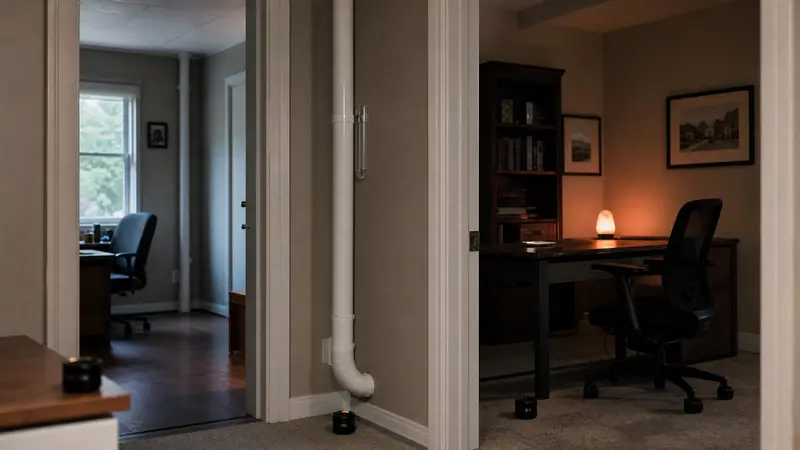
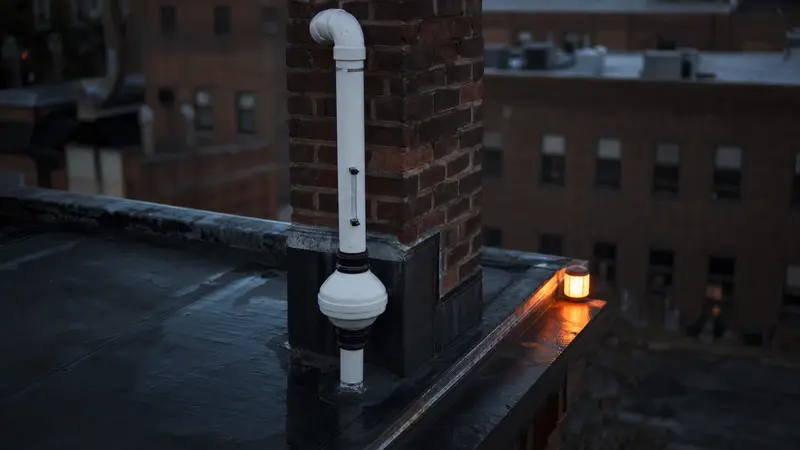
Commercial radon mitigation in York, PA covers apartments, offices, churches, schools, daycares and other buildings where people live or work. The process follows the same science as a home system, but at a larger scale: testing under ANSI/AARST protocols for multifamily and large buildings, diagnostics to map the slab, and systems with multiple suction points sized for the footprint.
We provide York County radon mitigation for property owners, managers and boards, with DEP-Certified Installers. Call (717) 356-3035 any time for a same-day callback and to schedule a site visit.
Buildings we work on
Radon enters any building that sits on the ground. We work with:
- Apartments and multifamily housing, from converted rowhouses to garden-style complexes
- Small offices and retail, including single-story slab buildings and mixed-use storefronts
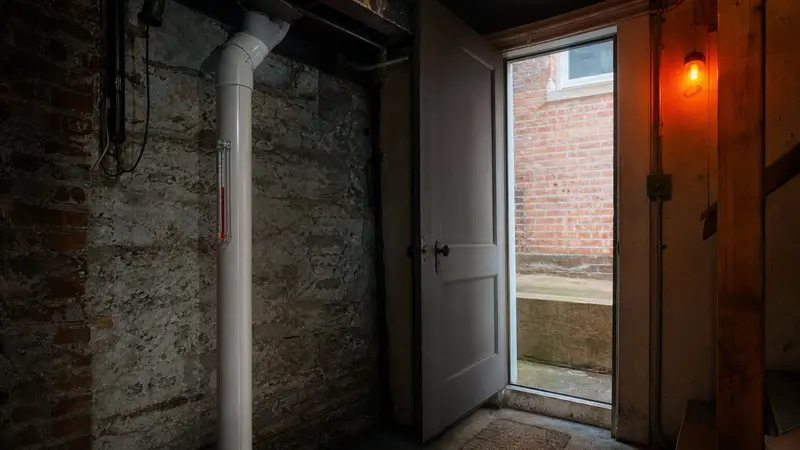
- Churches and community buildings, many with older stone foundations and large basements
- Schools and private academies
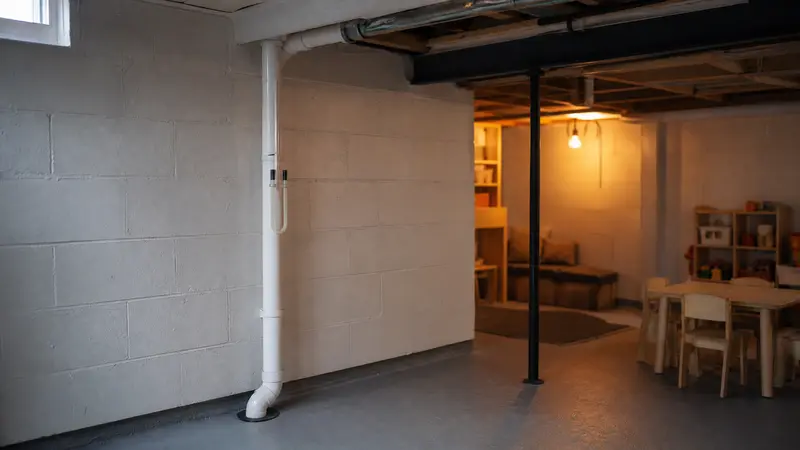
- Daycares and early learning centers, where children spend long hours on lower floors
- Warehouses and light industrial spaces with occupied offices
EPA's national survey of schools found that nearly one in five had at least one schoolroom with a short-term radon level above 4 pCi/L, according to EPA's radon in schools page. Large buildings are not exempt.
What's included
A commercial or multifamily project usually includes:
- Initial testing following ANSI/AARST MA-MFLB-2023, the measurement protocol for multifamily, school, commercial and mixed-use buildings
- Building review of the foundation, slab sections, footings, crawl spaces, elevator pits, utility trenches and HVAC
- Pressure field diagnostics using small test holes to see how suction spreads under each slab section
- System design following ANSI/AARST SGM-MFLB-2023, the soil gas mitigation standard for existing multifamily, school, commercial and mixed-use buildings
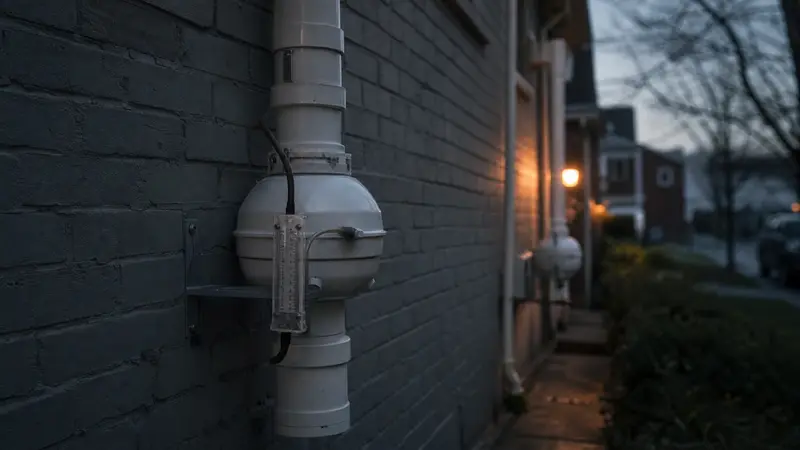
- Installation of one or more fans, suction points, piping and monitors, scheduled around tenants, classes or business hours
- Sealing of major entry points such as open sumps, floor drains, slab joints and utility penetrations
- Post-mitigation testing of the treated areas
- Documentation of test locations, results and system details for owners, boards, lenders or insurers
When you only need to know where the building stands, we start with professional radon testing in York.
Signs your building needs attention
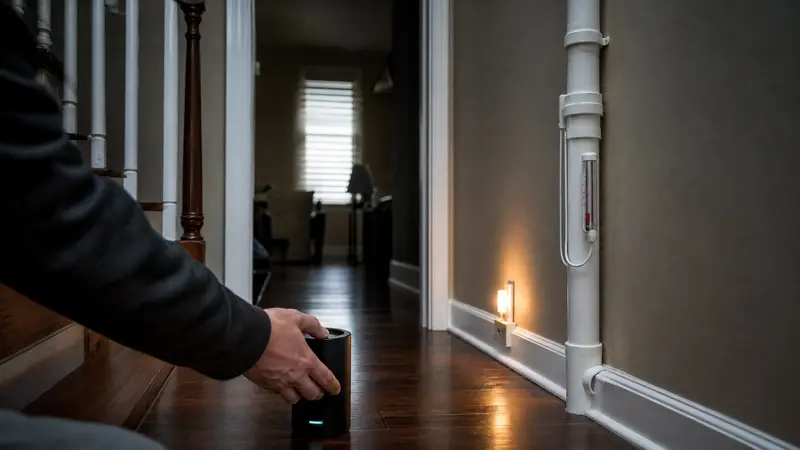
You should test or retest when:
- The building has never been tested, or the last test was years ago
- A lender, insurer, buyer or agency asks for radon results
- Ground-floor units or offices tested at or above 4.0 pCi/L, the EPA action level
- You have renovated, changed the HVAC system or converted a basement into occupied space
- Tenants or staff have asked about radon
- You own a school, daycare or other building where children spend the day
Our process
- Call. Reach us at (717) 356-3035 any time. We call back the same day.
- Scoping call. We ask about building size, foundation type, number of units or rooms, HVAC and any existing test results.
- Testing plan. We set test locations under the multifamily and large building protocol, including every ground-contact occupied space and a share of upper floors.
- Testing. Devices are placed under closed-building conditions with the HVAC running normally.
- Diagnostic visit. If results are elevated, we map the slab with pressure field tests and review the HVAC.
- Written proposal. You get a free written scope and price, with phasing options for large buildings.
- Installation. We schedule work around occupants, often unit by unit or zone by zone.
- Post-mitigation testing. We retest treated areas and give you a written report.
Methods compared
Larger buildings often combine methods. This table shows the main options.
| Method | How it works | Best for |
|---|---|---|
| Sub-slab depressurization | Fans pull soil gas from under the slab through one or more suction points | Most slab and basement buildings |
| Sump and drain tile suction | Sealed sumps and perimeter tile become suction points | Buildings with interior drainage systems |
| Crawl space depressurization | A sealed membrane over the soil with suction below it | Buildings with crawl spaces or dirt floors |
| HVAC pressurization or ventilation adjustments | Air handling changes reduce the pull on soil gas or dilute it | Some large buildings, often alongside suction |
| Sealing of major entry points | Closing large gaps so suction works better | Always a supporting step, not a fix on its own |
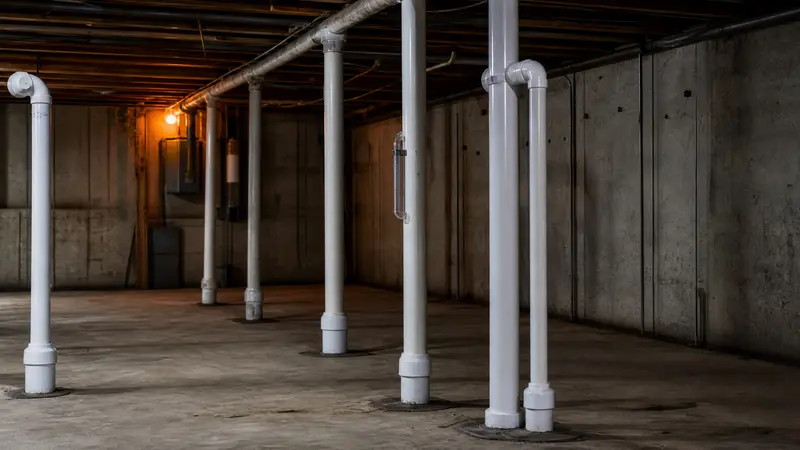
Large slabs are often split by footings, grade beams or thickened sections that block airflow. That is why diagnostics matter more on commercial jobs than on houses. A building that looks like one slab can need several separate suction zones.
What affects the price
Commercial and multifamily projects are scoped per building, so there is no flat rate. The main cost drivers are:
- Total footprint and number of separate slab sections
- How well air moves under the slab (gravel vs. dense soil)
- Number of units or rooms that need testing
- Pipe routing, roof access and building height
- Occupancy constraints, such as working after hours or around classes
- HVAC review or changes
- Reporting needs for lenders, boards or agencies
Our commercial pricing is $935 to $1,320, set by a written quote after a diagnostic visit. For residential system pricing in York, see our guide to radon mitigation cost in York.
York County context
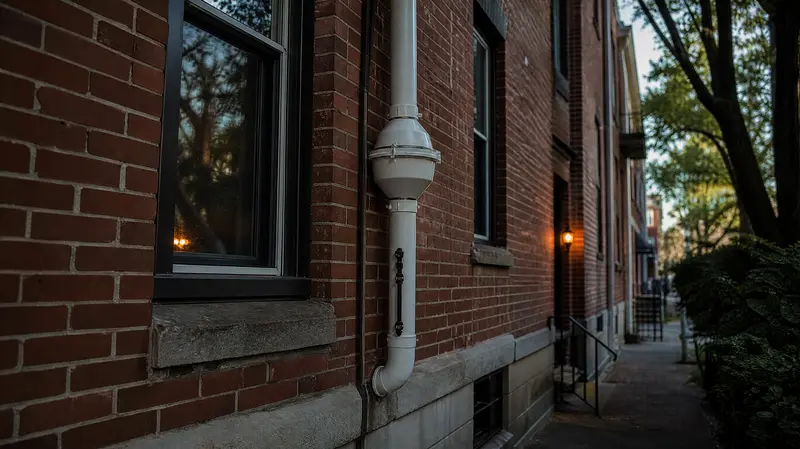
York County is in EPA Radon Zone 1, the highest radon potential category. Many commercial and multifamily buildings in and around York are older brick and stone structures, including converted mills, churches and rowhouse apartments. Their foundations often have several sections, dirt crawl spaces or stone walls, which call for careful diagnostics.
Winter matters for testing. Heated buildings draw more soil gas in through the stack effect, so cold months often show the highest results.
Pennsylvania rules
Pennsylvania requires anyone who tests or mitigates radon for others, in any building, to be certified by PA DEP under the Radon Certification Act and 25 Pa. Code Chapter 240. You can confirm certification through the PA DEP Radon Division.
Pennsylvania does not currently require radon testing in rental housing, schools or daycares. Bills to require testing in schools have been introduced, and House Bill 289 was reported out of a House committee as amended in March 2026 and then laid on the table, but it is not law. Pennsylvania's child care regulations do not require radon testing either. Some federal housing and financing programs set their own radon testing rules for multifamily properties. For example, HUD requires radon testing for most FHA-insured multifamily loans, and Fannie Mae and Freddie Mac have their own testing rules, which were scaled back in 2025. Ask your lender what applies to your property.
If you are planning a new building, our radon-resistant new construction for builders service covers rough-ins before the slab is poured.
Why choose us
DEP-Certified Installers
Pennsylvania requires radon testers and mitigators to be certified by PA DEP, and that applies to commercial work too. Our installers are certified. That gives owners, boards and lenders a credential they can check with the state. We put our certification number on every proposal and report, so your documentation stands up when someone asks who did the work.
Built to ANSI/AARST standards
We test under ANSI/AARST MA-MFLB-2023 and design systems under ANSI/AARST SGM-MFLB-2023, the consensus standards for multifamily, school, commercial and mixed-use buildings. EPA lists both on its standards of practice page. Following them means correct test locations, documented diagnostics and systems that a lender, inspector or future mitigator can understand. It also gives boards and owners a clear, published benchmark to hold any contractor to.
A written clearance guarantee
Every system we install comes with a written guarantee: if post-mitigation testing in the treated areas is not below 4.0 pCi/L, we keep working at no charge until it is. On large buildings, that can mean adding a suction point or adjusting a fan in one zone. You get a clear standard, in writing, before the work starts, and a report you can hand to tenants or a board.
Frequently Asked Questions
Do Pennsylvania landlords have to test for radon?
No statewide law currently requires Pennsylvania landlords to test rental units for radon. Sellers must disclose known radon information when selling, and some lenders or housing programs require testing. For multifamily owners, testing ground-contact units is best practice. Read our guide to radon rules for Pennsylvania landlords.
Are PA schools and daycares required to test?
Not currently. Pennsylvania has no statewide law requiring radon testing in schools or daycares. Bills such as House Bill 289 have been proposed, but none is law yet, so check status before relying on any requirement. Learn more about radon testing in Pennsylvania schools and daycares.
How is commercial testing different from home testing?
Multifamily and large buildings follow the ANSI/AARST MA-MFLB-2023 protocol. It calls for more test locations, including every occupied ground-contact room or unit, and requires the HVAC to run normally during the test. Here is how commercial and multifamily radon testing works.
Does every apartment unit need testing?
Under the ANSI/AARST protocol, every ground-contact unit should be tested. On each upper floor, at least one unit and at least 10 percent of units are tested. Results from lower floors guide how much more testing is needed. Read about radon in apartments and multifamily buildings.
How much does commercial radon mitigation cost?
It depends on the building. Cost is driven by footprint, the number of slab sections, how air moves under the slab, pipe routing and occupancy. A diagnostic visit maps the slab so the written quote is accurate. Learn more about commercial radon mitigation cost.
Schedule a building assessment
Whether you manage one rental building or a campus, start with a clear plan. Call (717) 356-3035 any time for a same-day callback, or request a site visit and free written quote.