On this page
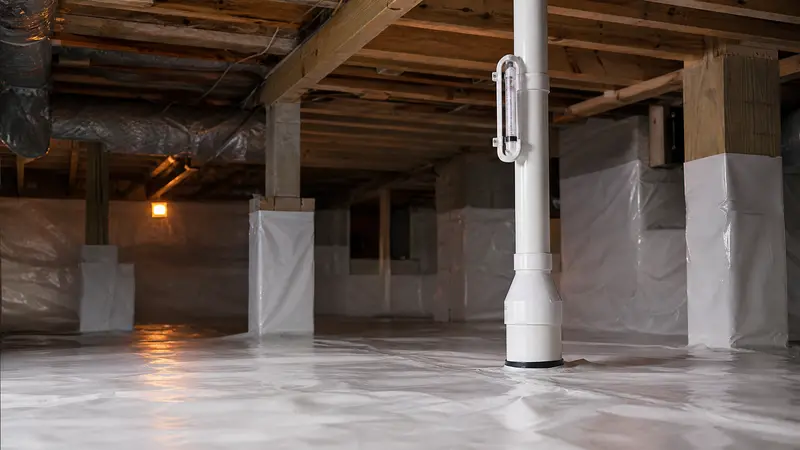
Crawl space radon mitigation in York, PA uses a sealed plastic membrane over the crawl space soil with a suction pipe and fan under it. This method, called sub-membrane depressurization, pulls radon from the soil before it reaches your home. We can also take it further with full encapsulation, sealed vents and a dehumidifier.
We are a radon mitigation company in York with DEP-Certified Installers. Call (717) 356-3035 any time for a same-day callback and a free written quote.
What's included in a crawl space radon system
A crawl space system is built around the soil, since there is no slab to pull from. Our standard crawl space job includes:
- Site assessment. We check the crawl space height, access, soil, piers, walls, vents, moisture and any ductwork or plumbing in the way.
- Ground preparation. Debris, sharp rocks and old loose plastic are removed so the new membrane lies flat and stays intact.
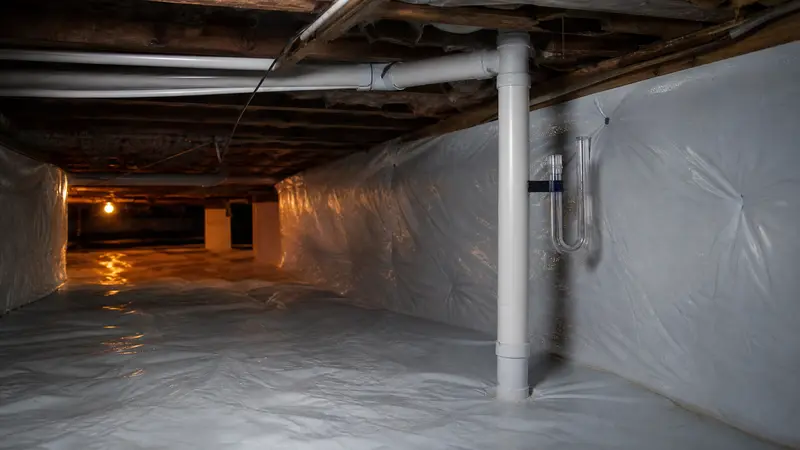
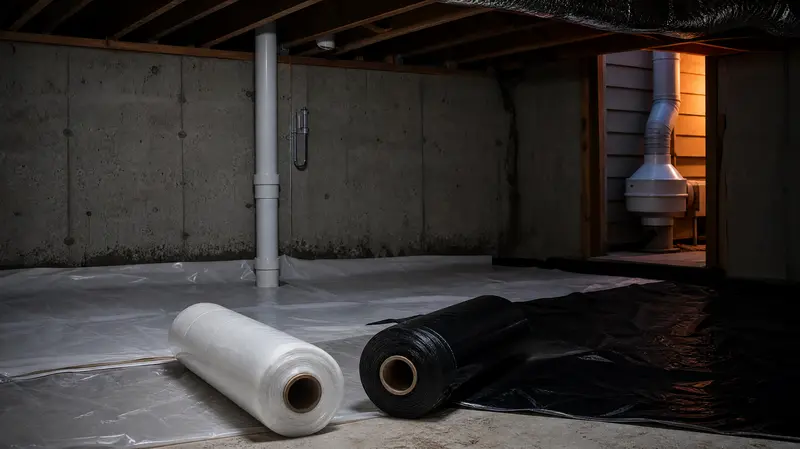
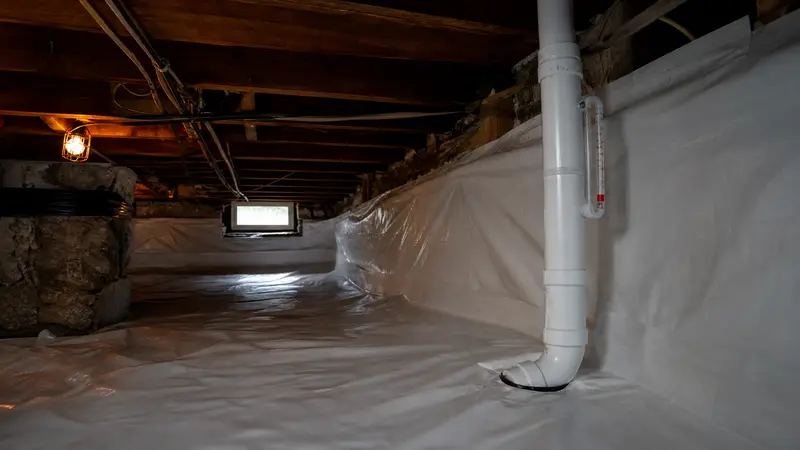
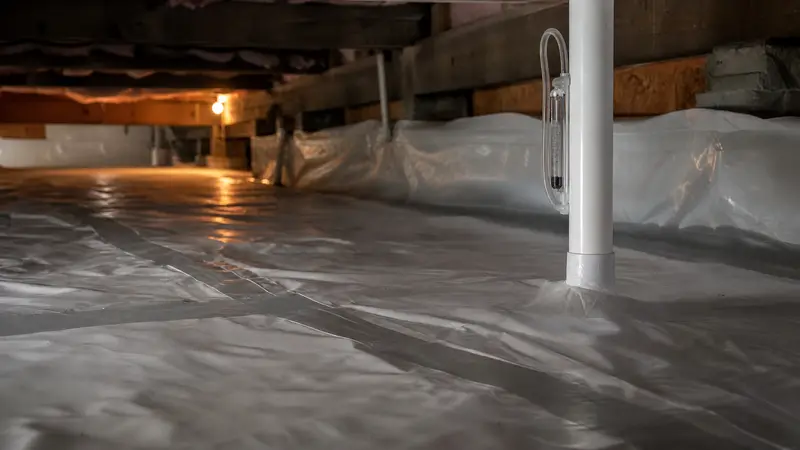
- Radon membrane. A heavy, reinforced plastic liner covers all exposed soil. Seams are overlapped and sealed.
- Sealed edges. The membrane is sealed to the foundation walls and around piers and posts so the fan pulls from the soil, not the crawl space air.
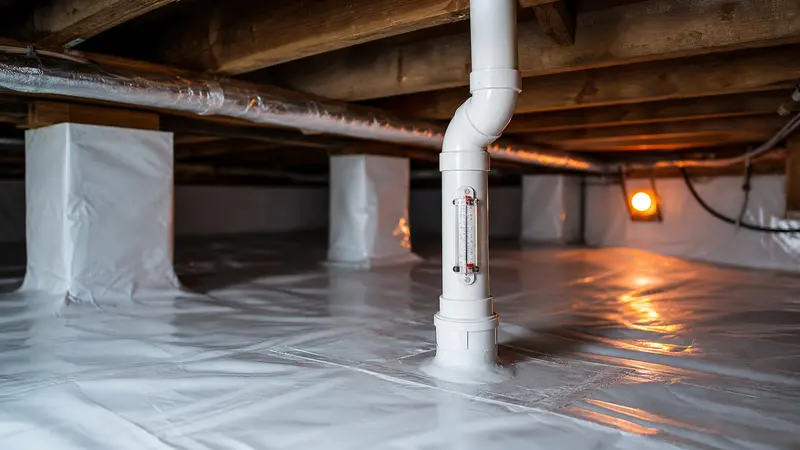
- Suction point. A pipe is placed under the membrane, usually with perforated pipe or a collection fitting, and connected to the fan.
- Fan and discharge. The fan is mounted outside the living space, and the pipe discharges above the roof line, away from windows and doors.
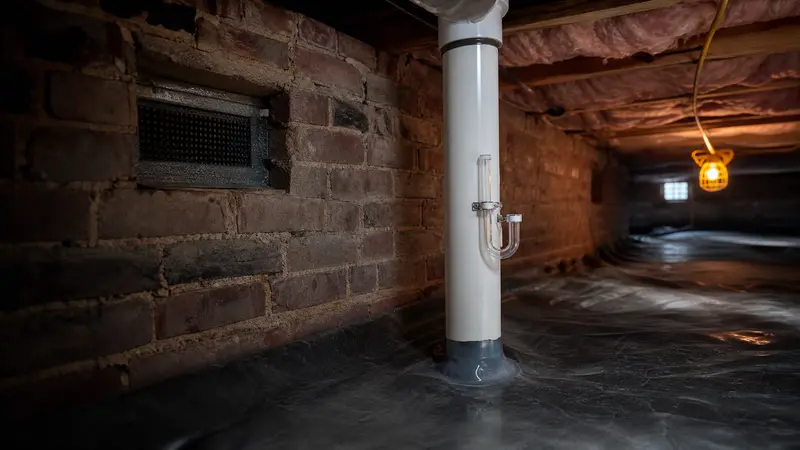
- Gauge and labels. A manometer (U-tube gauge) shows the system is running. Labels follow Pennsylvania rules.
- Clearance test and guarantee. We test no sooner than 24 hours after the fan starts and within 30 days. If the result is not below 4.0 pCi/L, we keep working at no charge.
The fan, pipe and gauge are the same parts used in a standard radon mitigation system installation. The difference is the membrane that stands in for the concrete slab.
Optional encapsulation upgrades
Many homeowners want a crawl space that is clean, dry and easy to enter, not just lower in radon. We can add:
- A heavier liner that runs up the walls and is fastened and sealed at the top.
- Sealed vents to stop humid summer air from entering.
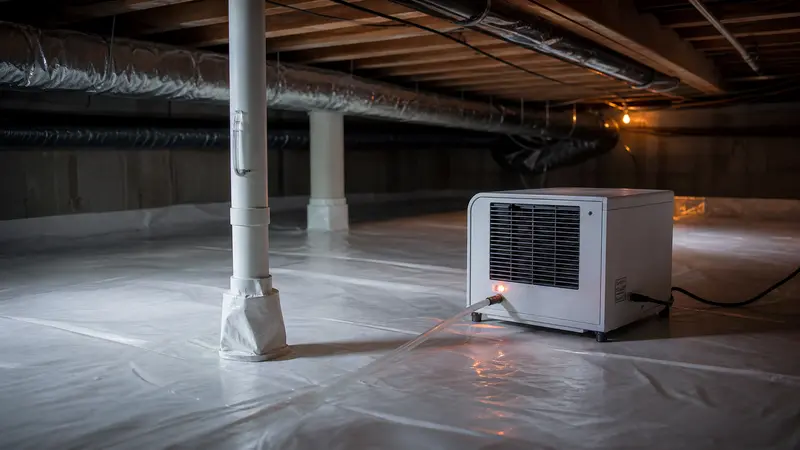
- A crawl space dehumidifier to control moisture once the space is sealed. Our guide to crawl space dehumidifiers and radon explains how they work together.
- Insulation and air sealing at the rim joist, where needed.
Signs you need crawl space radon mitigation
- Your test came back at or above 4.0 pCi/L. The EPA recommends fixing your home at that level and says to consider fixing between 2 and 4 pCi/L.
- Your crawl space has bare dirt or loose plastic. Bare soil gives radon a direct path up into the home.
- Your house sits partly on a crawl space. Additions, sunrooms and older sections are often built over a crawl space while the main house has a basement.
- The crawl space is damp or musty. Moisture and radon often enter through the same open soil.
- You are selling or buying. A crawl space system can be installed on a closing deadline.
The EPA's Citizen's Guide to Radon covers how to test and what the numbers mean.
Our process
- Call. Reach us at (717) 356-3035 any time. We call back the same day.
- Inspect. We look at the crawl space, any connected basement and the outside of the home, and measure the area to be covered.
- Quote. You get a free written quote that lists the membrane grade, square footage, suction points, pipe route and any encapsulation add-ons.
- Install. Most installs are completed in one day. Large or hard-to-access crawl spaces, or full encapsulation, can take longer.
- Clearance test. We test after the system has run at least 24 hours and within 30 days.
- Walk-through. We show you the gauge, explain what normal looks like and hand you the written guarantee.
Crawl space options compared
| Option | What it is | Reduces radon? | Controls moisture? |
|---|---|---|---|
| Loose vapor barrier | Thin plastic laid on the dirt, not sealed | Very little | Some |
| Encapsulation only | Heavy liner sealed to walls, vents closed | Some, but not reliably | Yes |
| Sub-membrane depressurization (SMD) | Sealed liner with suction and a fan | Yes, the main radon method | Some |
| SMD + encapsulation | Sealed liner with suction, sealed vents, dehumidifier | Yes | Yes |
| Crawl space ventilation | Opening vents or adding a fan to move air | Some, varies with weather | Can make it worse in summer |
For most York homes with a radon problem in the crawl space, SMD is the core. Encapsulation is an upgrade for comfort and moisture.
What affects the price
Crawl space jobs are priced mostly by size and access:
- Square footage. Membrane material and labor scale with the area.
- Liner grade. A basic radon membrane costs less than a thick, wall-to-wall encapsulation liner.
- Access and height. Low, tight crawl spaces take longer to work in.
- Ground conditions. Rocks, debris, old plastic and standing water add prep time.
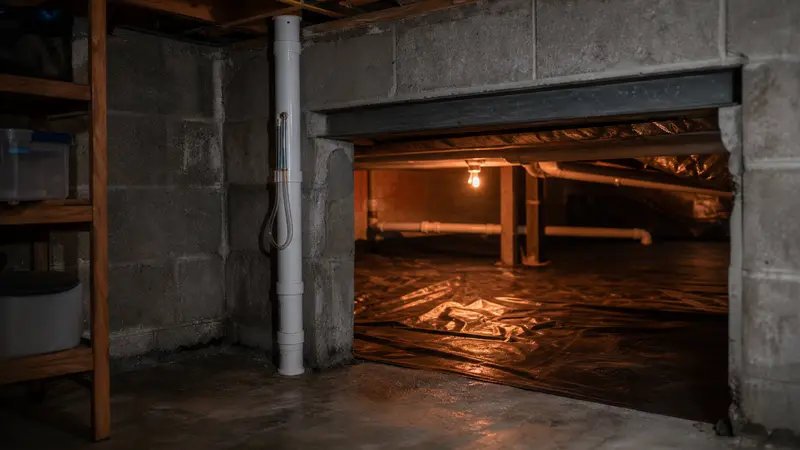
- Mixed foundations. A home with a basement and a crawl space may need more than one suction point.
- Add-ons. Sealed vents, a dehumidifier and insulation are priced separately.
Our crawl space pricing is $935 to $1,320. Pennsylvania cost guides commonly cite roughly $800 to $2,500 for a standard system, and crawl space work can run higher because of membrane material and labor. A written on-site quote sets the real number. See our page on radon mitigation cost in York for the general factors.
Crawl spaces in York homes
York's housing mix includes plenty of crawl spaces. They are common under rear additions and sunrooms on older city homes, under some mid-century homes in the suburbs around the city, and next to basements in houses that were expanded over the years. Older homes with stone or block foundations often combine a crawl space with a leaky basement. Our page on radon mitigation for older homes and stone foundations covers that side of the job.
Zone 1. The EPA places York County in Radon Zone 1, its highest potential category. You can view it on the EPA radon zone map.
Pennsylvania rules. Pennsylvania requires anyone who tests or mitigates radon for others to be certified by PA DEP, under the Radon Certification Act and 25 Pa. Code Chapter 240. Our certification number is on every written quote.
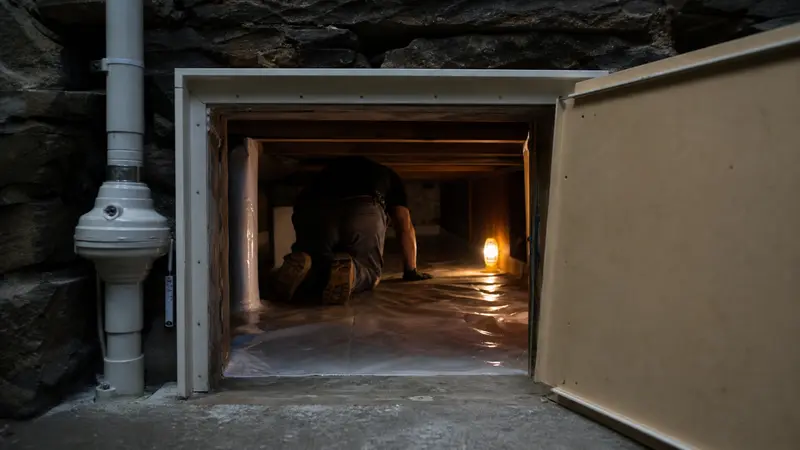
Seasons. York summers are humid, which is why vented crawl spaces often get damp and musty. Winters bring freezing temperatures that put pipes at risk in an open crawl space and drive the stack effect, which pulls more soil gas into the house. A sealed membrane with suction works in both seasons.
Why choose us
PA DEP certified installers
Pennsylvania requires radon mitigators to be certified by PA DEP, and every system we install is done under that certification. Certification means our installers have met the state's requirements and follow state rules for design, labeling and reporting. In a crawl space, that training shows in the details: how the membrane is sealed at the walls and piers, where the suction point goes and how the fan is placed. You can check our certification with PA DEP before you hire us.
A written clearance guarantee
Every crawl space system comes with a post-install clearance test and a written guarantee. If the result is not below 4.0 pCi/L, we keep working at no charge until it is. That matters in crawl spaces, where a loose seam or an unsealed pier can quietly undercut the system. The guarantee means we have every reason to seal it right the first time, and you have a clear result in writing for your records or a home sale.
Built to national and state standards
We design crawl space systems to the ANSI/AARST soil gas mitigation standards for existing homes and to Pennsylvania's requirements. That covers membrane sealing at seams, walls and penetrations, fan location outside the living space, discharge above the roof line and away from openings, a visible gauge and proper labels. Following these standards keeps the system safe and makes it easy for a future buyer's inspector to verify.
Frequently Asked Questions
What is sub-membrane depressurization?
Sub-membrane depressurization is the standard radon fix for crawl spaces. A heavy plastic membrane is sealed over the soil, and a suction pipe under it connects to a fan. It works the same way as sub-slab depressurization, with plastic in place of concrete. Read sub-membrane depressurization explained.
Does crawl space encapsulation reduce radon?
Encapsulation alone reduces radon only a little and not reliably, because gas still builds up under the liner and leaks through seams. Add a suction pipe and fan under the liner and it becomes a true radon system. Learn more: does crawl space encapsulation reduce radon.
What's the difference between a vapor barrier and a radon barrier?
A radon barrier is a thicker membrane, sealed at every seam, wall and pier, and tied into a suction system. A vapor barrier is often thin plastic laid loose on the dirt to slow moisture. A loose vapor barrier is not a radon barrier. Compare them: vapor barrier vs. radon barrier.
How much does crawl space radon mitigation cost?
Our crawl space systems are priced at $935 to $1,320, set by a written on-site quote. The main cost drivers are square footage, liner grade, crawl space height and access, ground prep and any encapsulation add-ons. See the full breakdown of crawl space radon mitigation cost.
My house has a basement and a crawl space. Can one system cover both?
Often, yes. A suction point under the basement slab and one under the crawl space membrane can usually share one fan. A second fan is needed only when the areas do not connect well or the load is too large. See radon mitigation for homes with a basement and a crawl space.
Should I open or close my crawl space vents for radon?
Open vents can dilute radon some, but they let in humid summer air and freezing winter air, which can cause moisture problems and frozen pipes. Results also change with the weather. Active depressurization under a sealed membrane is more reliable. Learn more: do crawl space vents reduce radon.
Get a free written quote for your crawl space
Ready to fix radon in your crawl space? Call (717) 356-3035 any time and we will call back the same day. We serve York and the surrounding York County area, and every system includes a clearance test and a written guarantee. Prefer to write? Send us your details and we will schedule a visit.