On this page
- What's included in an older-home radon system
- Signs your home needs an older-home approach
- Our process for older homes
- Methods compared for older foundations
- What affects the price of an older-home system
- Older homes in York: what we see
- Why choose us
- Frequently Asked Questions
- Get a free written quote for your older home
Yes, a fieldstone, block wall, rowhome or dirt-floor basement can be brought below the EPA action level. Stone foundation radon mitigation in York, PA takes more planning than a standard slab job, because old walls and floors leak soil gas in more places. We design each system around the foundation you actually have, then prove the result with a clearance test.
We are a team of DEP-Certified Installers who offer DEP-certified radon mitigation in York, and older homes are the work we focus on. Call (717) 356-3035 any time for a same-day callback and a free written quote.
What's included in an older-home radon system
Every older-home project starts with a site visit, not a phone estimate. Here is what our work includes:
- Foundation assessment. We look at wall type, floor type, cracks, sump pits, floor drains, crawl space areas, old coal bins and any patched or dirt sections.
- Diagnostic testing where needed. On many older homes we drill a small test hole and check how air moves under the slab before we pick suction point locations.
- Suction points and sealing. We place one or more suction points and seal the major entry routes the system needs sealed to work well.
- Wall and membrane work. Where walls or soil floors leak too much gas, we add sealing, a wall membrane or a floor membrane tied into the system.
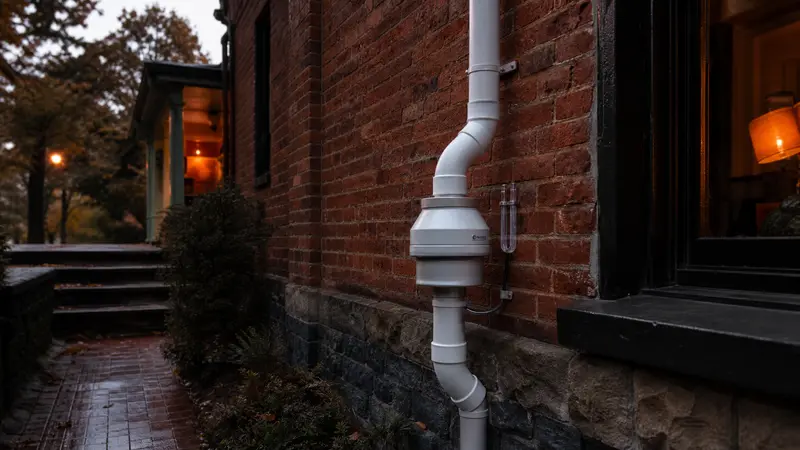
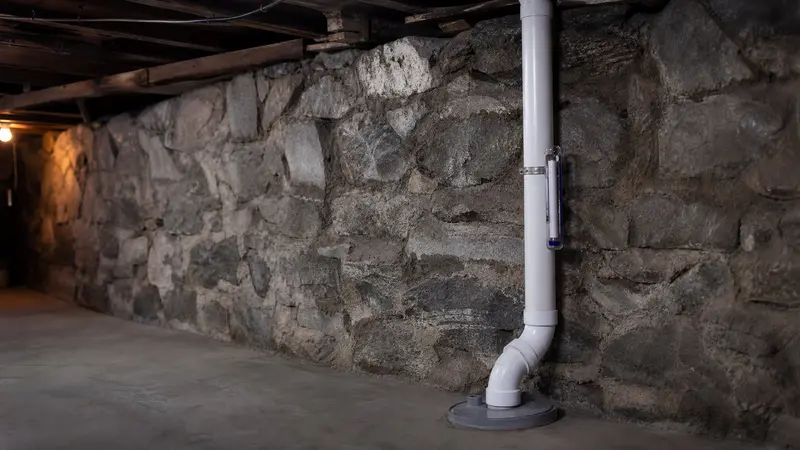
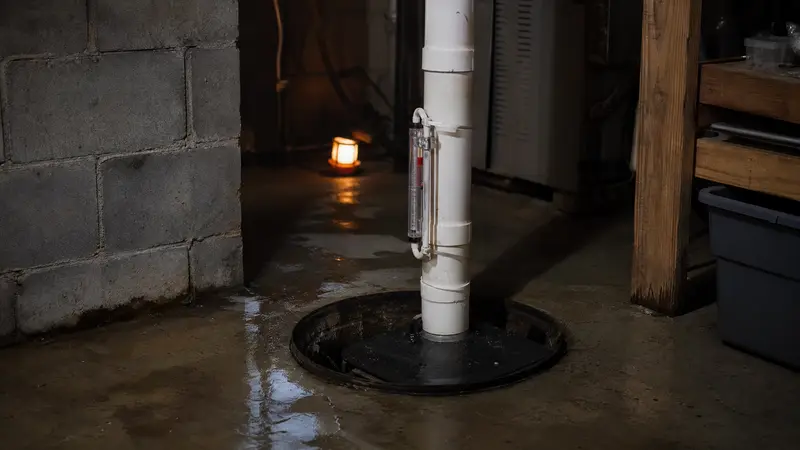
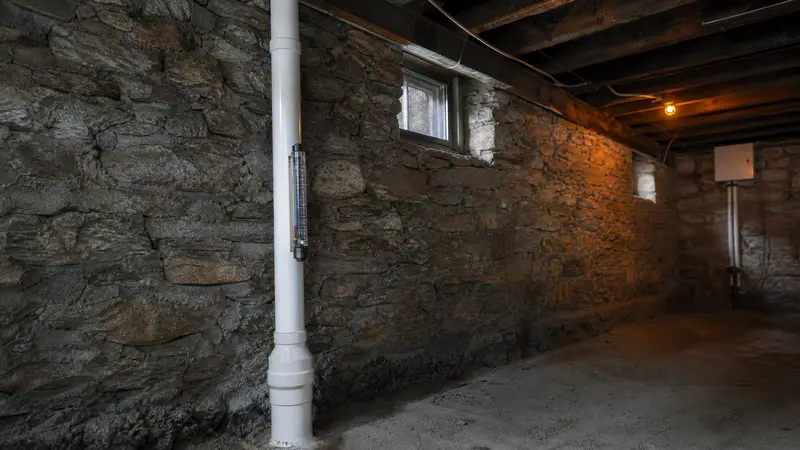
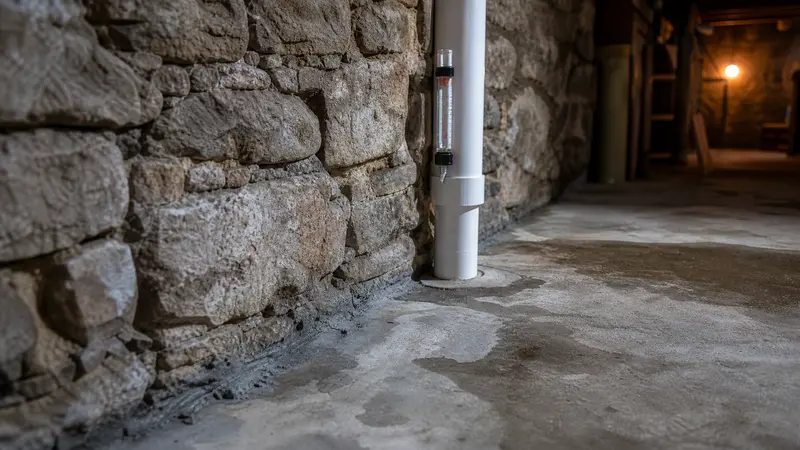
- Fan, piping and labeling. A fan rated for the job, piping routed to discharge above the roof line, a manometer (U-tube gauge) so you can see the system is running, and the labels Pennsylvania requires.
- Clearance test. A post-install radon test, run no sooner than 24 hours after the fan starts and within 30 days, as EPA guidance recommends.
- Written clearance guarantee. If the clearance test is not below 4.0 pCi/L, we keep working at no charge.
The core equipment is the same as any active soil depressurization system. Our page on radon mitigation system installation explains the standard setup. This page covers what changes when the house is old.
Signs your home needs an older-home approach
You do not need a special system just because your house has some age. You need one when the foundation has features that let soil gas move freely. Watch for these:
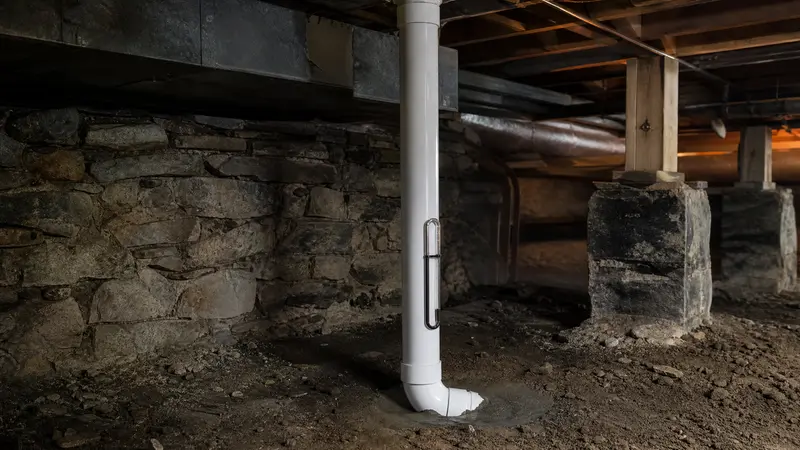
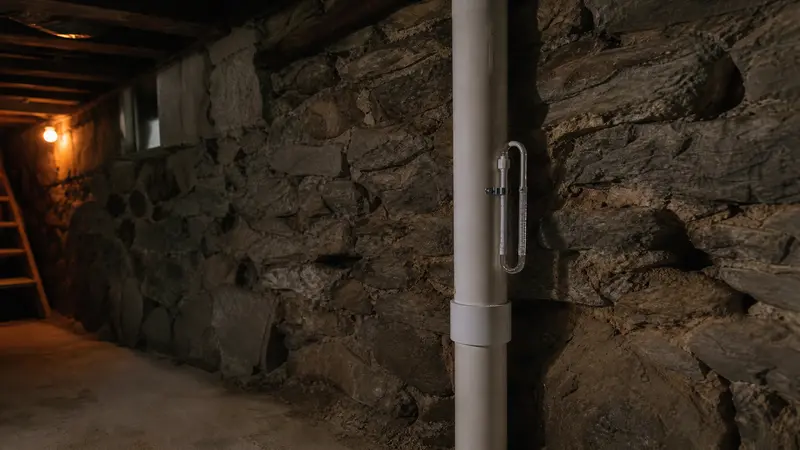
- Fieldstone or rubble walls. Stones set in lime mortar, often with gaps, crumbling joints or past patch jobs.
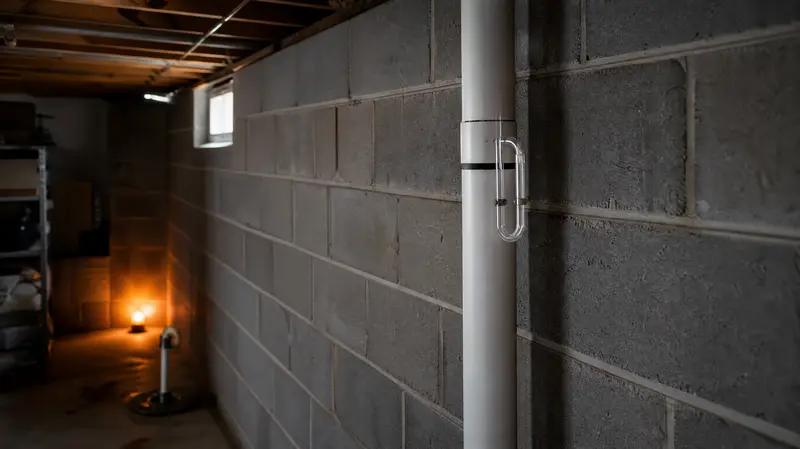
- Hollow concrete block walls. Common in mid-century York County basements. The open cores act like chimneys for soil gas.
- A dirt floor, or a partial dirt floor. Old coal rooms, root cellars and areas under porches or additions often never got concrete.
- A thin, cracked or patched slab. Older slabs were often poured thin, sometimes right on soil with no gravel layer under them.
- A crawl space next to the basement. Additions and sunrooms often sit on a crawl space. Our page on crawl space radon mitigation and encapsulation covers that part of the job.
- Water problems. Damp walls, a sump pit or seasonal water on the floor change how we design the system.
- A shared foundation. Rowhomes and twins share walls and sometimes soil under the floor with the house next door.
The only way to know your level is a test. If your test came back at or above 4.0 pCi/L, the EPA recommends fixing your home. The EPA also says to consider fixing between 2 and 4 pCi/L. Its Citizen's Guide to Radon explains both numbers.
Our process for older homes
- Call. Reach us at (717) 356-3035 any time. We call back the same day and set a visit.
- Inspect and test the foundation. We walk the basement, crawl spaces and the exterior. We check how air moves under the floor and note any water, drains or soft spots.
- Write the quote. You get a free written quote that lists the number of suction points, the sealing or membrane work, the pipe route and the fan. No surprise line items later.
- Install. Most installs are done in one day. Jobs with large membranes or major wall sealing can take longer, and we tell you that up front.
- Clearance test. We test after the system has run at least 24 hours and within 30 days.
- Hand-off. We show you the manometer, explain what normal looks like and give you the written clearance guarantee.
Methods compared for older foundations
Older homes rarely use only one technique. Most get a mix based on what the diagnostics show.
| Method | Best for | How it works | Notes |
|---|---|---|---|
| Sub-slab depressurization | Any basement with a concrete floor | A fan pulls soil gas from under the slab and vents it above the roof | The base of most systems; old slabs may need extra suction points |
| Block wall depressurization | Hollow block walls | Suction is applied to the open cores inside the wall | Often needs the top course and openings sealed first |
| Wall sealing or wall membrane | Fieldstone and rubble walls | Mortar joints are repointed or sealed, or a membrane is sealed over the wall | Reduces the leaks the fan has to overcome |
| Sub-membrane depressurization | Dirt floors and crawl spaces | A sealed plastic membrane covers the soil and a suction point sits under it | Same idea as a slab system, with plastic in place of concrete |
| Sealed sump cover | Basements with a sump pit | An airtight lid stops the pit from venting gas into the room | Can sometimes serve as a suction point |
On a fieldstone wall, gas comes through the wall itself, not only the floor. We decide how much sealing to do based on what the test hole readings show, not on a fixed package.
What affects the price of an older-home system
Older homes often cost more to mitigate than a newer home on a clean slab. The reasons are physical, not a markup:
- More suction points. Leaky or poorly connected soil under an old slab may need two or three points instead of one.
- Sealing and membrane work. Fieldstone walls, open block tops and dirt floors take labor and material.
- Harder pipe routes. Tight row lots, finished spaces and old framing make routing slower.
- A larger fan. Some leaky foundations need more airflow to reach the clearance level.
- Water management. Sumps, drains and damp areas need sealing that still lets water drain.
Pennsylvania cost guides commonly cite roughly $800 to $2,500 for a standard system, and older homes with extra work can land above that range. Our older-home pricing is $935 to $1,320. A written on-site quote sets the real number. See our full breakdown of radon mitigation cost in York for the general factors.
Older homes in York: what we see
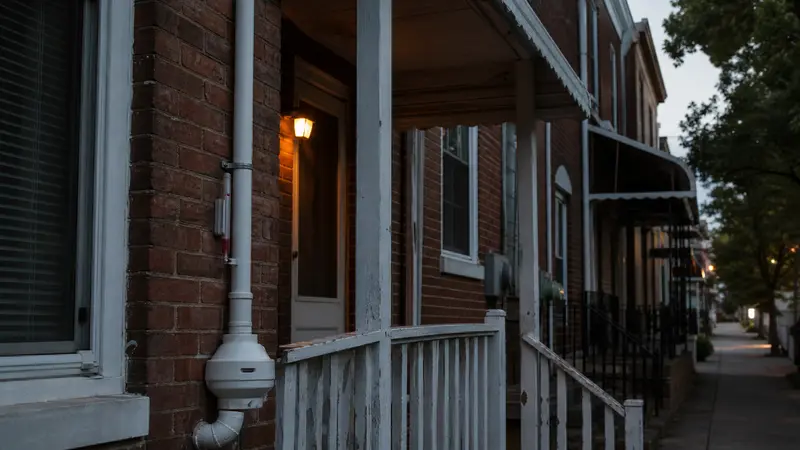
The city has a large stock of older brick rowhomes and twins, and many of the older neighborhoods sit on fieldstone foundations. Many mid-century suburban homes around the city were built with hollow block basement walls. Each type behaves differently when we put a fan on it.
Zone 1 county. The EPA places York County in Radon Zone 1, its highest potential category. You can see the county on the EPA map of radon zones. Zone 1 does not mean every house is high. It means testing is a must and high results are common.
Pennsylvania rules. Pennsylvania requires anyone who tests or mitigates radon for others to be certified by the PA Department of Environmental Protection, under the Radon Certification Act and 25 Pa. Code Chapter 240. Our certification number is on every written quote.
Seasons. York winters drive the stack effect hard. Warm air rises out of the house and pulls soil gas in at the bottom, and an old leaky foundation gives that gas many ways in. We design for winter conditions so the system holds up when it matters most.
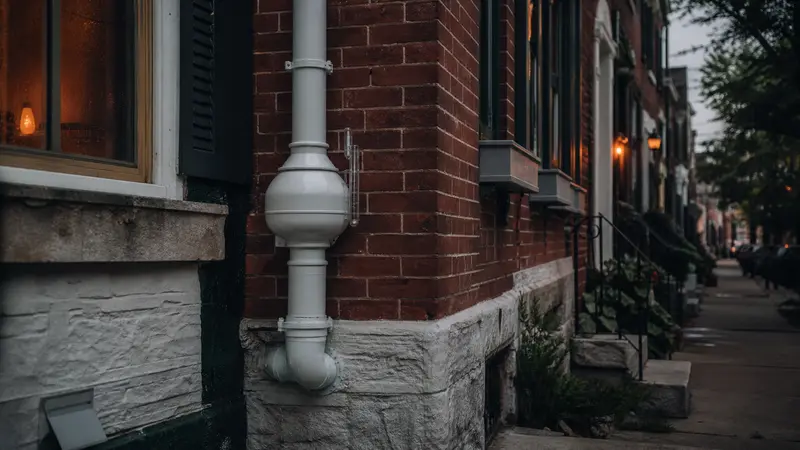
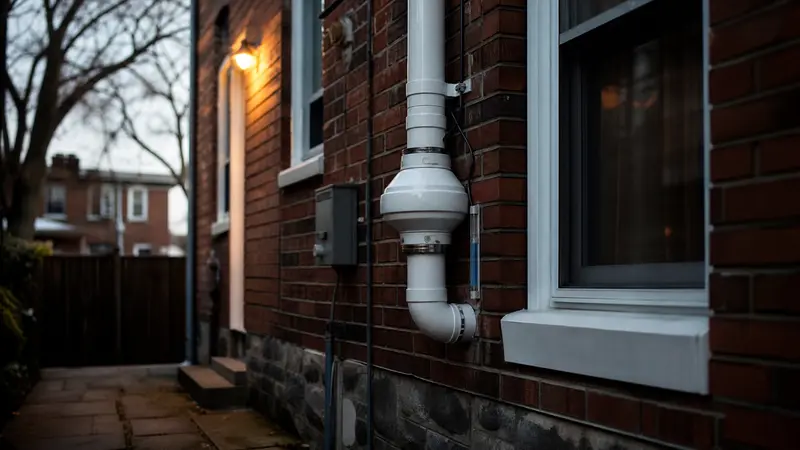
Historic exteriors. Some York City homes sit in a historic district, where certain exterior changes go through the city's architectural review process. Pipe routing on a visible front elevation may need extra planning. Our guide to radon systems on historic homes covers routing options that keep the street side clean. In the HARB district, the city requires approval for exterior work visible from a public street or alley, so ask the City of York before any exterior pipe goes up.
Why choose us
DEP-certified work on every job
Pennsylvania law requires radon mitigators to hold PA DEP certification, and we follow that rule on every install. Our installers are certified under 25 Pa. Code Chapter 240. Certification means the person working in your basement has passed the state's requirements and works under state rules for system design, labeling and reporting. On an older home, that training matters, because a leaky stone or block foundation punishes guesswork. You can confirm our status with the PA DEP before you sign anything.
A written clearance guarantee
We put our result in writing. If your post-install clearance test is not below 4.0 pCi/L, we keep working at no charge until it is. That matters more on an old foundation than anywhere else, since fieldstone walls and dirt floors are the homes where a basic one-pipe job is most likely to fall short. The guarantee gives us a reason to design the system right the first time, with the suction points and sealing the house needs.
Designed to recognized standards
We design older-home systems to the national ANSI/AARST soil gas mitigation standards for existing homes and to Pennsylvania's requirements. That covers fan placement outside the living space, discharge above the roof line and away from windows, sealed openings, a visible system gauge and proper labeling. On rowhomes, the discharge rules also protect the neighbors' windows. Following the standards keeps the system safe, quiet and easy for the next home inspector to approve.
Frequently Asked Questions
Can you mitigate radon in a fieldstone foundation?
Yes. Fieldstone foundations can be mitigated, but the walls and mortar joints leak soil gas, so a single suction point often is not enough. Most systems need extra suction points, sealing of the worst joints, or a wall or floor membrane tied into the fan. Learn more about radon mitigation for fieldstone foundations.
Why do block wall basements need special treatment?
Hollow concrete blocks have open cores that carry soil gas up inside the wall and out through cracks, holes and the open top course. Block-wall depressurization puts suction on those cores, usually after the top course and big openings are sealed. Read more about block wall basements and radon.
Why does radon mitigation cost more in older homes?
Older homes often need more suction points, more sealing, membrane work over stone walls or dirt floors, and harder pipe routes through tight lots and old framing. Some also need a stronger fan. Each item adds labor and material. See the breakdown of why older homes cost more to mitigate.
What if my basement has a dirt or partial dirt floor?
A dirt floor can be fixed two ways. We can cover the soil with a heavy, sealed membrane and put suction under it, or the area can get a concrete slab with suction under the slab. Partial dirt areas get sealed to the existing floor. Read about radon in a dirt-floor basement.
Can you install a system in a York rowhome?
Yes. Rowhomes and twins usually get a pipe run up the rear wall or through an interior chase, with discharge placed away from your windows and your neighbors'. Shared walls mean gas can move between units, so one unit's test does not decide the other's. See radon mitigation in York rowhomes and twins.
Do older homes have more radon?
Age alone does not cause radon. Leaky foundations and direct soil contact do. Older homes often test higher because they tend to have stone or block walls, thin cracked slabs, dirt areas and open drains that let more soil gas in. New homes can test high too. Read do older homes have more radon.
Will a system work in a damp or wet basement?
Usually, yes. Water changes the design: we seal sump pits with airtight covers, keep drains working, and plan suction points around wet soil that blocks airflow. A running system can also dry the area under the slab a bit. Learn about radon mitigation in a wet or damp basement.
Get a free written quote for your older home
Old foundation, new test result? Call (717) 356-3035 any time and we will call back the same day. We serve York and the surrounding York County area, and every system comes with a clearance test and a written guarantee. Prefer to write? Send us your details and we will set up a visit.