
On this page
- How much does crawl space radon mitigation cost?
- What drives the price
- Encapsulation vs. a radon membrane
- When the house already has a pipe
- York context
- How to compare crawl space quotes
- Key takeaways
- Frequently Asked Questions
- Next step Call (717) 356-3035 any time for a same-day callback and a free written quote.
The cost of radon mitigation in a crawl space depends on its size, how easy it is to work in, and whether you want a radon-only membrane or full encapsulation. Our sub-membrane system price is $1,200 to $2,500. Full encapsulation costs much more, and national guides list it in the thousands of dollars.
How much does crawl space radon mitigation cost?
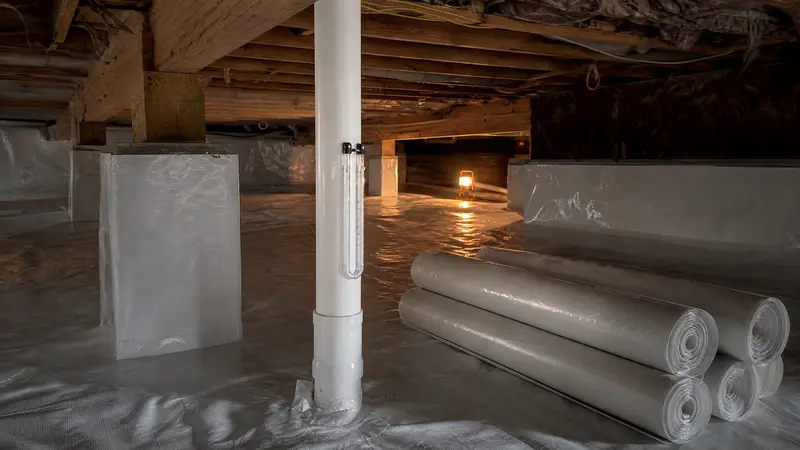
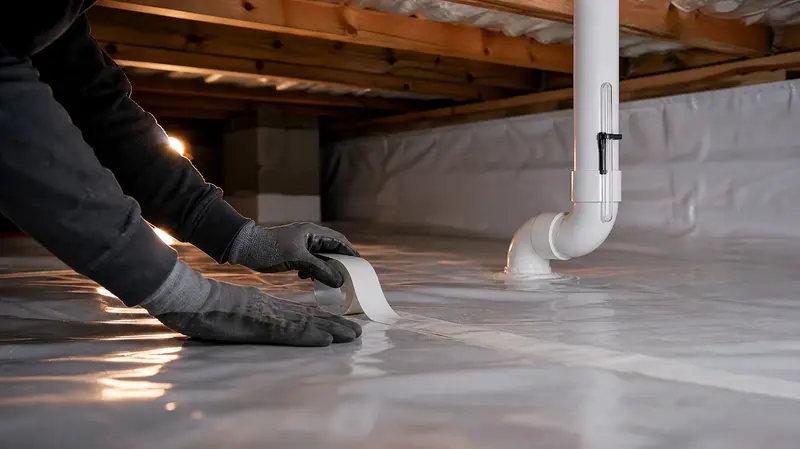
The standard fix for a dirt or gravel crawl space is called sub-membrane depressurization. A heavy plastic sheet goes over the ground, the seams and edges are sealed, and a pipe and fan pull soil gas from under the sheet and vent it above the roof.
There are two price levels to understand:
| Option | What it includes | Published cost (third-party) | Our price |
|---|---|---|---|
| Radon sub-membrane system | Membrane over the floor, sealed seams, suction point, pipe, fan | Varies by size; often near the cost of a standard system | $1,200 to $2,500 |
| Full encapsulation plus radon | Thicker liner up the walls, sealed vents, often a dehumidifier, plus the radon fan | $1,500 to $15,000 (Angi); $3,000 to $15,000 or $3 to $10 per sq. ft. (HomeGuide) | $5,000 to $12,000 |
These third-party ranges are national averages, not quotes. A written on-site quote sets the real number.
What drives the price
Square footage
Bigger crawl spaces need more membrane, more sealing and sometimes a second suction point. This is the largest single factor.
Height and access
A crawl space with two feet of clearance is slow and hard to work in. A small access hatch or a crawl space filled with ducts and pipes adds labor.
Floor condition
Rocks, debris, standing water or old plastic need to be cleared first. Wet crawl spaces may need drainage work before a membrane makes sense.
Membrane thickness
Thicker liners last longer and hold up to foot traffic and storage, but they cost more. A radon-only membrane is usually lighter than an encapsulation liner.
Vents and walls
Open crawl space vents can let air in that weakens the system. Some jobs seal vents or run the liner up the walls. Encapsulation always does.
Mixed foundations
Many York homes have a basement under one part and a crawl space under another. In that case, both areas are often tied to one fan. That adds pipe and suction points, but it usually costs less than two separate systems.
Encapsulation vs. a radon membrane
People often mix these up. Encapsulation is mainly about moisture, mold and comfort. A radon sub-membrane system is about radon. You can have one without the other, but the best results often come from doing both at once.
- If your main goal is lowering radon, a radon membrane with a fan is the core of the job.
- If your crawl space is damp or musty, encapsulation plus a radon fan solves both problems.
- Encapsulation alone, without a fan, may not lower radon enough.
When the house already has a pipe
Some newer homes were built with a radon-ready pipe already in place under the crawl space liner or basement slab. If that is your house, adding a fan may be all you need, which usually costs much less. See our guide on the cost to activate a passive radon system for details.
York context
York County is in EPA Radon Zone 1, so crawl spaces here can carry high radon levels straight into the living space above. Many older farmhouses and additions in the York area sit over dirt crawl spaces, and some homes combine a crawl space with a stone basement.
Because Pennsylvania requires DEP certification for anyone who mitigates radon for others, make sure your installer is certified. You can learn more about our approach on our page about crawl space radon mitigation in York.
How to compare crawl space quotes
Ask each installer:
- How many square feet of membrane are included, and how thick is it?
- How are seams, piers and walls sealed?
- How many suction points are planned?
- Will the vents be sealed or left open?
- Is a clearance test included?
- Is there a written guarantee on the result?
Quotes that skip sealing or leave out the clearance test are not the same job.
Key takeaways
- A radon sub-membrane system is the standard fix for dirt or gravel crawl spaces.
- Our price is $1,200 to $2,500, set by a written quote.
- Full encapsulation costs more. National guides list it at about $1,500 to $15,000.
- Size, height, floor condition and liner thickness drive the price.
- Homes with a passive pipe may only need a fan.
Frequently Asked Questions
Can I just put plastic down myself?
Loose plastic without sealing or a fan usually does not lower radon much. The fan and the sealed seams are what make the system work.
Will a crawl space system make my house colder?
A sealed membrane does not usually change room temperature. Sealing vents during encapsulation can reduce drafts.
How long does a crawl space install take?
Most radon-only crawl space systems are done in one day. Full encapsulation can take longer.