
On this page
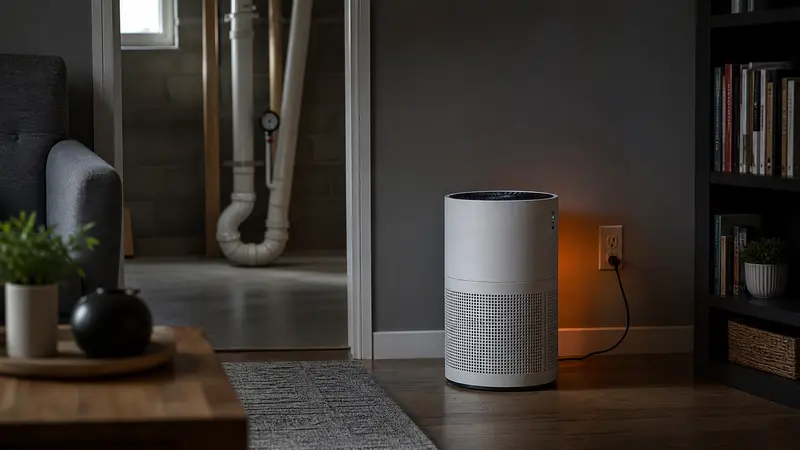
No, not in any reliable way. Radon is a gas, and most air purifiers are built to trap particles like dust and pollen. EPA states that it "does not recommend using air cleaners to reduce the health risks associated with radon." Whatever York County radon test results show for your area, lowering radon reliably takes source control, such as active soil depressurization or, in some cases, added ventilation.
Why air purifiers don't stop radon
Most home air purifiers use a HEPA filter. HEPA filters are great at catching particles. But radon is a gas, made of single atoms far smaller than any particle a filter can trap. It passes straight through.
Some purifiers add a carbon filter. Activated carbon can soak up some radon, which is why carbon is used in some test kits. But in a room purifier, the carbon fills up quickly and the radon keeps coming from the soil. It does not lower a home's radon level in a dependable way.
What about radon's decay products?
When radon breaks down, it forms tiny radioactive particles called decay products or progeny. These are what lodge in the lungs. Since they are particles, a filter can catch some of them.
So can an air purifier help a little? EPA looked at this question. In its guide to residential air cleaners, EPA says studies of air cleaners and radon are limited, and the amount of risk reduction found "has been inconsistent." EPA does not recommend air cleaning for radon or its decay products. It recommends stopping radon from entering the home instead.
There's another catch. A purifier might lower the decay products in one room while it runs. It does nothing about the radon gas that keeps entering and keeps making new decay products.
What lowers radon
EPA recommends methods that stop radon from coming in (EPA radon information). The main ones:
| Method | How it works | Reliability |
|---|---|---|
| Active sub-slab depressurization | A fan and pipe pull soil gas from under the floor and vent it above the roof | EPA: most common and usually most reliable |
| Crawl space membrane with suction | A sealed plastic sheet over the soil with suction under it | EPA: most effective for crawl space homes |
| Sealing cracks and openings | Closes some entry points | Not recommended alone by EPA |
| Opening windows | Dilutes radon with outdoor air | Temporary only, per EPA |
| Air purifier | Filters particles | Not recommended by EPA for radon |
The difference is simple. Mitigation systems stop the source. Purifiers only try to clean up after it.
Should you still use an air purifier?
Sure, for what it does well. Purifiers can help with dust, pollen, pet dander and smoke. Just don't count on one for radon, and don't let it delay a test or a fix.
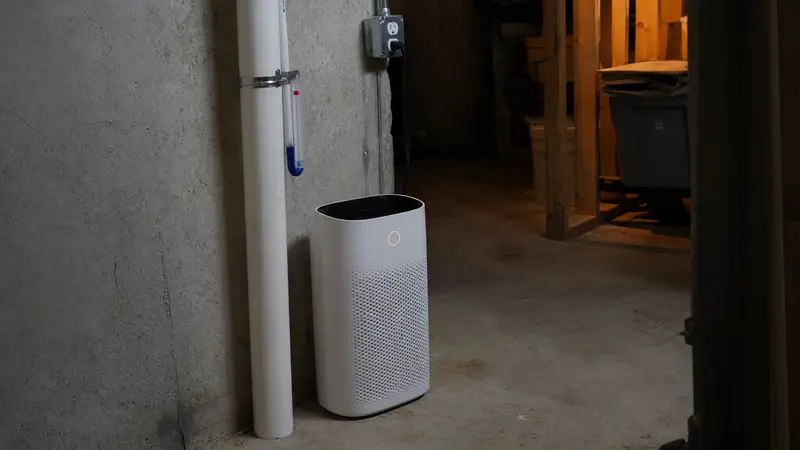
Can my neighbor's purifier explain their low result?
Not likely. Two nearby homes can have very different radon levels for many reasons, from soil to foundation cracks. Learn more about can your radon differ from your neighbor's.
Key takeaways
- Radon is a gas and passes through HEPA filters.
- EPA does not recommend air cleaners to reduce radon risk.
- Carbon filters fill up and don't lower whole-home levels dependably.
- Source control, like sub-slab depressurization, is the proven fix.
Frequently Asked Questions
Will an ERV or HRV lower radon?
Balanced ventilation can lower radon in some homes, but results vary. Test before and after, and talk with a certified mitigator first.
Does a dehumidifier help with radon?
No. A dehumidifier controls moisture, not soil gas. It won't change your radon level in a meaningful way.
See radon data for your area
Find out how common high radon is near you on our York County radon levels page. For a real fix and a free written quote, call (717) 356-3035 any time.