
On this page
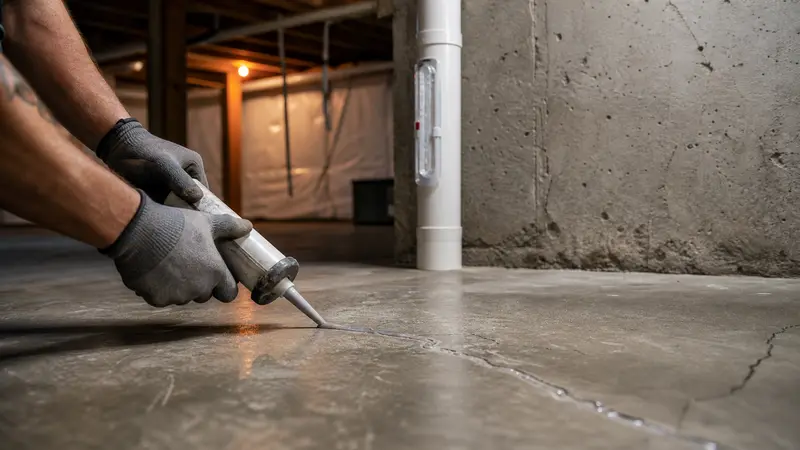
Sealing cracks alone rarely brings radon below the EPA action level of 4.0 pCi/L. The EPA does not recommend sealing by itself because it has not been shown to lower radon significantly or consistently. Radon sealant for concrete is useful, though, as part of a fan-based radon mitigation system, where it helps the suction reach farther under your slab.
What the EPA says about sealing
The EPA's Consumer's Guide to Radon Reduction is clear on this point. It says the EPA does not recommend sealing alone to reduce radon because, by itself, sealing has not been shown to lower radon levels significantly or consistently.
That does not mean sealing is useless. It means sealing is a supporting step, not the fix.
Why sealing alone falls short
Radon is a gas, and gas moves through very small openings. Even a well-sealed basement floor has paths you cannot reach or see.
- Hidden openings. Cracks under carpet, behind finished walls, under stairs and around buried pipes stay open.
- Pores in concrete and block. Concrete and hollow block are porous. Gas can move through them slowly even with no visible crack.
- New cracks. Concrete keeps shrinking and settling. Sealant can pull loose over time, and new cracks form.
- Pressure keeps pushing. Your house usually sits at lower pressure than the soil, especially in winter. As long as that pressure difference exists, soil gas looks for a way in.
In older York homes with fieldstone or rubble foundations, sealing alone is even less likely to work. Stone walls have many mortar joints and gaps that are hard to seal completely.
Where sealing does help
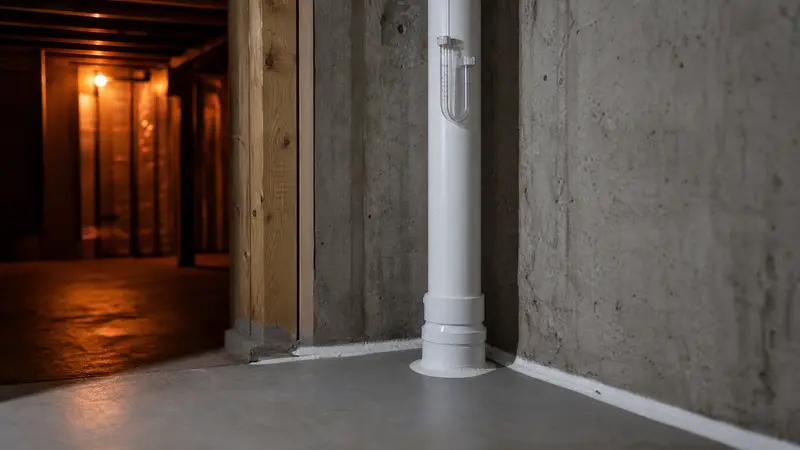
Sealing earns its place as part of an active system. When a fan pulls suction under the slab, every open crack is a leak that lets basement air rush in instead of soil gas. Sealing those leaks lets the same fan pull from a wider area.
Openings worth sealing include:
- Large slab cracks. Cracks you can see clearly or fit a coin edge into.
- The floor-wall joint. The gap where the slab meets the foundation wall, if it is open.
- Sump pits. An open sump is one of the biggest radon entry points. It should have a sealed, airtight lid.
- Pipe and utility penetrations. Gaps around plumbing, drains and wires that pass through the slab.
- Open block cores. The tops of hollow block walls, if they are exposed.
Pennsylvania mitigation standards call for these openings to be sealed in a permanent, airtight way with compatible caulks or sealants. Sump covers are sealed with a removable caulk so they can still be opened for pump service.
Types of radon sealant for concrete
Not every product suits every opening. Here is how the common types compare.
| Product type | Best for | Notes |
|---|---|---|
| Polyurethane caulk | Slab cracks, floor-wall joints, pipe gaps | Flexible and durable; a common choice for radon work |
| Silicone caulk | Sump lids and covers that must come off | Easy to remove and reseal |
| Hydraulic or non-shrink cement | Larger holes and gaps | Fills volume; may need caulk at the edges |
| Expanding foam | Gaps around pipes in walls | Fills irregular spaces; not for floor cracks under foot traffic |
| Penetrating or surface sealers | Whole concrete surfaces | Marketed for radon; limited evidence of lasting reduction alone |
Prep matters more than the product. Sealant only sticks to clean, dry concrete. Wider cracks may need a foam backer rod first so the caulk has something to rest on.
Does sealing help without a fan?
It can help a little in some homes. A basement with a large open sump or a big floor-wall gap might see some drop after sealing. But results vary a lot, and many homes see little change.
The only way to know is to test before and after. If you seal and your level is still 4.0 pCi/L or higher, you need an active system. Sub-slab depressurization with a fan is the method most certified mitigators use, and the EPA lists it as cutting radon by 50 to 99 percent. To see how well these systems perform, read do radon mitigation systems actually work.
A smart order of steps
- Test first. Know your starting level.
- Seal the obvious openings. Especially an open sump. This is a low-cost first step.
- Retest. See whether anything changed.
- Install an active system if still high. Sealing then becomes part of that system.
- Test after. A clearance test confirms the result.
Key takeaways
- Sealing cracks alone rarely gets radon below 4.0 pCi/L.
- The EPA does not recommend sealing by itself as a radon fix.
- Sealing does help a fan system pull from a wider area under the slab.
- Seal large cracks, floor-wall gaps, sump pits and pipe penetrations.
- Always test before and after any radon work.
Frequently Asked Questions
What is the best caulk for radon?
Polyurethane caulk is a common choice for slab cracks and floor-wall joints because it stays flexible and bonds well to clean concrete. Use a removable silicone for sump lids.
Should I seal my basement floor before a radon test?
You can, but test after sealing to see if it changed anything. If you are selling, follow your test protocol and do not alter the home during a test.
Do radon paints work?
Paints and surface sealers may reduce some entry, but there is little evidence that they lower radon reliably on their own.
Get a system that does the heavy lifting
Sealing works best as part of a fan system built for your home. See how we handle radon mitigation system installation in York, or call (717) 356-3035 any time for a free written quote and a same-day callback.