
On this page
- What perimeter drain tile is
- How a radon system uses drain tile
- When drain tile suction works best
- When a separate slab suction point is better
- Drain tile, moisture and your basement
- Drain tile in York homes
- How the system is checked
- Key takeaways
- Frequently Asked Questions
- See if your drain tile can do the work
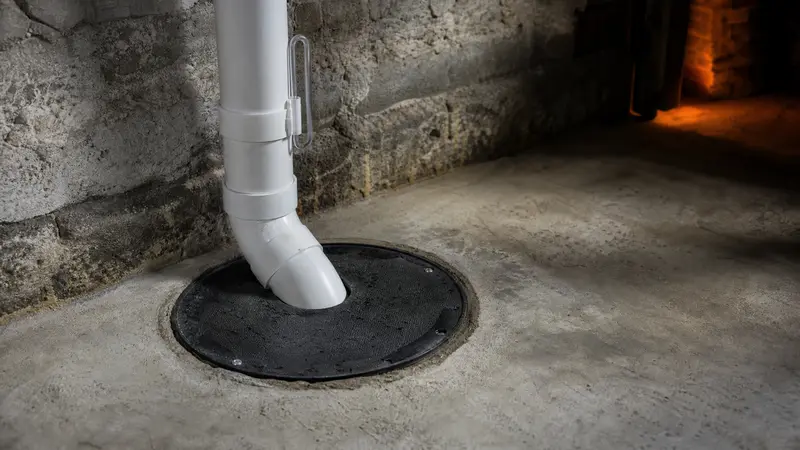
Drain tile radon mitigation uses the perforated pipe around your foundation as the path for radon suction. In sump pump radon mitigation, a sealed cover turns the sump pit into the suction point, and the fan pulls soil gas through the tile from all around the house. It works best when the tile loops most of the foundation and stays sealed from outdoor air.
What perimeter drain tile is
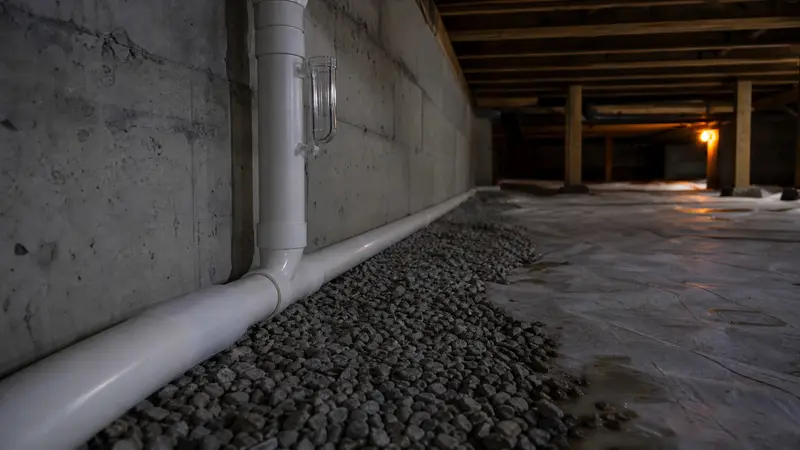
Drain tile is a perforated pipe laid along the footing of a foundation, usually in a bed of gravel. Older systems used clay tile sections, which is where the name comes from. Newer homes usually have plastic pipe.
Its job is to collect groundwater before it pushes through the floor or walls. Interior drain tile runs under the slab along the inside of the footing. Exterior drain tile runs outside the footing. Either way, the water usually flows to a sump pit, where a pump lifts it out, or to a gravity outlet in the yard.
How a radon system uses drain tile
Radon mitigation works by creating lower pressure under the slab than inside the house. Soil gas then flows to the suction pipe instead of into your basement.
Drain tile helps because it is already a network of open pipe in gravel around the whole foundation. When the sump pit is sealed and connected to a radon fan, the vacuum spreads through the tile. Instead of pulling from one spot in the middle of the floor, the system pulls from the perimeter, which is where many radon entry points are, such as the floor and wall joint.
EPA's Consumer's Guide to Radon Reduction lists both sump hole suction and drain tile suction as forms of soil depressurization, and notes that suction on drain tile is often effective.
When drain tile suction works best
Drain tile is a strong choice when:
- The tile loops all or most of the foundation perimeter.
- It drains into an interior sump pit that can be sealed.
- The gravel bed around the tile is clean and open, so air moves freely.
- The tile does not connect to the outdoors, or any outdoor outlet can be fitted with a one-way valve.
- The tile stays mostly dry outside of heavy storms.
In these homes, one suction point at the pit can treat the whole footprint.
When a separate slab suction point is better
Drain tile is not always the answer. A separate hole through the slab, a few feet from the pit, is often the better plan when:
- The tile is partial. If it only runs along one or two walls, the vacuum will not reach the rest of the slab.
- The tile drains to daylight. An outlet to the yard lets the fan pull outdoor air, which wastes suction and can make the fan work harder.
- The tile floods. In wet seasons, water can fill the pipe and block airflow, so suction drops just when the pump is busiest.
- The pit is in a bad spot. A pit in a finished room or far from a good pipe route may be harder to use.
- Diagnostics say so. A pressure field test, where the installer measures vacuum at small test holes around the slab, shows where suction actually reaches.
Even when suction comes from a slab hole, the sump pit still gets sealed. An open pit near a suction point pulls basement air into the system and weakens it.
Drain tile, moisture and your basement
Because the system pulls air from the same place water collects, some soil moisture vapor gets vented out with the radon. Many homeowners notice a basement that feels less damp. That is a side benefit, not a promise. A radon system does not stop leaks or replace waterproofing. We cover this in more detail in does radon mitigation reduce basement moisture.
Drain tile in York homes
York County is in EPA Radon Zone 1, the highest potential category. Many York homes built with block or poured basements in the last several decades have perimeter drain tile feeding a sump pit. That makes drain tile suction a common, effective option here.
Older homes are different. Many pre-war York houses have stone walls and no drain tile at all, so a slab or other suction plan is needed. York's wet springs are worth planning for too. We look at how your pit handles water before choosing it as the suction point.
How the system is checked
After installation, a U-tube manometer on the radon pipe shows the vacuum the fan is pulling. EPA guidance is to run the post-mitigation radon test no sooner than 24 hours after the system starts and within 30 days. If the result is not where it should be, adding a slab suction point or sealing a tile outlet often fixes it. EPA's A Citizen's Guide to Radon explains the action level and retesting.
Key takeaways
- Drain tile suction uses the sealed sump pit and perimeter tile as one large suction point.
- It works best when the tile loops the foundation and does not vent to the outdoors.
- Partial tile, tile that drains to daylight or tile that floods often calls for a separate slab suction point.
- The sump pit gets sealed either way.
- A clearance test confirms the result.
Frequently Asked Questions
How do I know if my house has drain tile?
Look in your sump pit. If one or more pipes enter the pit from the sides, you likely have drain tile feeding it.
Can drain tile suction work with exterior tile?
Sometimes. It depends on whether the exterior tile connects to the pit and whether vacuum can reach the slab. Diagnostics answer that.
Will the radon fan stop my sump from draining?
No. Water still flows through the tile to the pit and the pump still runs. The fan only moves air.
See if your drain tile can do the work
We check your pit, tile and slab before recommending a layout. Call (717) 356-3035 any time for a same-day callback and a free written quote.