On this page
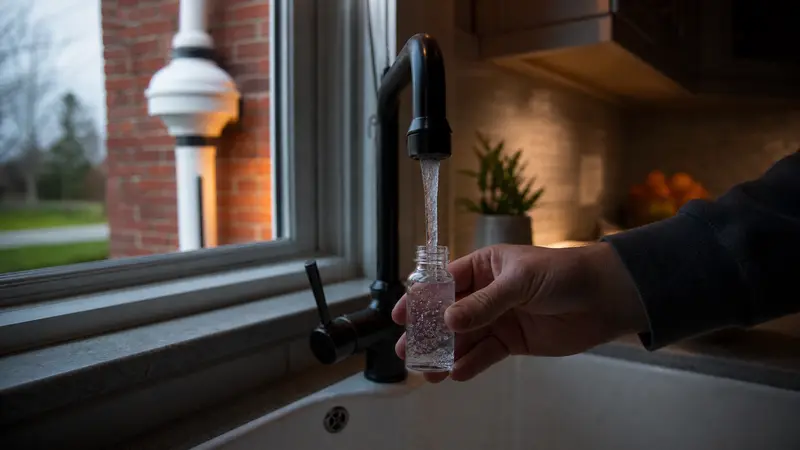
To test well water for radon before any well water radon treatment, get a sample kit from a lab on PA DEP's radon-in-water lab list, remove the aerator from a cold water tap, run the water for several minutes, then fill the vial with no air bubbles and seal it. Get the sample to the lab within a day or two, because radon escapes from water and decays quickly.
Why sampling technique matters
Radon is a gas. The moment water splashes, bubbles or sits open to the air, radon starts escaping. Radon also has a half-life of about 3.8 days, so a sample that sits for a week has lost a good share of its radon before anyone measures it.
Both problems push your result lower than the real number. A careless sample can make a high-radon well look fine. That is why water radon testing uses sealed vials and fast lab delivery, not an open jar.
What you need
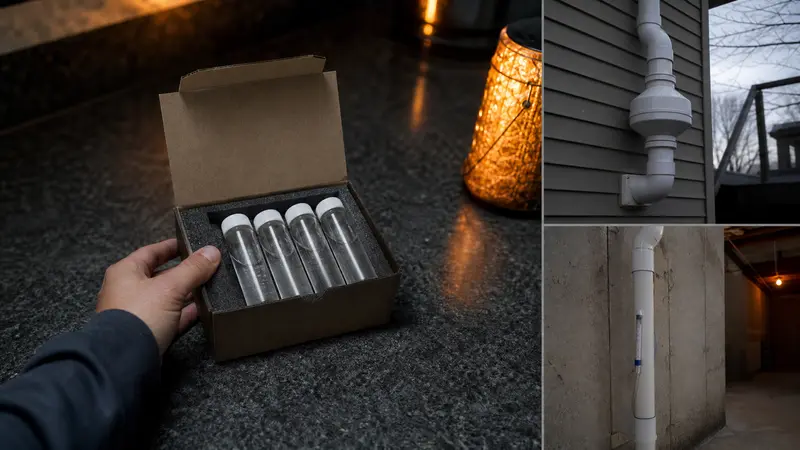
- A water radon kit from a lab. Ask the lab for its radon in water kit and instructions. PA DEP does not certify radon in water labs, but its Radon Division keeps a list of labs that offer the test. Call the PA Radon Hotline at 800-237-2366 to get it.
- The lab's vial. Most kits use a small glass vial, sometimes pre-filled with a liquid that holds the radon for counting.
- A cold water tap near where the well line enters the house.
- A shipping plan. Check the lab's delivery deadline before you sample.
PA DEP's radon in water fact sheet lists lab tests at about $25 to $50, though current prices vary.
Step by step: collecting the sample
1. Pick the right tap
Use a cold water faucet as close as possible to where the well water enters the house. If you have a water softener, iron filter or other treatment, sample before it when you can, since you want to know what is coming out of the well. A basement utility sink or the tap at the pressure tank is often a good choice.
2. Remove the aerator
Unscrew the screen (aerator) from the end of the faucet. The aerator mixes air into the water, which releases radon before it reaches the vial. Avoid hoses and spray attachments for the same reason.
3. Run the water
Run the cold water for several minutes so you are sampling fresh water from the well, not water that has been sitting in the pipes. Some state lab instructions call for about 15 minutes. Follow your lab's time.
4. Slow the flow
Turn the water down to a slow, smooth stream with no splashing. A gentle flow keeps radon in the water.
5. Fill the vial with no bubbles
Follow your lab's method. Many labs have you hold the vial under the stream or submerge it in a container of running water, let it overflow, then cap it underwater. Others use a syringe to draw water slowly from the stream. The goal is the same: no air pocket.
6. Check for bubbles
Cap the vial tightly and turn it upside down. If you see a bubble, empty it and start again.
7. Label and ship fast
Write down the date and exact time you took the sample. Send it to the lab right away. Many labs want samples within 24 to 48 hours of collection. Avoid sampling on a Friday unless the lab can receive it over the weekend.
Testing an existing treatment system
If you already have an aeration or carbon system, take two samples on the same day: one before the system (raw well water) and one after it (treated water). Comparing the two tells you how well the system is working.
Reading your result
Your lab report will show radon in pCi/L. Water numbers are often in the hundreds or thousands. They are not comparable to the 4.0 pCi/L air action level. A common rule of thumb, cited by PA DEP, is that 10,000 pCi/L in water adds about 1 pCi/L to indoor air.
For background on why York County wells are worth checking, read our guide to radon in well water in York County. EPA's radon page covers testing your indoor air, which you should do too.
Key takeaways
- Use a lab kit, not an open container.
- Remove the faucet aerator and use a cold tap near the well line.
- Fill the vial with no air bubbles and seal it.
- Get the sample to the lab within a day or two.
- Test air radon as well, since it is usually the bigger source.
Frequently Asked Questions
Can I use a home air test kit for my water?
No. Air kits measure radon in air. Water radon requires a lab vial and special analysis.
What time of year should I test my well?
Any time. Water radon does not swing with the seasons the way air radon does, so a well-collected sample is useful year round.
Should I retest after a high result?
If you are about to spend money on treatment and the first sample may have been collected poorly or shipped slowly, a second sample is a good idea.
Get help with your results
Have a water result and want to know what to do next? Call (717) 356-3035 any time for a same-day callback and a free written quote.