
On this page
- Where radon comes from in an apartment building
- Are upper-floor apartments safe from radon?
- Which units need testing
- How apartments are fixed
- Who is responsible: tenant or landlord?
- What condo owners should know
- Apartments in York
- Key takeaways
- Frequently Asked Questions
- Get your apartment building tested and fixed
Radon in apartments is usually highest in units with floors or walls touching the ground, but upper floors are not always safe. Under the ANSI/AARST protocol for multifamily buildings, every ground-contact unit should be tested, plus at least one unit and at least 10 percent of units on each upper floor. High units can then be treated with multifamily radon mitigation.
Where radon comes from in an apartment building
Radon is a colorless, odorless radioactive gas made as uranium breaks down in soil and rock. It enters buildings from the ground through cracks, joints, sumps, floor drains and utility penetrations. EPA estimates it causes about 21,000 lung cancer deaths a year in the U.S., and it is the leading cause of lung cancer among non-smokers.
In an apartment building, the units sitting on the slab or with basement walls take the brunt of it. Those are the units where testing matters most.
Are upper-floor apartments safe from radon?
Usually safer, but not guaranteed. Radon levels tend to drop with each floor above the ground. Still, radon can travel upward through:
- Elevator shafts and stairwells, which act like chimneys in the stack effect
- Utility chases and plumbing walls that run from the basement to the roof
- Shared HVAC systems that draw air from lower levels
- Gaps around pipes and wiring between floors
That is why the national protocol includes testing on upper floors too, not just the ground level.
Which units need testing
ANSI/AARST MA-MFLB-2023 is the national measurement protocol for multifamily, school, commercial and mixed-use buildings. Its basic rules for apartments:
| Location | What to test |
|---|---|
| Ground-contact units | Every dwelling with floors or walls in contact with the ground |
| Each upper floor | At least one unit and not less than 10 percent of units |
| Occupied common areas | Ground-contact rooms people use, such as offices, fitness rooms or laundry rooms |
Tests run with HVAC at normal settings, under closed-building conditions, for at least about 48 hours. Our guide to how commercial and multifamily radon testing works covers the full process.
Example
A three-story building with 8 units per floor has 8 ground-contact units. All 8 get tested. Floors two and three each need at least one unit tested, since 10 percent of 8 rounds up to one. If ground-floor results are high, the tester may recommend more upper-floor testing.
How apartments are fixed
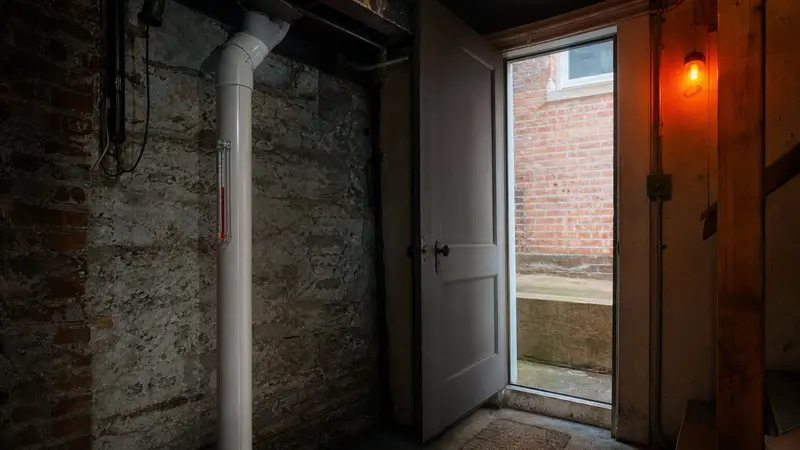
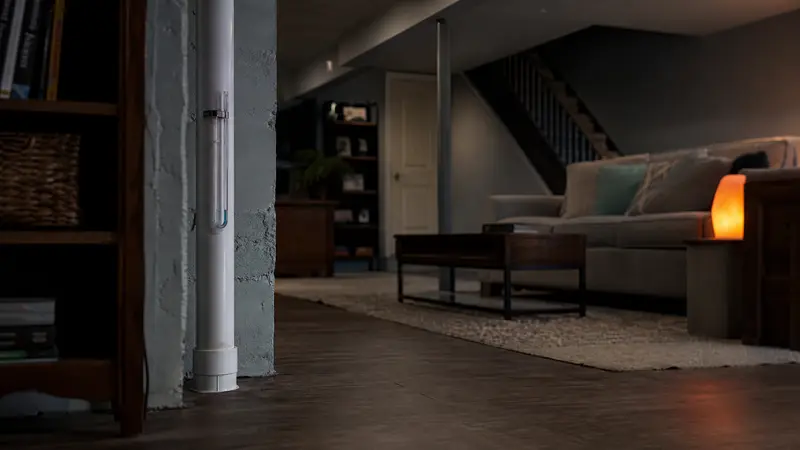
Most apartment buildings are fixed with sub-slab depressurization, the same basic method used in houses. Fans pull soil gas from under the slab and vent it above the roof. The differences are scale and layout:
- Multiple suction points. A long building or one with several slab sections needs suction in each section.
- Diagnostics first. Small test holes show how far suction reaches under the slab.
- Pipe routing. Pipes may run through closets, chases or up the exterior, depending on the building.
- Sealing common entry points. Sumps, floor drains, elevator pits and utility trenches.
- Scheduling around tenants. Work is often done unit by unit.
The national standard for these systems is ANSI/AARST SGM-MFLB-2023. EPA lists it on its radon standards of practice page.
Who is responsible: tenant or landlord?
In a rental building, the owner controls the structure, so the owner is the one who can fix radon. Pennsylvania does not currently have a statewide law requiring landlords to test for radon. Our guide to radon rules for Pennsylvania landlords covers what applies today and what is best practice.
If you rent, you can test your own unit with a short-term kit. If the result is 4.0 pCi/L or higher, the EPA action level, share it with your landlord in writing and ask about next steps.
What condo owners should know
In a condo building, the slab and foundation are usually common elements controlled by the association. An owner can test their unit, but a fix often needs association approval, and a building-wide system may be the best answer. Bring results to the board.
Apartments in York
York County is in EPA Radon Zone 1, the highest radon potential category. Much of York's rental housing is in older buildings: rowhouse conversions, apartments over storefronts and older brick complexes. These often have stone or block basements, dirt-floor sections or several additions, which makes unit-by-unit testing important.
Anyone hired to test or mitigate radon in Pennsylvania must be certified by PA DEP.
Key takeaways
- Ground-floor and basement units are most at risk, but upper floors can have radon too.
- Test every ground-contact unit plus at least 10 percent of units on each upper floor.
- Most buildings are fixed with sub-slab depressurization, often with several suction points.
- The building owner or association controls the fix.
- Pennsylvania has no statewide landlord radon testing law today.
Frequently Asked Questions
I live on the third floor. Should I test?
It is less likely to be high, but testing is the only way to know. A short-term kit is a low-cost check.
Can one system treat a whole apartment building?
Sometimes, if the slab allows suction to spread. Larger or split buildings usually need several suction points or fans.
Will mitigation work disrupt tenants?
Usually not much. Most work happens in basements, common areas and on the roof, with brief access to some units.
Get your apartment building tested and fixed
We test and mitigate apartment buildings and rental properties across York. Call (717) 356-3035 any time for a same-day callback.