
On this page
Yes. Winter radon mitigation installation is common, and the system works the same as one installed in summer. Most of the work happens inside the basement, which stays above freezing. Cold weather changes a few details, like pipe cement cure times and how an exterior pipe is set up to handle freezing, but it rarely delays the job.
Why winter is a good time to fix radon
Radon levels in many homes run higher in winter. Warm air rises and leaks out of the upper floors, and the house pulls in air from below to replace it, including soil gas. Windows stay shut, so less fresh air dilutes what gets in.
Families also spend more time indoors in the cold months. If a test shows a high level, there is little reason to wait for spring.
Winter is also a good time to prove the system works. A clearance test run during cold weather, when radon entry tends to be strongest, shows the system can handle the toughest conditions.
What changes in cold weather
Pipe cement and sealants
PVC primer and cement cure more slowly in the cold. Installers use products rated for cold weather and give joints more time to set before the fan starts. Caulks and sealants inside the basement are less affected because the basement stays warm.
Exterior pipe and freezing
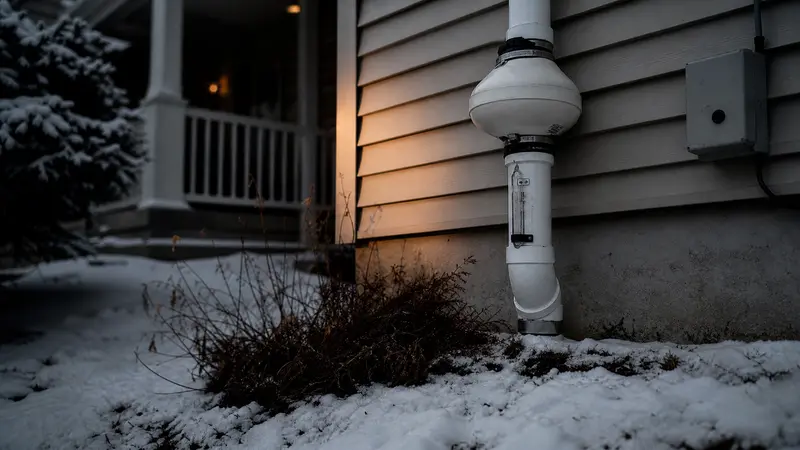
Soil gas is warm and moist. When it travels up a cold exterior pipe, some moisture condenses on the inside walls. In very cold weather, that water can freeze, mostly near the top outlet.
Installers prevent this a few ways:
- Pipe slope. Sloping horizontal runs back toward the suction point lets water drain down instead of pooling.
- Pipe size. A properly sized pipe keeps air moving fast enough to limit buildup.
- Fan placement. A fan that keeps running moves moist air out before it freezes in place.
- Interior routing. Running the pipe up through the house keeps it warmer. This is one reason some homeowners choose an interior route.
Roof work
Roof penetrations for interior systems need a dry, safe roof. Ice or heavy snow can push that step to another day. Exterior systems that run past the roof edge avoid this.
Frozen ground
Frozen ground does not stop the work. The suction point goes through the basement slab, and the soil under a heated basement does not freeze.
The clearance test in winter
The post-mitigation test follows the same EPA guidance year-round: start no sooner than 24 hours after the system is running and within 30 days. Closed-house conditions, with windows and outside doors kept shut, are easy to keep in winter.
Can I do it myself in winter?
Pennsylvania lets you mitigate radon in a home you own or live in. But cold weather adds steps, like working on icy ladders and using cold-rated cement. Read DIY radon mitigation in Pennsylvania before you decide.
Watching your system through the winter
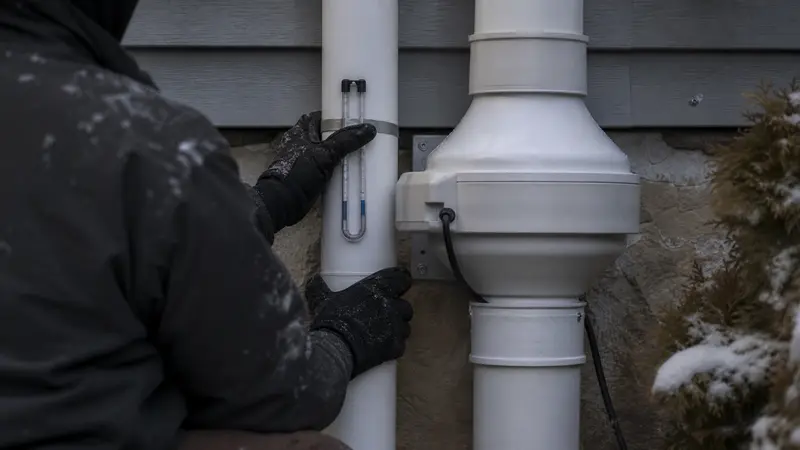
Check the manometer after a cold snap. A reading that rises sharply can mean ice is narrowing the outlet. A reading that drops to zero means the fan has stopped. Clear snow and ice away from any exterior fan housing so it can run freely.
The EPA's Citizen's Guide to Radon has more on testing in different seasons.
Key takeaways
- Radon systems can be installed in winter and work the same year-round.
- Winter often has higher radon levels, so it is a good time to act.
- Cold weather slows pipe cement cure times and can cause freezing at exterior outlets.
- Good pipe slope, sizing and routing prevent most freezing problems.
- Clearance testing follows the same EPA guidance in any season.
Frequently Asked Questions
Will my radon pipe freeze?
It can, mostly at the outlet of an exterior pipe in very cold weather. Proper slope and sizing limit this, and interior routing avoids most of it.
Should I wait until spring to install?
No. Radon levels are often higher in winter, and the install works the same in cold weather.
Does snow on the roof affect the system?
Pennsylvania rules require the pipe to discharge at least 12 inches above the roof, which helps keep it clear of normal snow.
Schedule your winter install
We install year-round in York. Call (717) 356-3035 any time for a free written quote and a same-day callback.