
On this page
A radon fan alarm watches the suction in your radon pipe and sounds when that suction drops. When it goes off, check the breaker, the fan outlet and the exhaust for ice or a blockage, then look at the manometer. If the fan is silent or suction stays low after those checks, it is likely time for radon fan replacement in York, PA.
What a radon system alarm monitors
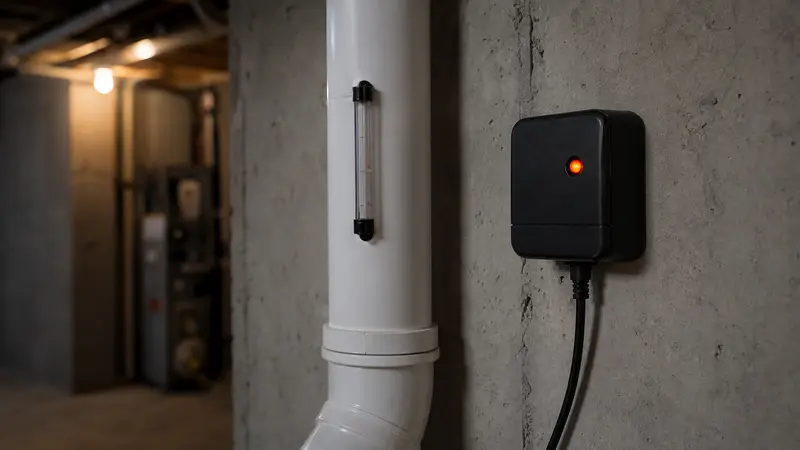
Most radon alarms are pressure alarms. A small tube connects the alarm to the radon pipe. The alarm senses the vacuum the fan creates. If the vacuum falls below a set point, the alarm beeps, flashes or both.
Recognized installation standards require a device that shows whether the fan is working, and EPA's Consumer's Guide to Radon Reduction lists sound alarms, light indicators and liquid gauges as examples. Many homes have both a U-tube manometer and an alarm.
An alarm does not measure radon. It measures suction. A radon test is the only way to know your actual radon level.
Quick checks when the alarm sounds
Work through these in order:
- Check the breaker. Look for a breaker labeled "Radon System" and reset it if tripped.
- Check the fan outlet or GFCI near the fan and press reset if needed.
- Listen at the fan. Is it humming? Is air coming out of the exhaust?
- Look for ice or debris at the exhaust, especially on cold mornings.
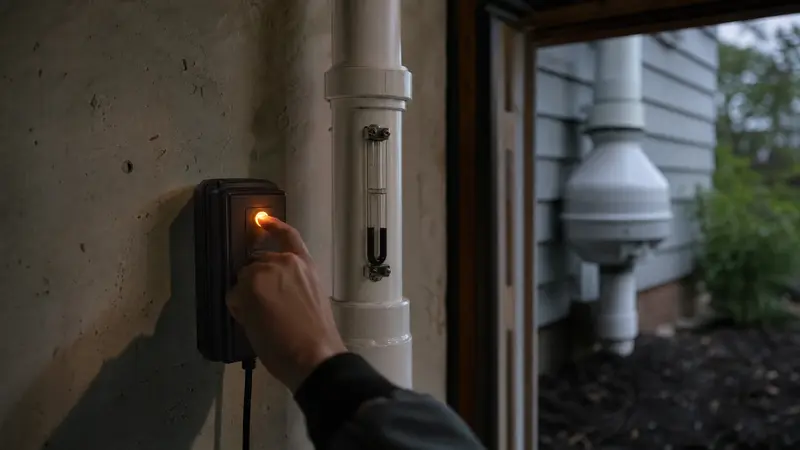
- Read the manometer. Is the liquid level, or lower than the mark?
- Check the alarm tube. Make sure the small tube between the alarm and the pipe is attached and not cracked or kinked.
If the fan restarts and the gauge returns to its mark, the alarm should clear. Some models need a manual reset.
What the alarm is telling you
| What you find | What it likely means | Next step |
|---|---|---|
| Fan off, power fixed it | Tripped breaker or GFCI | Watch for repeat trips |
| Fan off, power present | Failed fan motor | Replace fan |
| Fan running, gauge level | Blocked or broken pipe, ice | Clear blockage or repair pipe |
| Fan running, gauge normal | Faulty alarm or loose tube | Reattach tube or replace alarm |
| Alarm only on cold mornings | Ice at exhaust or frozen water in pipe | Fix pipe slope; check exhaust |
| Breaker trips again | Electrical or motor fault | Call a professional |
When the alarm means a new fan
Fans wear out. EPA notes they may last five years or more, and manufacturer warranties tend not to exceed five years. If your fan has power but is silent, hums without spinning, or grinds loudly, it is near the end. An alarm in a system that is 5 to 10 years old often means it is time for a replacement.
Do not ignore or unplug the alarm
A beeping alarm is annoying, but it is doing its job. Unplugging it or silencing it without a fix leaves you blind to a system that has stopped protecting your home. York County is in EPA Radon Zone 1, so a stopped fan can mean radon climbs back up fast.
Alarms after a remodel
Alarms often go off after work on the house. A contractor may bump the pipe, crack a joint, unplug the fan or disconnect the alarm tube. If you are finishing a basement, plan the system changes before work starts. Our guide to moving a radon system during a basement remodel covers what to plan for.
After any repair, retest
Once suction is back, run a short-term radon test no sooner than 24 hours after the fan restarts. That confirms the system is lowering radon again, not just making noise.
Key takeaways
- Radon alarms monitor suction, not radon levels.
- Check power, the exhaust and the manometer first.
- A silent fan with power usually needs replacing.
- A normal gauge with a sounding alarm may mean a faulty alarm or loose tube.
- Retest after any repair.
Frequently Asked Questions
Why does my radon alarm go off only in winter?
Cold weather can freeze condensation in a low spot or at the exhaust, which cuts suction. Correcting the pipe slope often fixes it.
Can I add an alarm to an older system?
Yes. Many older systems have only a U-tube gauge. An alarm can be added to the pipe and plugged into a nearby outlet.
Does the alarm need batteries?
Some do and many plug in. Check your model's label or manual.
Alarm won't stop?
We can find out why and fix it, often in one visit. We offer radon fan replacement in York for any brand of system. Call (717) 356-3035 any time for a same-day callback.