
On this page
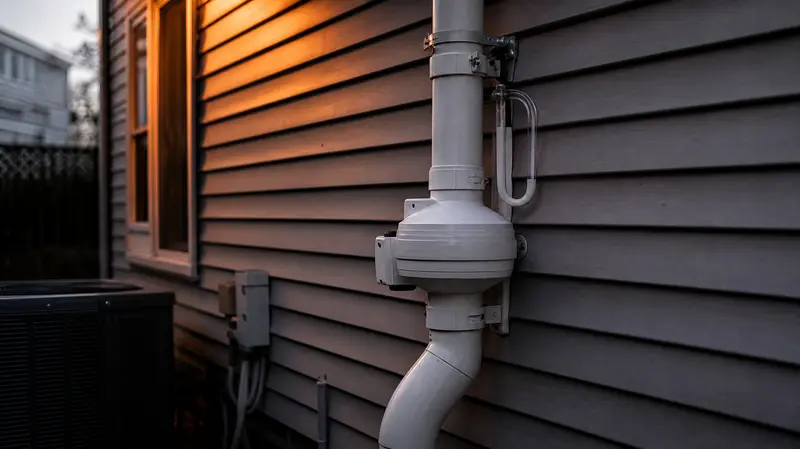
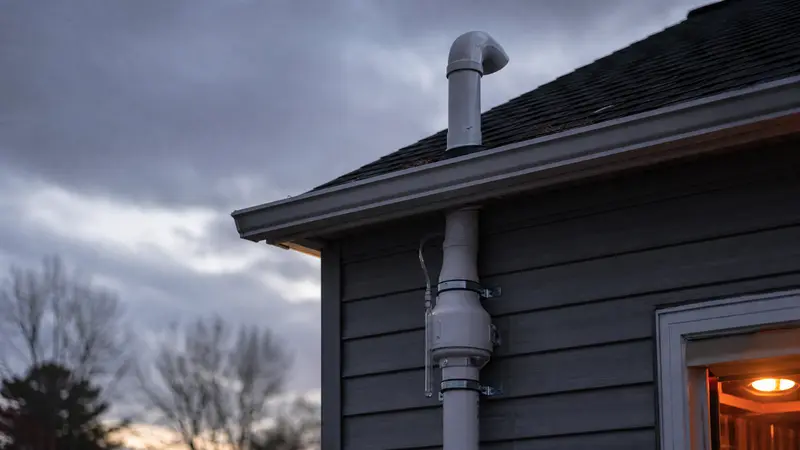
From outside, an installed radon mitigation system looks like a PVC pipe running up the side of the house, with a small round fan mounted near the bottom. The pipe climbs past the roof edge and ends at least 12 inches above the roofline. With an interior route, all you see is a short vent stack on the roof.
The parts you can see outside
The pipe
Most exterior systems use 3 or 4 inch PVC pipe. It comes out of the house just above the ground, usually through the rim joist, then runs straight up the wall. Straps or brackets hold it to the siding every few feet.
The fan
The fan sits on the pipe, usually a few feet off the ground on the exterior wall. It looks like a round housing about the size of a small bucket, often white or gray, with the pipe going in the bottom and out the top. An electrical box or disconnect switch is mounted nearby.
The discharge
At the top, the pipe rises above the roof edge. Pennsylvania standards require the discharge to be at least 12 inches above the roof, 10 feet or more above the ground, and 10 feet or more from operable windows, doors and other openings, unless it is 2 feet above them. The pipe is left open at the top so air flows straight up and away from the house.
Exterior vs. interior: what you see from the street
| Route | What you see outside |
|---|---|
| Exterior | Pipe up the wall, fan near the bottom, pipe above the roof edge |
| Interior (attic fan) | A single vent stack on the roof, like a plumbing vent |
| Garage route | Pipe hidden in the garage; a stack on the roof above it |
The radon removal is the same either way. The choice is about cost, looks and what your house allows. To understand what the parts are doing, read how a radon mitigation system works.
Where the pipe usually goes
Installers try to put the exterior pipe on the least visible wall that still works. Common choices:
- Back or side walls. Out of view from the street.
- Inside corners. Where two walls meet, the pipe blends into the shadow line.
- Near downspouts. Next to a downspout, a pipe looks like part of the gutter system.
The route also has to clear gutters, decks, windows and electric meters. On a rowhome or a house with a tight side yard, the back wall is often the only practical choice.
Ways to make it blend in
- Paint the pipe. PVC can be painted with a paint made for plastic to match your siding or trim. Keep labels visible.
- Choose a fan color. Some fans come in more than one color, or have covers.
- Use a downspout-style cover. Some installers offer rectangular covers that make the pipe look like a downspout.
- Plant around the fan. Low shrubs can screen the fan, as long as there is room to service it and air can move around it.
Will it hurt my curb appeal?
Most people stop noticing an exterior system soon after it goes in. Radon systems are common in Pennsylvania, so many buyers recognize them. In York County, which sits in EPA Radon Zone 1, a working system can be a selling point, since it shows the home was tested and fixed.
If looks matter a great deal, an interior route through a closet or garage hides almost everything.
Is it safe to be near the pipe outside?
The discharge is placed high above the roof and away from windows and doors so radon thins out quickly in outdoor air. Below the fan, the pipe is under suction. Above it, soil gas travels inside sealed pipe to the discharge. Keep the pipe intact and the fan housing sealed, and do not block or cut into it. The EPA's radon page has more on how radon systems work.
Key takeaways
- An exterior radon system is a PVC pipe up the wall, a fan near the bottom, and a discharge above the roof edge.
- Interior routes show only a vent stack on the roof.
- Pennsylvania rules set how high and how far from windows the discharge must be.
- Paint, pipe placement and covers can help the system blend in.
- Radon removal works the same with either route.
Frequently Asked Questions
How big is a radon fan?
Most residential radon fans are about the size of a small bucket, roughly 8 to 12 inches across, mounted inline on the pipe.
Can the pipe go on the front of my house?
It can, but most installers avoid it if another wall works. Interior routing is an option if the front is the only choice.
Does the outside fan need a cover?
Radon fans are made for outdoor use. A cover is optional and mostly about looks.
See your options
We will show you where the pipe and fan would go before any work starts. Call (717) 356-3035 any time for a free written quote and a same-day callback.