On this page
Radon water treatment cost depends on the type of system. HomeGuide lists granular activated carbon (GAC) filters at about $1,200 to $1,800 and aeration systems at about $4,000 to $5,000. Our well water radon pricing is $1,500 to $5,500, depending on the system. That is separate from the cost of mitigating radon in air. Higher radon levels in water usually call for aeration, which costs more.
How much does radon water treatment cost?
Radon in water is only a concern for homes on private wells. Public water systems usually hold water long enough, or aerate it, so radon breaks down before it reaches your tap.
There are two main types of treatment:
| System | How it works | Best for | Published cost (HomeGuide) | Our price |
|---|---|---|---|---|
| Granular activated carbon (GAC) | Water passes through a tank of carbon that holds the radon | Lower radon levels in water | $1,200 to $1,800 | $935 to $1,320 |
| Aeration | Water is sprayed or bubbled in a tank, and a fan vents the released radon outside | Higher radon levels in water | $4,000 to $5,000 | $935 to $1,320 |
National cost guides such as Angi list water mitigation more broadly at about $1,200 to $5,000. These are averages, not quotes. A written on-site quote after a water test sets the real number.
Why the two systems cost so differently
Carbon filters
GAC systems are simple: a tank, carbon media and plumbing connections. They cost less up front. But the carbon collects radon and its decay products, which give off radiation. At higher levels, the tank itself can become a source of exposure, and used carbon may need special handling. That is why carbon is usually used only for lower radon levels.
Aeration systems
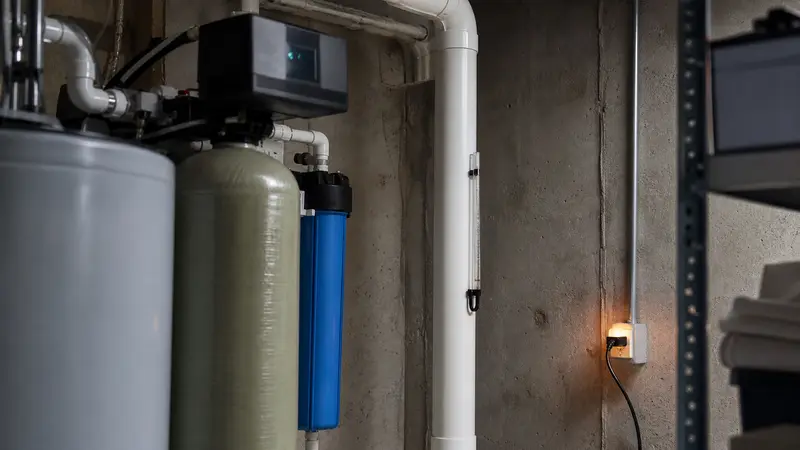
Aeration systems remove radon by mixing water with air in a tank, then venting that air outside with a fan. They work at much higher radon levels and do not build up radioactive material. They cost more because they include a tank, a vent fan, a repressurization pump to send water back into the house, and more plumbing.
Ongoing costs
Up-front price is only part of the cost:
- Carbon media replacement. GAC media needs replacing every few years, depending on water use and radon level.
- Electricity. Aeration systems run a blower and a repressurization pump. Our guide on how much it costs to run a radon fan shows how to estimate fan electricity, and the same math applies to an aeration blower.
- Maintenance. Aeration tanks may need periodic cleaning, especially with iron or hardness in the water.
- Retesting. Test the treated water after install and every few years after that.
Do you need water treatment?
Radon in water adds to the radon in your indoor air when you shower, wash dishes or do laundry. A common rule of thumb is that about 10,000 pCi/L of radon in water adds about 1 pCi/L to indoor air.
There is no final federal drinking water limit for radon. In 1999, EPA proposed a limit of 300 pCi/L, with a higher alternative level of 4,000 pCi/L for areas with indoor air programs, but that rule was never finalized. PA DEP has not set its own limit for private wells. Its radon in water fact sheet notes that the proposed 300 pCi/L level may still be useful guidance for well owners.
Because guidance varies, many homeowners decide based on:
- The water test result.
- The indoor air radon result.
- Whether the house already has an air mitigation system.
Test your indoor air first. In most York homes, soil gas is the larger source of indoor radon, and the EPA radon page recommends testing air in every home.
York context
York County is in EPA Radon Zone 1. Many homes outside the city rely on private wells drilled into bedrock, and the same uranium-bearing rock that produces radon in soil gas can put radon into groundwater. If you are on a well and your air test is high, a water test is worth doing too.
Our page on well water radon treatment in York explains how we test and size systems.
Key takeaways
- Carbon (GAC) systems cost less up front and suit lower radon levels.
- Aeration systems cost more but handle high radon levels without radioactive buildup.
- Our price is $1,500 to $5,500, depending on the system, set after a water test.
- Plan for ongoing costs: media, electricity, maintenance and retesting.
- Test your air first. Soil gas is usually the bigger source.
Frequently Asked Questions
Does a water softener remove radon?
No. Water softeners and most standard filters are not designed to remove radon gas.
Is radon in water dangerous to drink?
Most of the risk from radon in water comes from breathing radon released into the air, not from drinking it. EPA notes a smaller risk from ingestion.
How do I test my well for radon?
A water radon test uses a special sample vial filled carefully so no air gets in. It goes to a lab for analysis.