On this page
- Why there is no "zero risk" number
- EPA's radon levels, explained
- How risk changes with the number
- Why 4.0 pCi/L and not lower?
- What a good result after mitigation looks like
- Your result in York County context
- What to do with your number
- Key takeaways
- Frequently Asked Questions
- Compare your result to local data
No radon level is completely safe, because lung cancer risk rises with any exposure. EPA recommends fixing your home if radon is 4.0 pCi/L or higher, and says to consider fixing it between 2 and 4 pCi/L. Most homes can be brought below 4, and many below 2. To see where local homes tend to fall, check radon levels in York County, PA.
Why there is no "zero risk" number
Radon is radioactive. When you breathe it in, its breakdown products can lodge in your lungs and give off small bursts of radiation. Over years, that can damage lung cells. The more radon you breathe, and the longer you breathe it, the higher the risk.
That is why EPA does not call any level "safe." Instead, it sets an action level. That is the point where the benefit of fixing the problem is clear and the fix is practical for most homes.
Outdoor air averages about 0.4 pCi/L, and the average U.S. home is about 1.3 pCi/L, according to EPA's Citizen's Guide to Radon. Even those levels carry a small risk. You can't get to zero, but you can get much lower.
EPA's radon levels, explained
Here is how EPA's guidance breaks down, in plain terms.
| Your result | What EPA says | What it means for you |
|---|---|---|
| 4.0 pCi/L or higher | Fix your home | Plan a mitigation system. Higher numbers call for faster action. |
| 2.0 to 3.9 pCi/L | Consider fixing | Worth fixing, especially for long-term homes, smokers or kids. |
| Below 2.0 pCi/L | Below the consider-fixing range | Retest every few years and after major changes. |
The unit, pCi/L, stands for picocuries per liter. If the unit is new to you, here is what pCi/L means in simple terms.
How risk changes with the number
EPA publishes risk estimates for people exposed to a radon level over a lifetime. Here are a few of them, per 1,000 people (EPA health risk of radon):
| Radon level | Never smoked: about this many could get lung cancer | Smokers: about this many could get lung cancer |
|---|---|---|
| 20 pCi/L | 36 | 260 |
| 10 pCi/L | 18 | 150 |
| 4 pCi/L | 7 | 62 |
| 2 pCi/L | 4 | 32 |
| 1.3 pCi/L | 2 | 20 |
Two things stand out. First, risk climbs steadily with the level. Second, smoking makes radon far more dangerous. If anyone in your home smokes, getting radon down matters even more.
These are population estimates, not predictions for any one person. They help you weigh the decision.
Why 4.0 pCi/L and not lower?
People often ask why the action level is 4 if risk exists below it. The short answer is a balance between risk and what testing and mitigation can reliably achieve.
At 4 pCi/L and above, the risk is high enough that fixing makes clear sense for nearly every home. Between 2 and 4, EPA still encourages fixing, because the risk there is not trivial. Below 2, it is harder to lower levels further in many homes.
Other groups set their own reference points. The World Health Organization suggests a reference level of 100 Bq/m3, which is about 2.7 pCi/L. That lower figure is one reason many homeowners aim well below 4 when they mitigate.
What a good result after mitigation looks like
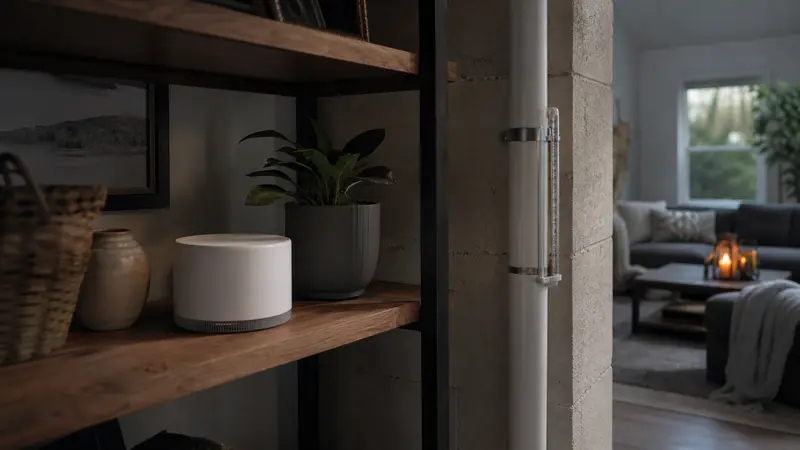
A properly installed active system often brings a home well under 4 pCi/L. EPA notes that most homes can be reduced to 2 pCi/L or below.
After any install, there should be a clearance test. EPA guidance is to run it no sooner than 24 hours after the system starts and within 30 days. That test shows whether the system did its job.
At Radon Mitigation York PA, our written clearance guarantee means that if your clearance test is not below 4.0 pCi/L, we keep working at no charge.
Your result in York County context
York County is in EPA Radon Zone 1, the highest-potential group. In PA DEP's test data for the county, about half of all tests reached 4.0 pCi/L or higher. So a high result here is common. It is not a reason to panic, but it is a reason to act.
What to do with your number
- 4.0 or higher: Get a written quote from a PA DEP-certified mitigator. If you're buying or selling, plan around the closing date.
- 2 to 3.9: Consider mitigation, especially if the basement is lived in or anyone smokes.
- Below 2: Good result. Retest in about two years, and after finishing a basement or other big changes.
- Short-term test only: If your first short-term result is high, EPA suggests a follow-up test before deciding, unless you need to act quickly for a sale.
Key takeaways
- No radon level is risk-free.
- EPA says fix at 4.0 pCi/L or higher, and consider fixing between 2 and 4.
- Risk climbs with the level and is much higher for smokers.
- Most homes can be brought below 4, and many below 2.
- Always confirm a fix with a clearance test.
Frequently Asked Questions
Is 3 pCi/L safe?
It is below EPA's action level but inside the "consider fixing" range. Many families choose to mitigate at 3, especially if they use the basement or anyone smokes.
Is 10 pCi/L an emergency?
It is not an emergency in the sense of immediate harm, since radon risk builds over years. But it is well above the action level, so plan to fix it soon.
Does a low result last forever?
No. Levels change with seasons and with changes to the house. Retest every couple of years and after renovations.
Compare your result to local data
See how your number stacks up against your area on our York County radon levels page, built from PA DEP test data. Questions about your result? Call (717) 356-3035 any time for a same-day callback.