On this page
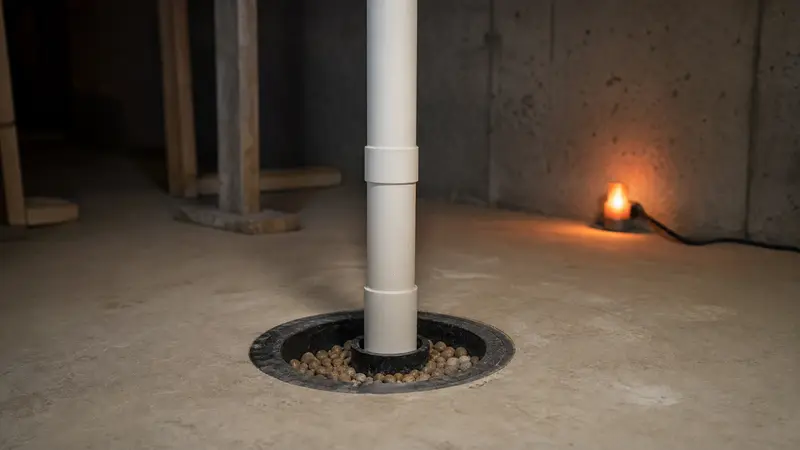
Sub-slab depressurization (SSD) is the most common way to lower radon in a home with a basement or slab floor. In an SSD radon mitigation system, a pipe is sealed into the soil under the concrete, and a fan running nonstop pulls on it. That lowers the air pressure under the slab, so radon is drawn out and vented above the roof instead of seeping inside.
Why the EPA favors this method
The EPA's Consumer's Guide to Radon Reduction lists active sub-slab depressurization as reducing radon by 50 to 99 percent. It is the method most certified mitigators reach for first in basement homes, and it is the one used in most York basements.
The reason it works so well is simple. Radon does not come from your house. It comes from the soil under it. Instead of trying to plug every crack where radon could get in, SSD goes to the source and pulls the gas away before it reaches the floor.
How sub-slab depressurization works
Your house normally sits at slightly lower air pressure than the soil around it. Warm air leaks out of the top of the house, and exhaust fans and appliances pull air out too. The house makes up for that by pulling air in from below, including radon-rich soil gas.
SSD flips that pressure difference. The fan makes the area under the slab lower in pressure than the basement. Now air wants to move down through any crack, not up. Radon in the soil is drawn toward the suction point, up the pipe and out above the roofline, where it thins out quickly in outdoor air.
The parts of an SSD system
- Suction point: a hole cored through the slab, with a small pit dug out of the soil and gravel below it.
- Vent pipe: usually 3 or 4 inch PVC, running from the suction point to above the roof.
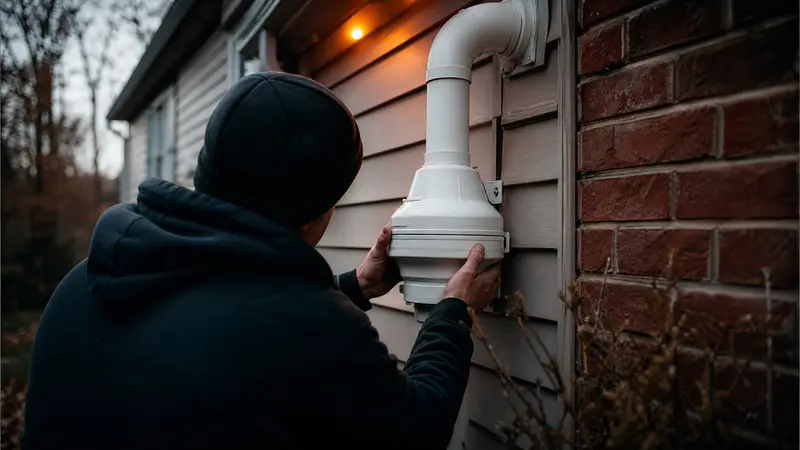
- Fan: an inline fan built to run all the time. In Pennsylvania it must be outside the living space, such as on an exterior wall or in an attic or garage.
- Manometer: a U-tube gauge on the pipe that shows the fan is pulling.
- Sealing: caulk or sealant on major cracks, floor-wall gaps and the sump lid so the fan pulls soil gas, not basement air.
How an installer sets up an SSD system
A well-planned system starts with a look at how air moves under your slab.
- Pick a spot. Installers look for a place near the middle of the slab, close to an easy route for the pipe, and away from finished walls when possible.
- Run a diagnostic. They drill small test holes and apply suction to see how far the pressure change spreads. Gravel under the slab spreads it easily. Clay or packed fill does not.
- Core and dig. They cut through the slab and remove soil to make a suction pit. A bigger pit often gives better coverage.
- Pipe and fan. The pipe is sealed into the slab, routed out of the house and connected to the fan, then carried above the roof.
- Seal and label. Openings are sealed, the manometer is set, and the pipe is labeled.
- Test. A clearance test is run after the system has been on at least 24 hours.
For most homes this is a one-day job. Our guide to how long radon mitigation installation takes walks through the full timeline from quote to clearance test.
What makes SSD work well, or poorly
SSD is reliable, but results depend on a few things.
What is under the slab
Clean gravel under the floor lets suction spread far, so one suction point can cover a whole basement. Tight soil or no gravel layer limits how far suction reaches. In those homes, installers add suction points or use a stronger fan.
Foundation type
Some York homes have more than one foundation. An older house might have a stone-walled basement with a newer addition on a crawl space. Each section may need its own suction point or a plastic sheet laid over crawl space soil, all tied to one fan.
Openings in the slab
Large open cracks, a loose sump lid or an open floor drain let the fan pull basement air. That weakens the suction under the rest of the floor. Sealing these openings makes the same fan reach farther.
Fan choice
A fan that is too weak will not reach the edges of the slab. A fan that is too strong uses more electricity and can be louder than it needs to be. The diagnostic test helps match the fan to the house.
SSD compared with other options
| Option | Typical use | How it compares |
|---|---|---|
| Sub-slab depressurization | Basements and slab floors | The standard approach; high, steady reductions |
| Sump pit suction | Basements with a sump and drain tile | A form of SSD that uses the sealed sump as the suction point |
| Sub-membrane depressurization | Dirt crawl spaces | Same idea, with suction under a sealed plastic sheet |
| Sealing alone | Any home | Not recommended by the EPA as a stand-alone fix |
| Passive pipe (no fan) | Some newer homes | Weaker than an active system; often needs a fan added |
Living with an SSD system
Once installed, SSD needs very little from you. Glance at the manometer every so often. If the liquid on both sides is level, the fan is not pulling and needs a check.
Fans run 24 hours a day and last for years, though they do wear out eventually. Plan on retesting at least every two years, as the EPA suggests, and after any big remodel that changes the basement.
Key takeaways
- Sub-slab depressurization pulls radon from the soil under your home and vents it above the roof.
- The EPA lists it as cutting radon by 50 to 99 percent.
- Results depend on what is under the slab, the foundation type, sealing and fan choice.
- A diagnostic test before install helps place the suction point and pick the fan.
- Most homes can be done in a day, followed by a clearance test.
Frequently Asked Questions
Is sub-slab depressurization the same as a radon mitigation system?
It is the most common type. When people say "radon system," they usually mean an SSD system with a fan and a pipe above the roof.
How many suction points does a house need?
Many homes need one. Large slabs, tight soil or mixed foundations may need two or more, all usually tied to a single fan.
Does SSD work in a house with a crawl space?
It works for the slab part. The crawl space usually gets a sealed plastic sheet with suction under it, often on the same fan.
Get a system designed for your home
Every slab is different, and the right setup depends on what is under yours. See how we handle radon mitigation system installation in York, or call (717) 356-3035 any time for a free written quote and a same-day callback.