
On this page
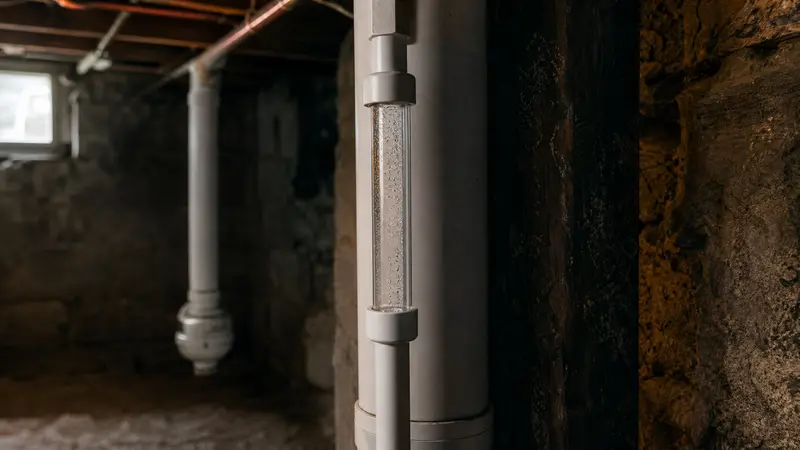
Some water in a radon pipe is normal. Soil gas pulled from under your slab is damp, and it condenses on the cool pipe walls. The system is built so that water runs back down the pipe and drains under the slab. Constant loud gurgling, pooling or dripping usually points to a pipe that is sloped wrong or a high water table, and may call for radon pipe and system repair.
Why there is water in a radon pipe
A radon system pulls air from the soil under your basement floor and sends it up and out above the roof line. Soil air is humid. When that warm, moist air meets a pipe that runs through a cold attic or along an outside wall, the moisture turns to water inside the pipe.
This is the same thing that happens on a cold glass of water on a summer day. It is expected, and a well-built system handles it.
How the system is designed to drain
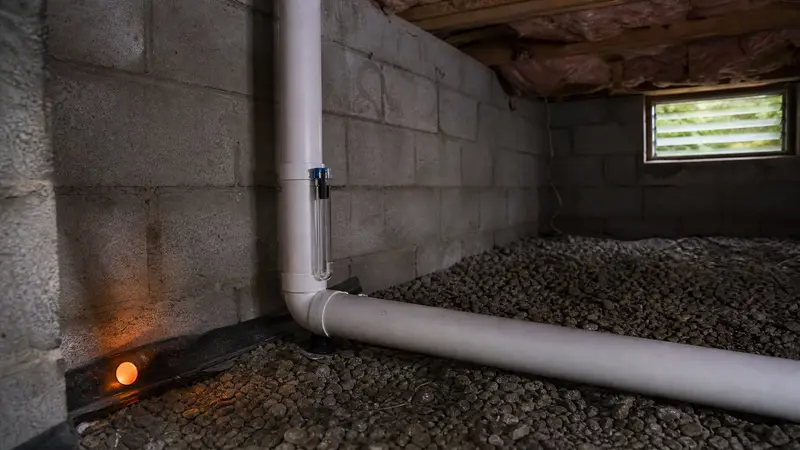
Recognized radon installation standards call for the pipe to have a continuous downward slope back toward the suction point. The common rule is at least 1/8 inch of fall per foot of pipe. With that slope, water runs back down to the suction pit under the slab and soaks into the soil and gravel.
The fan also matters. Inline radon fans are usually mounted so water can pass through and drain away from the motor. When the pipe and fan are set up right, you may hear a faint trickle now and then, but water does not collect.
When gurgling is normal
You may hear brief gurgling or trickling:
- In cold weather, when condensation is heaviest.
- After heavy rain, if a small amount of rain enters the open exhaust.
- Right after the fan starts, as water settles.
A quick, occasional sound like this is not a problem. The manometer reading should stay steady.
When water means a problem
Call a certified mitigator if you notice any of these:
- Constant gurgling or bubbling that does not stop.
- Water dripping from a joint or pooling on the floor near the pipe.
- A sagging horizontal run where water can sit.
- A manometer reading that jumps around or drops when the gurgling starts.
- Water reaching the fan, which can shorten its life.
Common causes of problem water
Pipe sloped the wrong way
If a horizontal run pitches away from the suction point, or has a dip, water collects in the low spot. Air bubbling through that water causes the gurgle. The fix is to re-slope or re-support the pipe.
Sagging pipe
Long runs of PVC can sag over time if hangers are too far apart or work loose. A sag acts like a trap. New hangers and a corrected slope solve it.
High water table
In some homes, groundwater rises close to the bottom of the slab after heavy rain. The suction point can pull water up into the pipe. This is more likely in low-lying areas and in homes with a sump. A mitigator may need to adjust the suction point or tie into a sealed sump.
Rain at the exhaust
An open exhaust lets some rain in. That is normally fine, since it drains the same way condensation does. Rain caps are not always recommended, because some designs restrict airflow or trap ice. Ask your installer before adding one.
Should you turn the fan off when it gurgles?
No. Turning the fan off lets radon build back up. Gurgling is a sign the pipe needs attention, not a reason to stop the system. Learn more about should a radon fan run all the time.
Water and York winters
York sees freezing nights for much of the winter, and that is when condensation is heaviest. Water that sits in a low spot can freeze, narrow the pipe, and choke off airflow. If your manometer drops on a cold morning and your fan sounds strained, check the exhaust and any exterior pipe for ice. Recognized standards and the EPA Consumer's Guide to Radon Reduction both stress having a working warning device so you know when suction drops.
Key takeaways
- Some water in a radon pipe is normal condensation.
- The pipe should slope back toward the slab, at least 1/8 inch per foot, so water drains.
- Constant gurgling, pooling or dripping points to slope, sagging or water table issues.
- Do not turn the fan off. Get the pipe fixed instead.
- In winter, trapped water can freeze and block airflow.
Frequently Asked Questions
Is water in a radon pipe dangerous?
The water itself is not a radon hazard. The concern is that trapped water can block airflow or damage the fan, which can let radon levels rise.
Can I drill a hole to drain the water?
No. A hole lets radon-rich soil gas leak into your home. Have the slope corrected instead.
Why does it only gurgle in winter?
Cold pipes cause more condensation. A small slope problem that stays quiet in summer can show up once the weather turns cold.
Get gurgling fixed
If your radon pipe is gurgling all the time, we can find and fix the cause. We handle radon fan replacement in York and pipe repairs on any brand of system. Call (717) 356-3035 any time for a same-day callback.