
On this page
Most radon fans last about 5 to 10 years before radon fan replacement is needed, and some run well past that. The fan runs nonstop, so its bearings and motor slowly wear out. The two biggest makers, RadonAway and Fantech, back their radon fans with five-year limited warranties. A level manometer, new noise or an alarm usually means the end is near.
Typical radon fan lifespan
EPA's Consumer's Guide to Radon Reduction says fans "may last for five years or more" and then may need repair or replacement. Cost guides and installers commonly cite 5 to 10 years as the normal range.
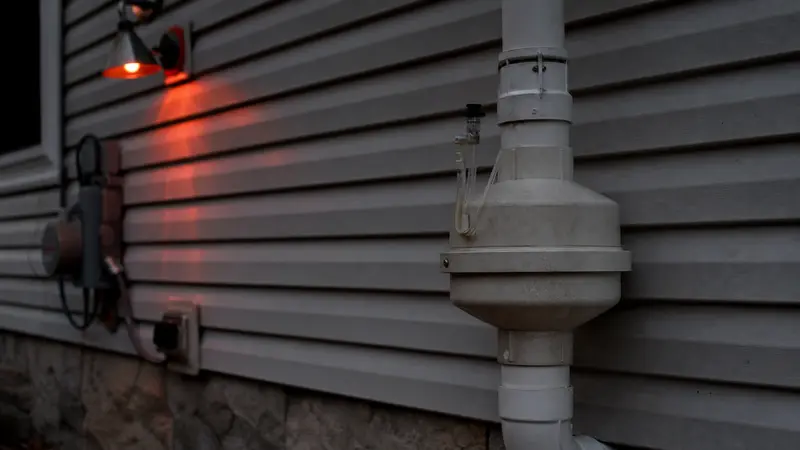
That range is wide because every fan works under different conditions. A fan running at low suction in a mild attic will usually outlast one working hard on an exposed wall through York winters.
What shortens a radon fan's life
A radon fan runs 24 hours a day, 365 days a year. That is about 8,760 hours of runtime every year. Several things add wear on top of that:
- High suction load. Tight clay or dense soil under the slab makes the fan work harder. A fan pushed near its limit runs hot.
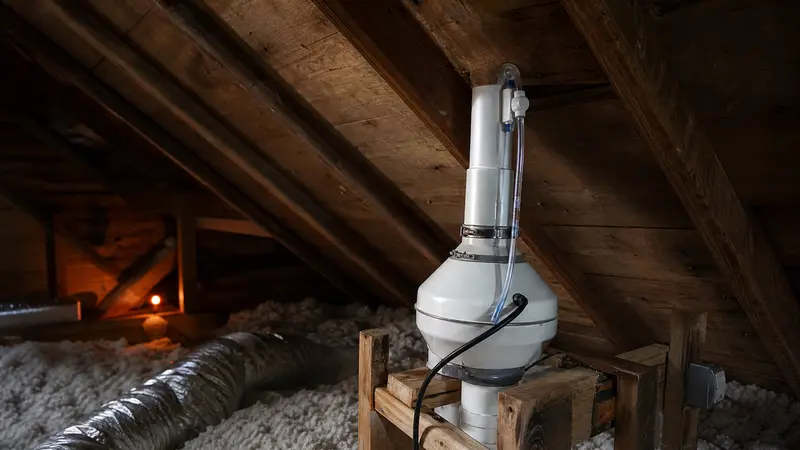
- Heat. Fans in hot attics run warmer, which is hard on motor insulation and bearing grease.
- Water. Condensation that cannot drain back down the pipe can reach the fan housing. Fans should be mounted so water drains away from the motor.
- Ice and freezing. Exterior fans in Pennsylvania see repeated freeze and thaw cycles.
- Vibration. A fan that is not mounted or supported well shakes, and that wears bearings faster.
- Power issues. Surges and brownouts can damage motors. RadonAway's RP fans have thermal protection that shuts the motor off if it overheats.
Warning signs your fan is wearing out
Fans rarely fail without warning. Watch for these signs:
- The manometer reading drops below the mark your installer set, or the liquid goes level.
- New sounds such as grinding, rattling, whining or a rough hum. Our guide on radon fan noise: causes and fixes helps you sort out which noises matter.
- The alarm sounds or its light changes.
- The fan feels very hot or cycles on and off by itself.
- A retest comes back higher than your last clearance test.
If the fan is silent and the gauge is level, check the breaker and outlet first. If power is fine, the fan has most likely failed.
What radon fan warranties cover
RadonAway lists a five-year limited warranty on its RP series fans. Fantech's warranty table lists five years on its Rn radon fans, including the EC and slimline versions. Both warranties cover defects in materials and workmanship.
A few points to know:
- Warranty claims usually need proof of purchase and sometimes the installer's records.
- Labor to remove and reinstall the fan may not be covered by the maker.
- Read the exact terms for your model, since conditions can change.
Since EPA notes that manufacturer warranties "tend not to exceed five years," plan for a fan replacement at some point if you stay in your home long term.
Should you replace a fan before it fails?
Some homeowners replace an older fan once it starts showing early signs, such as bearing noise or weak suction, rather than waiting for it to stop. That avoids a stretch of time with no protection, which matters in a Zone 1 county like York. See the EPA map of radon zones.
There is no need to swap a quiet fan that holds a steady gauge reading just because of its age. Keep checking the manometer monthly and retest every two years.
Key takeaways
- Most radon fans last about 5 to 10 years.
- RadonAway and Fantech radon fans carry five-year limited warranties.
- Heat, water, ice, vibration and high suction loads shorten fan life.
- A level manometer, new noise or an alarm are the main failure signs.
- Check the gauge monthly and retest at least every two years.
Frequently Asked Questions
Can a radon fan last 20 years?
Some do, especially fans running at light loads in mild locations. You should not count on it. Track the manometer and retest every two years so you know when the fan starts to slip.
Does a new fan need a new radon test?
Yes. Test no sooner than 24 hours after the new fan starts. That confirms the replacement brought your levels back below 4.0 pCi/L.
Is a bigger fan a longer-lasting fan?
Not by default. The right fan is the one matched to your home's suction needs. An oversized fan uses more power, and an undersized one works too hard and may not lower radon enough.
Need a new radon fan?
If your fan is showing its age, we can help. We handle radon fan replacement in York for any brand and any installer's system. Call (717) 356-3035 any time for a same-day callback and a free written quote.