On this page
National Radon Action Month is EPA's yearly push, every January, to get people to test their homes for radon. Winter is a smart time to test because homes are closed up and radon often runs higher. EPA uses the month to remind people that radon is the leading cause of lung cancer among non-smokers and that testing is easy. It is a good time to check radon levels across York County and test your own home.
What National Radon Action Month is
Each January, EPA and its partners focus attention on radon. State radon programs, health departments, lung health groups and local groups run events, share testing tips and encourage people to check their homes.
EPA's message for the month is simple. It encourages people to (EPA National Radon Action Month):
- Test their homes
- Spread the word to friends and family
- Encourage others to test
- Consider radon-resistant features when building new homes
EPA notes that radon claims about 21,000 American lives each year and that you can't see, smell or taste it. It also stresses that radon is a preventable health risk.
Why January is a good time to test
EPA's page doesn't say exactly why January was picked. But winter makes practical sense for testing, for a few reasons:
Homes are closed up. Windows and doors stay shut, so radon that enters builds up. Short-term tests also need closed-house conditions, which are easy to keep in winter.
The stack effect is strongest. Warm air rising inside the house draws air in at the bottom, including soil gas. Cold weather makes that pull stronger.
It's a worst-case look. A winter result often shows a home near its higher levels. If your winter result is low, that's a good sign. If it's high, you know to act.
The new year is a good reminder. Like checking smoke detector batteries, it helps to tie radon to a date on the calendar.
That said, any time of year is a good time to test. A long-term test of 90 days or more gives the best picture of your year-round average.
National Radon Action Month in Pennsylvania
Pennsylvania has some of the highest radon levels in the country, and PA DEP promotes testing each January. DEP says about 40% of Pennsylvania homes tested are above EPA's 4 pCi/L action level (PA DEP Radon Division).
In some recent years, DEP and the American Lung Association have offered a limited number of free test kits to Pennsylvania residents in January. Supplies run out, and the offer is not guaranteed every year. Check DEP's site each January for current offers.
National Radon Action Month in York County
York County sits in EPA Radon Zone 1, and PA DEP's test data shows about half of county tests at or above 4.0 pCi/L. Much of that comes down to local rock and soil, which you can read about in why radon is high in York County.
For York homeowners, January is a natural time to:
- Test a home that has never been tested
- Retest a home tested more than two years ago
- Retest after finishing a basement or adding on
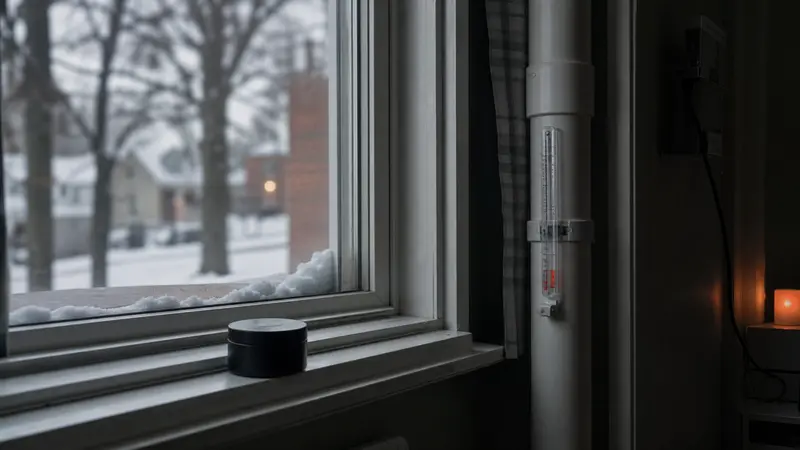
- Check that an existing radon fan is running and the gauge shows suction
How to test this January
- Pick your test. A short-term test (2 to 7 days) gives a quick answer. A long-term test (90 days or more) shows your year-round average. A professional continuous monitor gives hourly readings.
- Test the lowest lived-in level. For most York homes, that's the basement if you use it, or the main floor if you don't.
- Keep closed-house conditions. Keep windows and outside doors shut, except for normal coming and going, during short-term tests.
- Follow the device directions. Place it away from drafts, heat, humidity and outside walls.
- Read the result. EPA recommends fixing at 4.0 pCi/L or higher and considering a fix from 2 to 4.
What to do after you test
- Below 2 pCi/L: Retest in about two years, or after big changes to the house.
- 2 to 4 pCi/L: Consider mitigation, especially if you spend time in the basement or anyone smokes.
- 4.0 or higher: Get a written quote from a PA DEP-certified mitigator. Pennsylvania requires certification for anyone who tests or mitigates for others.
Winter is also a fine time to install a radon system. Work is mostly indoors and in the basement, and most installs take one day.
Key takeaways
- January is National Radon Action Month, led by EPA.
- Winter testing gives a closed-house, often higher-end reading.
- Pennsylvania and York County both have high rates of results above 4.0 pCi/L.
- Test the lowest lived-in level and follow EPA's guidance on your number.
Frequently Asked Questions
Do I have to wait until January to test?
No. You can test any time. January is just a good reminder, and winter conditions make short-term tests easier to run correctly.
Will a summer test give a lower number?
Often, yes, because homes are more open. That's why a long-term test across seasons gives the most accurate average.
Can a radon system be installed in winter?
Yes. Most of the work happens inside, and the fan and pipe are built for outdoor conditions.
Start with local data
See how common high radon is near you on our York County radon levels page, built from PA DEP test data. To test this January, or any month, call (717) 356-3035 any time for a same-day callback.