
On this page
Radon runs high in York County because the ground under it holds uranium and lets gas move easily. A limestone belt through the middle of the county weathers into clay soils that can carry uranium and radium. Fractured schist and phyllite in the south give radon many paths up. Homes then pull that gas inside.
Radon starts with uranium in the ground
Radon is not something people add to a house. It forms on its own, deep in the soil and rock, from uranium. Uranium is a natural element found in small amounts almost everywhere. Over a very long time it breaks down step by step. One of those steps is radium, and radium breaks down into radon gas.
Radon is a gas, so it does not stay put. It moves through tiny spaces between soil grains and through cracks in rock. Outdoors, it mixes with air and stays at low levels. Under a house, it can collect and get pulled inside.
So two things decide how much radon a place has:
- How much uranium and radium are in the rock and soil. More source material means more radon being made.
- How easily gas moves through the ground. Loose, cracked or broken-up ground lets radon travel farther and faster.
York County scores high on both. EPA places the whole county in Radon Zone 1, its highest-potential group, where the predicted average indoor screening level is above 4 pCi/L (EPA radon zone map).
The three kinds of ground under York County
York County sits in the Piedmont region of southern Pennsylvania. Its rock falls into three broad belts, running roughly east to west. Here is the plain-English version.
North: red shale, sandstone and diabase
Northern York County, the part closer to Harrisburg, sits on younger sedimentary rock. Think red shale, siltstone and sandstone that formed in an ancient basin. Dark, hard igneous rock called diabase cuts through it in places. One well-known body of it is named the York Haven Diabase.
In PA DEP's test data, several northern ZIP codes show some of the county's lower medians. They still have plenty of high tests, just fewer on average.
Middle: the York Valley limestone belt
A band of limestone and dolomite runs through the middle of the county, including much of the York area. These are carbonate rocks, and rain and groundwater slowly dissolve them.
When limestone dissolves, the parts that don't dissolve get left behind as clay-rich soil. A U.S. Geological Survey study of Pennsylvania radon explains that this process "creates soils that are enriched in impurities, including radionuclides such as uranium and radium." In plain terms, the soil above the limestone can hold more radon source material than the rock it came from.
Dissolving rock also leaves cracks, channels and small voids. Those openings give radon gas a path to travel. The same USGS study found that carbonate rock settings made up three of the five statewide groups with median indoor levels above 4 pCi/L (USGS report on indoor radon in Pennsylvania).
South: schist, phyllite and quartzite hills
Southern York County is rolling hill country built on older metamorphic rock. These rocks were squeezed and heated long ago, which turned mud and sand into schist, phyllite and quartzite.
Metamorphic rock like this is often fractured, and it tends to sit under a thick layer of weathered, broken-down rock. Fractures and loose weathered rock both let gas move. Some of the county's highest ZIP code medians in PA DEP data come from this southern area.
Is York County part of the Reading Prong?
No. The Reading Prong is a well-known high-radon rock belt in eastern Pennsylvania. It made national news in the 1980s. York County is not on it.
York County's radon comes from its own mix of limestone, metamorphic rock and the soils that form from them. That is worth knowing, because some people assume radon is only an "eastern PA" issue. PA DEP test data shows that roughly half of all tests reported in York County came back at or above 4.0 pCi/L.
Why the house matters as much as the ground
Geology sets up the radon supply. The house decides how much gets in.
Most homes have slightly lower air pressure inside than in the soil below, especially in winter. Warm air rises and leaks out near the top of the house. That pulls replacement air in at the bottom, including soil gas. Radon enters through:
- Cracks in basement floors and walls
- The joint where the floor slab meets the foundation wall
- Sump pits and floor drains
- Gaps around pipes and wires
- Bare soil in crawl spaces
- Older stone foundations with many open joints
York has a lot of older housing, including fieldstone and block basements, plus newer homes on slabs and crawl spaces. Any of them can test high. The details of one house, like its cracks, its foundation type and how it moves air, explain why two homes on the same street can get very different results.
What the local numbers say
PA DEP has collected radon test results in York County for decades. When you sort them by ZIP code, the pattern is clear: in most county ZIPs, about half or more of the tests reached 4.0 pCi/L or higher.
EPA recommends fixing a home at 4.0 pCi/L or higher, and says to consider fixing between 2 and 4. If you're not sure where your result falls, read what radon level is safe.
Still, a high-radon county doesn't mean every house is high, and a low-radon area doesn't mean any house is low. Geology tells you the odds. A test tells you the answer.
What this means for you
- Test your home. It is the only way to know your level. Basements and the lowest lived-in floor are the usual test spots.
- Don't rely on a neighbor's result. Even next door, results can differ a lot.
- Retest after big changes. Finishing a basement, adding a room or replacing a furnace can change how air moves.
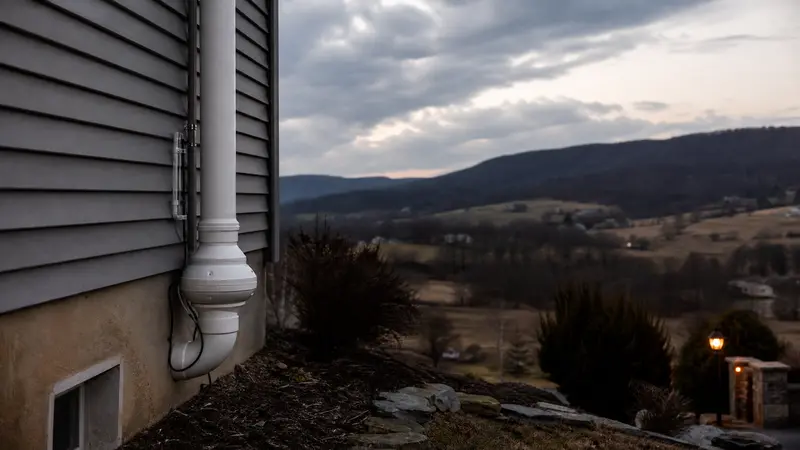
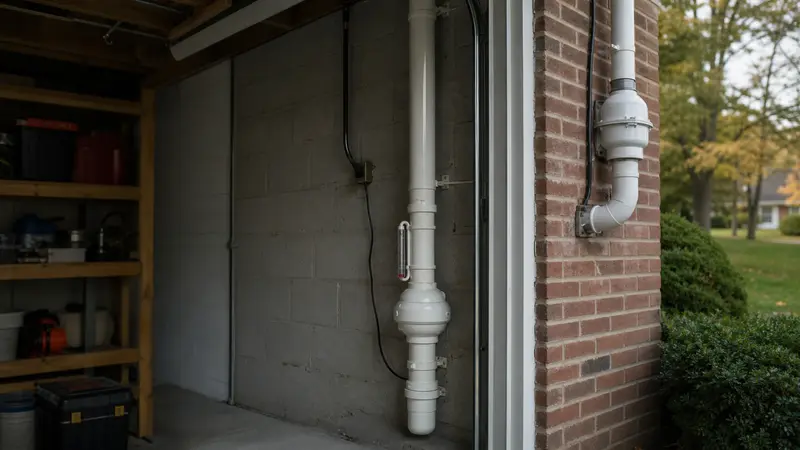
- If it's high, fix it. Active soil depressurization, a fan-driven pipe system that pulls gas from under the floor and vents it above the roof, is the method EPA describes as the most common and usually the most reliable.
Key takeaways
- York County is in EPA Radon Zone 1, the highest-potential group.
- Radon forms from uranium in rock and soil, then moves through cracks and loose ground.
- The county's limestone belt weathers into soils that can be enriched in uranium and radium, according to USGS.
- Fractured schist and phyllite in the south also give radon easy paths.
- About half of York County tests in PA DEP data reached 4.0 pCi/L or higher.
- Your house's own features decide how much gets in, so every home needs its own test.
Frequently Asked Questions
Does living on limestone mean my house has high radon?
Not always. Limestone areas raise the odds, but cracks, foundation type and air pressure in your home decide the actual level. Only a test can tell you.
Is radon higher in some parts of York County than others?
PA DEP data suggests yes. Some southern ZIPs show higher medians than some northern ones. But every part of the county has plenty of high tests.
Can radon levels change over time?
Yes. Levels shift with seasons, weather and changes to the house. Winter results often run higher because homes are closed up.
See the numbers for your ZIP code
Want to see how your area compares? Our page on York County radon levels breaks down PA DEP test data by ZIP code. When you're ready to test or fix, call (717) 356-3035 any time for a same-day callback and a free written quote.