On this page
There is no enforceable limit for radon in private well water. In 1999 EPA proposed 300 pCi/L for public water systems, or 4,000 pCi/L where a state runs an indoor air radon program, but the rule was never finalized. Most homeowners decide on radon in well water treatment by weighing the water result together with their indoor air radon level.
The numbers you will see
When you get a water radon result back from a lab, it will be in picocuries per liter (pCi/L), the same unit used for air. But the numbers are not comparable. Water results are often in the hundreds or thousands, while air results are usually in single digits. A water reading of 2,000 pCi/L does not mean your home is 500 times over the air action level.
Here are the reference points that come up most often:
| Number | What it is | Status |
|---|---|---|
| 4.0 pCi/L (air) | EPA action level for indoor air | EPA guidance, widely used |
| 300 pCi/L (water) | Proposed Maximum Contaminant Level (MCL) for public water | Proposed in 1999, never finalized |
| 4,000 pCi/L (water) | Proposed Alternative MCL (AMCL) for areas with an indoor air program | Proposed in 1999, never finalized |
| 10,000 pCi/L (water) | Level that adds about 1 pCi/L to indoor air | Rule of thumb |
What EPA proposed in 1999
In 1999, EPA proposed a rule for radon in public drinking water. It set two levels. The first was a Maximum Contaminant Level of 300 pCi/L. The second was a higher Alternative Maximum Contaminant Level of 4,000 pCi/L. States or water systems could use the higher limit if they also ran a multimedia mitigation program aimed at reducing radon in indoor air, since air is the bigger source of exposure for most people.
The proposal never became a final rule. You can read EPA's archived summary of the proposed radon in drinking water rule. Even if it had been finalized, it would have applied to community water systems, not private wells. PA DEP notes that private wells are not regulated under the federal Safe Drinking Water Act.
Why water and air are judged together
Radon in water matters mostly because it escapes into the air. When you shower, run the dishwasher or do laundry, the gas comes out of the water and mixes with the air in your home. A widely used rule of thumb, cited by PA DEP, is that 10,000 pCi/L in water adds about 1 pCi/L to indoor air.
That ratio changes how you read your result:
- 300 to 2,000 pCi/L. Adds only a small fraction of a pCi/L to your air. Many homeowners at this level focus on air radon first.
- 2,000 to 10,000 pCi/L. Adds a measurable amount, up to about 1 pCi/L. Treatment is worth considering, especially if air levels are also near or above 4.0 pCi/L.
- Above 10,000 pCi/L. Water alone can push indoor air up by 1 pCi/L or more. Treatment is commonly recommended at this point.
These bands are a practical way to think about results, not legal thresholds. Your water use, house size and ventilation all affect how much radon ends up in the air.
How treatment decisions are made
When we review a well result, we look at four things:
- The water number. Higher results justify more spending on treatment.
- The indoor air number. If air is high and water is low, an air system is the better first step. If both are high, you may need both.
- How the sample was taken. A sample that sat in an open cup or took a week to reach the lab can read low. Radon has a half-life of about 3.8 days, so slow delivery lowers the result.
- Your water use. Large households use more water, which releases more radon into the air.
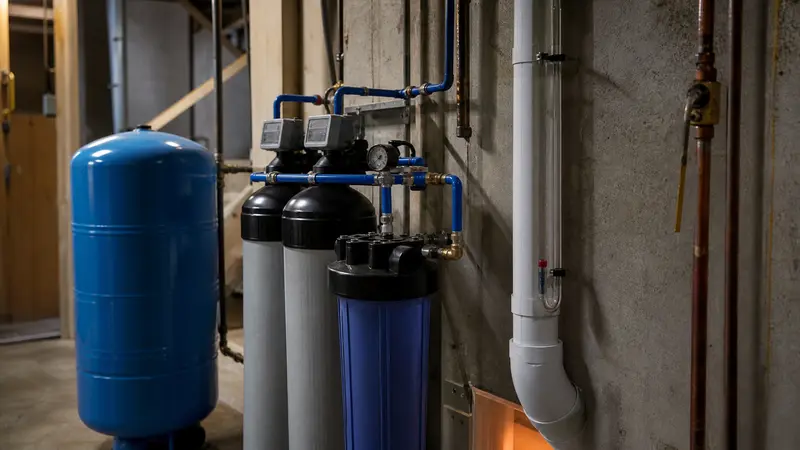
The level also guides which system fits. Carbon (GAC) filters are often used for lower results, while aeration handles higher results without building up radioactivity in the unit. Our guide to aeration vs. GAC carbon filters for radon in water compares them side by side.
York County context
York County is in EPA Radon Zone 1. Penn State Extension cites a study of about 900 Pennsylvania wells in which 78% were above 300 pCi/L and 10% were above 5,000 pCi/L. So a result over 300 pCi/L is common here and is not a reason to panic. It is a reason to look at your full picture.
Key takeaways
- No enforceable radon limit exists for private wells.
- EPA's 1999 proposal set 300 pCi/L (MCL) and 4,000 pCi/L (AMCL) for public water, but it was never finalized.
- About 10,000 pCi/L in water adds roughly 1 pCi/L to indoor air.
- Decide on treatment using both your water and air results.
Frequently Asked Questions
Is 1,000 pCi/L of radon in water bad?
It is above the old proposed 300 pCi/L level but adds only about 0.1 pCi/L to indoor air. Most homeowners at this level focus on air radon first.
Does Pennsylvania have its own radon in water limit?
PA DEP's fact sheet refers to EPA's proposed 300 pCi/L level and notes it has not been adopted. Private wells are not regulated under the federal Safe Drinking Water Act.
Should I retest before treating?
If the first sample was collected poorly or took days to reach the lab, yes. A second, carefully collected sample gives you a firmer number.
Get help reading your result
Not sure what your number means? Call (717) 356-3035 any time for a same-day callback. We look at your water and air results together and give you a free written quote if treatment makes sense. See our well water radon treatment in York page for details.