On this page
Retest your home no sooner than 24 hours after the radon system starts running and within 30 days of installation. That first test is the clearance test. After that, EPA advises retesting at least every two years, after any radon mitigation system repair, and after major renovations such as finishing a basement.
The clearance test: your first retest
The clearance test (also called the post-mitigation test) shows whether your new system did its job. EPA's Consumer's Guide to Radon Reduction says this test "should be done within 30 days of system installation, but no sooner than 24 hours after your system is in operation with the fan on."
Why wait 24 hours? The system needs time to pull down the radon that built up in the soil and the house. Testing too soon can catch leftover radon and give a reading that is higher than your home's new normal.
Why within 30 days? You want to confirm the system works while the installer is still close to the job, and before you rely on it for months.
How the clearance test is done
- Use a short-term test, usually 2 to 7 days.
- Keep closed-house conditions: windows and outside doors shut except for normal coming and going.
- Place the test in the lowest lived-in level of the home.
- Do not place it near the radon pipe or the sump.
Our York radon clearance guarantee is built around this test. If the result is not below 4.0 pCi/L, we keep working at no charge.
Retesting after a repair or fan replacement
Any time the system is repaired, retest. This includes:
- A new fan.
- A pipe repair or reroute.
- A new suction point.
- Sealing work at the slab or sump.
Use the same rule: test no sooner than 24 hours after the fan is back on. A good manometer reading tells you there is suction. Only a radon test tells you the radon level.
Ongoing retests: every two years
EPA says it is a good idea to retest at least every two years. Systems can slowly lose performance as fans wear, and houses change over time. Recognized installation standards also call for the system label to remind owners about testing every two years.
Fans are the part that changes most. Most last about 5 to 10 years. Learn more about how long a radon fan lasts and the signs of wear.
Retesting after renovations
EPA advises retesting after major renovations. Examples include:
- Finishing or remodeling a basement.
- Adding a room or addition on a slab.
- New plumbing or drains through the slab.
- Replacing or changing your HVAC system.
- Starting to use a lower level as a bedroom or office.
Each of these can change how soil gas enters the house or how much time you spend near it.
Short-term vs. long-term retests
| Test type | Length | Best use |
|---|---|---|
| Short-term | 2 to 90 days (often 2 to 7) | Clearance tests, checks after repairs, home sales |
| Long-term | More than 90 days | Seeing your year-round average |
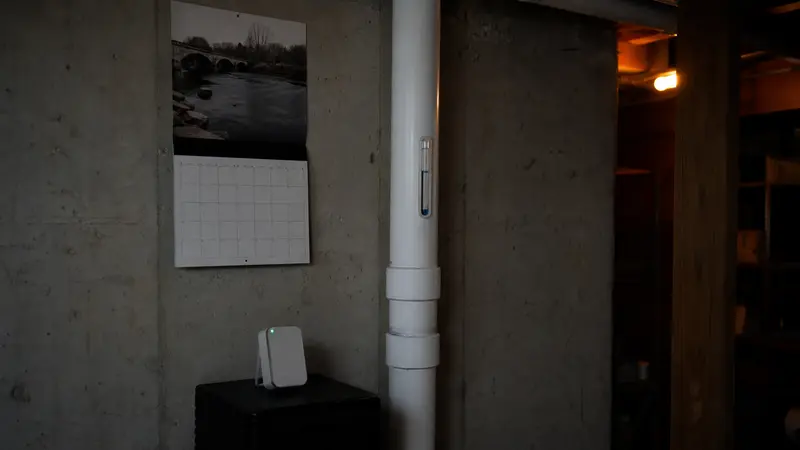
A long-term test gives a better picture of your average exposure, since radon rises and falls with the weather and seasons. Many homeowners use a short-term test for the clearance test and a long-term test for later checks.
What to do if the retest is high
If a retest comes back at 4.0 pCi/L or higher:
- Check the manometer and alarm.
- Look for a dead fan, a blocked exhaust or a cracked pipe.
- Call a certified mitigator to diagnose the system.
- Retest after the fix.
If the result is between 2 and 4 pCi/L, EPA says to consider further steps to lower it. A small change, such as sealing a sump or adding a suction point, can help.
York context
York County is in EPA Radon Zone 1, the highest-potential group. PA DEP reports the average Pennsylvania home tests at about 7 to 8 pCi/L. With levels like that in the soil, a system that slips can let radon climb back well above the action level. Regular retests are cheap insurance. For more on testing in Pennsylvania, see the PA DEP Radon Division.
Key takeaways
- Clearance test: no sooner than 24 hours after the fan starts, within 30 days of install.
- Retest after any repair or fan replacement.
- Retest at least every two years.
- Retest after major renovations or a change in how you use your basement.
- A good gauge reading shows suction, but only a test shows radon.
Frequently Asked Questions
Can I do the retest myself?
Yes. Homeowners can test their own home with a lab-analyzed kit. Follow the closed-house rules closely.
My clearance test was low. Do I still need to retest?
Yes. Retest at least every two years. Fans wear and homes change.
Does the season affect my retest?
It can. Radon often runs higher in colder months when homes are closed up. A long-term test evens this out.
Need a retest or a repair?
If your retest came back high, we can find out why. We provide radon fan replacement in York and repairs for any installer's system. Call (717) 356-3035 any time for a same-day callback.