
On this page
A radon mitigation warranty usually comes in two or three parts. The fan maker covers the fan, often for around five years. The installer covers workmanship, such as pipes, seals and labor. The best installers also give a clearance or performance guarantee, which covers the result: getting your radon level below a set number.
The three kinds of coverage
| Coverage | Who gives it | What it covers | What to ask |
|---|---|---|---|
| Fan warranty | The fan maker | Defects in the fan motor and housing | How many years, and does it need professional installation? |
| Workmanship warranty | The installer | Pipe joints, seals, mounting, wiring and labor | How long, and what voids it? |
| Clearance or performance guarantee | The installer | Getting the clearance test below a set level | What number, and is extra work free? |
Fan warranty
The fan is the only moving part in most radon systems, and it runs around the clock. Major radon fan makers commonly offer a limited warranty of around five years, and some models carry longer terms. Check the current terms for the exact fan model you install. Some require that a professional install the fan, and some require you to register it.
A fan warranty usually covers the part, not the labor to swap it. Ask your installer whether they will replace a failed fan under warranty at no labor charge, and for how long.
Workmanship warranty
This covers the installer's work: glued pipe joints, the slab seal at the suction point, crack sealing, the sump lid, roof or wall penetrations, and the fan wiring. If a pipe joint leaks or the sump lid seal fails because of how it was installed, this warranty should cover the repair.
Workmanship terms vary a lot from company to company. Get the length and the exclusions in writing.
Clearance or performance guarantee
This is the coverage that protects the result you are paying for. A clear guarantee:
- Names a target level, usually below 4.0 pCi/L, the EPA action level
- Says what happens if the clearance test misses it (extra work at no charge)
- Includes a retest after each fix
Some guarantees also promise a level for a set number of years. Read the fine print, because a long-term guarantee may require you to retest on a schedule and keep the fan running.
What usually voids a warranty
Most warranties do not cover:
- Damage from storms, impact or animals
- Turning the fan off or unplugging it for long periods
- Changes to the house, such as finishing the basement or cutting new holes in the slab
- Someone else moving or modifying the system
- A sump lid left off after pump service
Pennsylvania's standards require every system to carry a permanent label with the installer's name, DEP certification number, contact information and install date. Keep that label in place, and keep your paperwork. It is how you make a claim, and it is what a future buyer will ask for.
What the state requires, and what it does not
Pennsylvania sets installation rules for radon systems, including where the fan can go, where the exhaust must end, what must be sealed, how the system is labeled, and what information you must receive when the job is done. Those rules are explained in Pennsylvania radon mitigation standards.
The state rules do not set a warranty length. That part is up to the installer, which is why it is worth comparing in writing.
How to keep your coverage
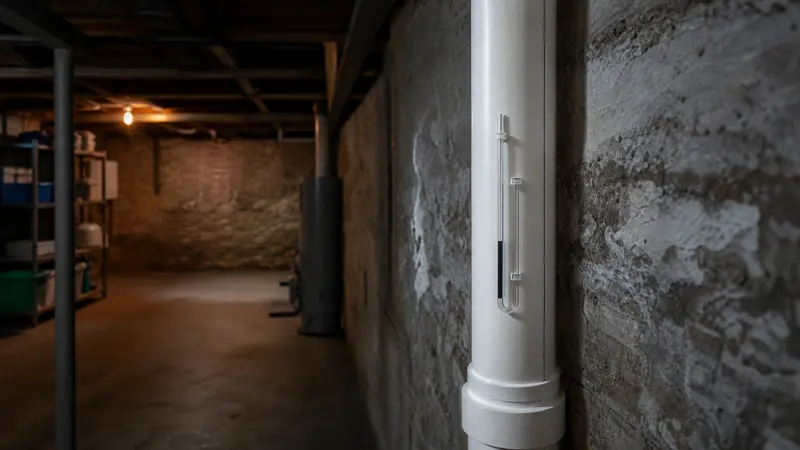
- Check the gauge. PA DEP advises looking at the U-tube manometer periodically to make sure the fan is running.
- Retest every two years. The EPA and PA DEP both recommend it, and some long-term guarantees require it.
- Call before you remodel. If you plan to finish the basement, ask the installer how to protect the system.
- Keep records. Store the clearance test, the fan warranty card and the system label details together.
Key takeaways
- Most radon systems come with a fan warranty from the maker and a workmanship warranty from the installer.
- A clearance guarantee is separate, and it is the one that covers your result.
- Fan warranties usually cover the part, not the labor, so ask about both.
- Remodeling, unplugging the fan or moving the system can void coverage.
- Get every term in writing before work starts.
Frequently Asked Questions
How long does a radon fan last?
Fans run all day, every day, and eventually wear out. Many last well past the warranty, but plan on replacing the fan at some point.
Does a warranty transfer when I sell my house?
It depends on the company and the fan maker. Ask before you list, and give the buyer your paperwork.
Is a lifetime guarantee better?
Only if the terms are clear. Check what level it promises, what you must do to keep it, and whether labor is included.
Get it in writing in York
Every system we install comes with a written guarantee: below 4.0 pCi/L on the clearance test, or we keep working at no charge. Read the full terms of our York radon clearance guarantee, or call (717) 356-3035 any time for a same-day callback.